

How Much Should You Upgrade Your Garden As A Renter?

We may receive a commission on purchases made from links.
Living in a rental home can be challenging for gardeners. You run the risk of spending time and money making improvements to the garden only to be told a few months later that the owner wants to sell the property. That doesn't stop you from imagining your next beautiful spring garden. That yearning to get your hands in dirt leaves you wondering whether it's worth upgrading your garden as a renter or not. How much garden work — and what kind — you do involves weighing the risks against your time and budget, the portability of what you create, and what your landlord or local regulations allow.
Being asked to move out after investing in a garden is only one potential pitfall. Depending on the terms of your rental agreement, you may not be permitted to make any changes to the exterior — or interior — of the property. Simply finding damage-free ways to hang plants in your rental can be a challenge for some tenants. Agreements can include rules about returning the yard to its original condition before you leave. What's more, the law is on the landlord's side: tenants cannot alter or change rental property landscaping without express permission.
Some renters have worked hard on a garden only to have the landlord destroy it. In extreme cases, a landlord could try to use a garden as grounds for eviction. For legal protection and peace of mind, always consult your rental agreement and speak with your landlord before making gardening decisions or investments. If you receive written permission to garden on the property, take photos and notes of what the yard looked like before you made changes.
There are some renter-friendly gardening methods
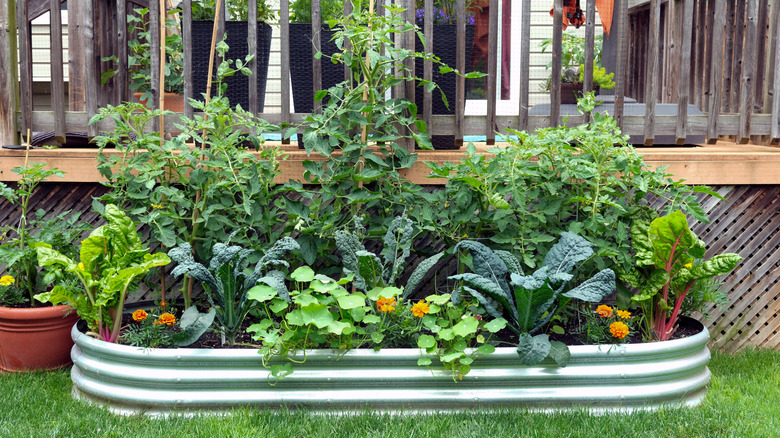
While some renters are willing to invest in upgrades for a garden, many are understandably hesitant to put a lot of money into landscaping a property they don't own. Offering to pay an extra deposit or share some of what you grow with your landlord could sweeten the deal. Or consider the benefits of growing a container garden. This type of garden is movable should you be asked to vacate your rental, and you can grow flowers or vegetables anywhere on the property — within reason and with permission. Potted plants often need minimal weeding and have fewer problems with diseases or pests, as long as you practice good garden hygiene. Container gardens are generally easier to maintain than an in-ground garden. When the cold weather arrives, you can move your perennials indoors to protect them from frost and snow.
You can turn almost anything hollow into a garden container. Old wheelbarrows, buckets, pallets, and metal bins all make great vegetable gardens. For smaller plants, consider quirky upcycles, like large seashells or vintage teacups with drainage holes drilled into them. You could even add movable garden furniture, like a lightweight FDW Garden Bench or an Oyeal Garden Arbor Trellis with Planter Boxes. How much time or money you spend upgrading the garden is your decision. If you choose to grow in the ground and are asked to move, you could always dig up your plants to take with you. If space is limited outdoors or you can't make changes to the yard, create a gorgeous plant window in your kitchen. It could be as simple as a few herbs on your windowsill or as elaborate as the renter-friendly wooden grid shelving cleverly crafted by TikTok creator @want.zamora. His method requires no drilling or permanent changes.