

The Compact Orange Variety That's Ideal For Growing Indoors
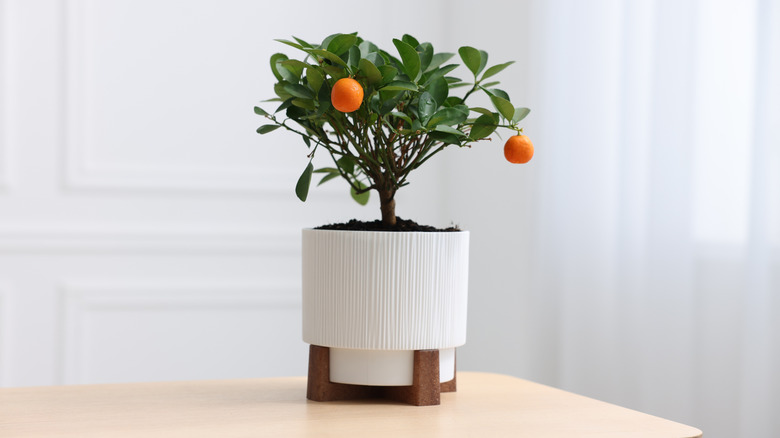
If you live in a colder region, you may be envious of those who are able to grow citrus fruits outdoors. There is something beautiful about watching oranges, limes, and lemons slowly ripen on trees, while you tentatively wait for them to be perfect for you to pick. Thankfully, you don't need to forgo this joy, even if your climate is less than citrus-friendly. You can grow certain citrus trees indoors thanks to their compact nature, and a popular choice is the calamondin orange (X Citrofortunella microcarpa).
This compact orange tree variety is probably a cross between the kumquat and a mandarin orange (although botanists are not completely certain), and produces small, sour fruit that are one or two inches in diameter. Although you can't really eat these fresh because of their bitter taste, they can be used in recipes, marmalade, and garnishes. They can be a pretty good substitute for lemons and limes. The calamondin orange tree usually grows to a height of 3 to 5 feet when kept as an indoor citrus tree. Once it starts flowering, this tree will produce a whole load of fruit, with the tiny oranges covering the tree nearly year-round.
Light and heat are vital to growing a calamondin orange tree indoors
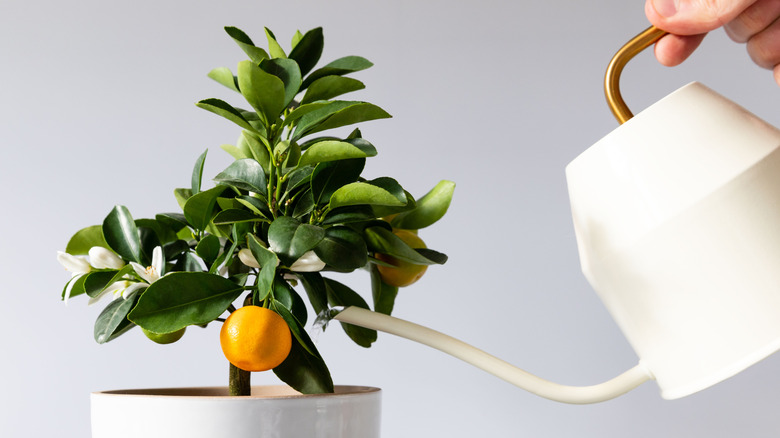
To grow a calamondin orange tree indoors, you need to make sure it's getting enough light and heat. Warmth is necessary for citrus trees to produce sugar, so keep your calamondin tree at around 65 degrees Fahrenheit in the daytime. Temperatures can be slightly lower at night, but anything under 50 degrees can cause issues for the plant's health. Position your calamondin tree in full sun to keep it happy, ensuring it is receiving 8 to 12 hours of sunlight a day. A conservatory or greenhouse is a great location for this tree. You may need to bring in artificial light if there is not enough sunlight, especially during the winter.
When your calamondin tree is putting on new growth in the spring and summer, be sure to water it regularly and mist it every day. Water thoroughly to ensure that the soil is completely damp. Check the surface of the soil before watering again, and only do so if it is dry. Calamondin trees do benefit from feeding, and you should apply a fertilizer designed for citrus trees throughout the year. As insects pollinate citrus trees outside, you can hand pollinate your indoor calamondin tree with a paintbrush to encourage it to produce fruit. Your calamondin tree may shed some of its baby fruit before it ripens, but don't worry too much. This can happen with container trees, as they will shed the extra fruit they are unable to support.