

A Victorian Home Renovation Uncovers A Beautiful Original Feature
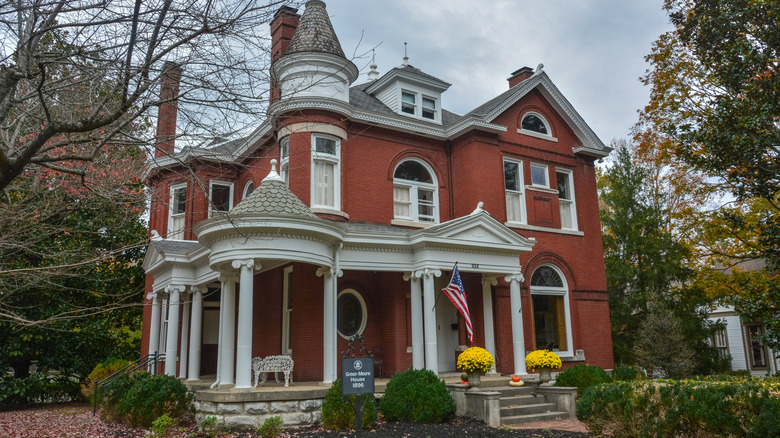
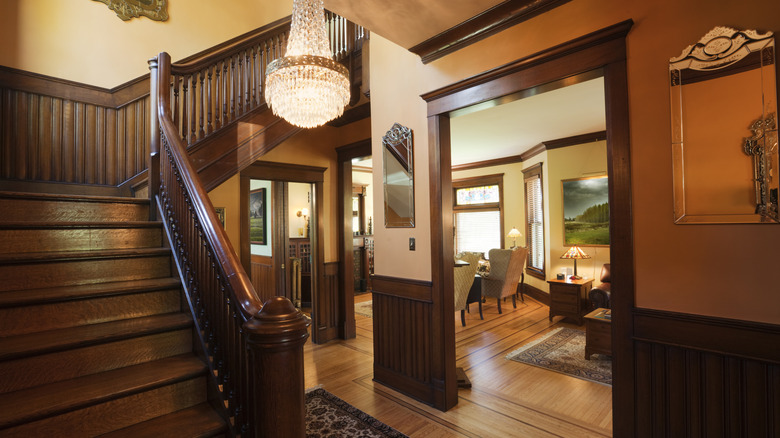
An older home renovation project can be full of delightful surprises. Intact William Morris wallpaper under cheap paneling or original stone walls behind modern drywall are treasures worth hunting for. One couple, happy owners of a Victorian home, uncovered a beautiful original feature during their renovation project. Maroon carpet covered every inch of every riser and tread of the home's grand staircase, even obscuring the elegant wide stairs curving around the newel post at the bottom of the staircase. When they tore the carpet out, they discovered the original staircase in almost new condition, needing very little effort to reclaim its place of pride in the foyer.
@edenkimofficial DID YOU EXPECT THE END RESULTS?!😱 Cant wait to clean them up because this staircase is definitely the STAR of this house!! Stay tuned for more renovations! #homerenovation #victorianhouse #victorianhome #victorianhomerenos #victorianhomerestoration #homeremodel #familyhome
Technically, Victorian style houses were built during the reign of Britain's Queen Victoria from 1837 to 1901, but houses with Victorian features continued to be built in the United States after her reign ended. The interiors have intricate, delicate woodwork, hardwood floors, wainscoting, and elaborate fireplace surrounds. Staircases were frequently part of an imposing entryway with a large foyer that led into the home's living spaces. A back staircase in the same home, primarily built for servants' use, would be much simpler. Carpeting was not considered a luxury, so stairways were frequently carpeted. If the stairs in your Victorian home are covered, the carpeting may be an authentic piece of your home's history, but odds are that if you remove the carpet you'll find the original wood stairs in good shape.
Removing carpet from a Victorian staircase
If the carpet on your stairway is in good shape, pull back a corner to check for signs that hardwood is hiding under the carpet before you commit to tearing it all out. You may discover the wood is in poor shape, or the project may be more than you're willing to take on. If you decide to proceed, do it carefully to avoid damaging the stairs. Start at the top of the stairs with a vise grip, nail puller, and sharp box knife in hand. Use the box knife to carefully cut the carpet under the nose or lip of the top stair and then use the vise grip to pull the carpet away from the riser. As you encounter fasteners that are left behind when you pull the carpet away, use the nail puller to remove them. Continue until you reach the bottom of the stairs while doing as little damage to the wood as possible.
You may find the stairs in such good condition that all you need to do to finish the job is a little hole filling and light sanding, but maybe not. The entire staircase may need to be sanded and refinished, there may be treads you have to replace and then match to the others with stain, or you may discover that a previous homeowner painted the stairs. In the worst case scenario, the carpet is glued to the stairs. Each of these challenges requires a different approach to restore the staircase to its original beauty.