

12 Stunning Ways Christmas Trees Have Been Decorated Throughout The Decades

I'm a Christmas-loving history geek, and decorating the tree is one of my favorite holiday traditions. The history behind it and how it's evolved is also utterly fascinating — from its roots as a pre-Christian tradition to its adoption as a beloved part of family Christmas celebrations across much of the world.
I'm a Xennial — a child of the very early '80s — so I've lived through quite a few Christmas tree trends. And yes, some were beautiful. But in my house, a wonderfully over the top collection of ornaments, lights, and tinsel very reminiscent of the '80s and 90's maximalist trees always wins. We jokingly say that our tree looks like one of Santa's elves ate a bad candy and threw up Christmas in our living room. I love the whimsy of a chaotic, unthemed Christmas tree adorned with a random collection of pretty things. Whatever you want your tree to look like, you can generally decorate for Christmas even on a tight budget. Let's travel back in time and take a look at how Christmas tree decorating has evolved.
1848: the royal Christmas tree that changed everything
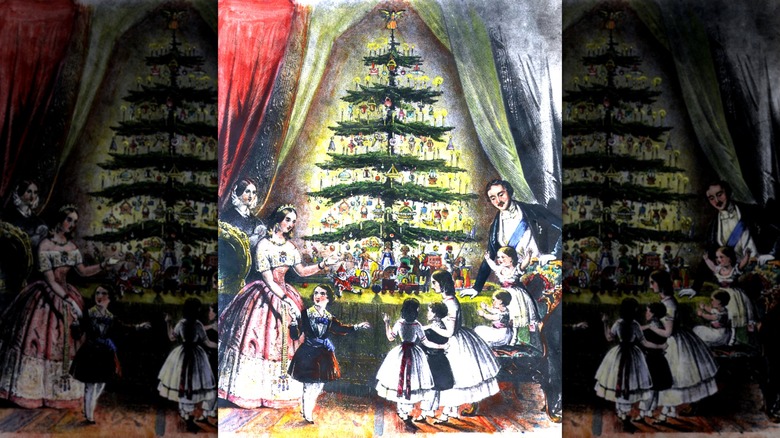
Before the mid-1800s, Christmas trees weren't really mainstream in America or England. They were more common in Germany and other parts of Europe. But then, in 1848, an engraving first shown in The Illustrated London News, was released and printed in newspapers across the world. It shows Queen Victoria, Prince Albert, and their many children gathered around a heavily decorated Christmas tree at Windsor Castle. The tree is festooned with real candles clipped to branches (hello beautiful fire hazard), sweets, fruit, and small toys. And, as people have always wanted to follow royal trends, the Christmas tree suddenly became an iconic holiday transition on both sides of the Atlantic.
If you love the idea of this iconic Victorian tree, you can bring some of these touches into your own home, but preferably without the real live candles. LED versions are much safer! To get the look, choose a small, upright tree. If you're a stickler for tradition, go for a real tree. Place it on a table draped in festive fabric or a colored sheet, so you can place gifts beneath. Then decorate with German-style glass ornaments and baubles, as well as candies, dried fruit, and small toys. And, on the table top, around the base of the tree, place your Nutcrackers, festive trains, and other holiday-themed plushies, wooden toys, and figures. This gives you romance, regality, history, and fun all in one small tree.
1900s: early 20th-century simplicity at home
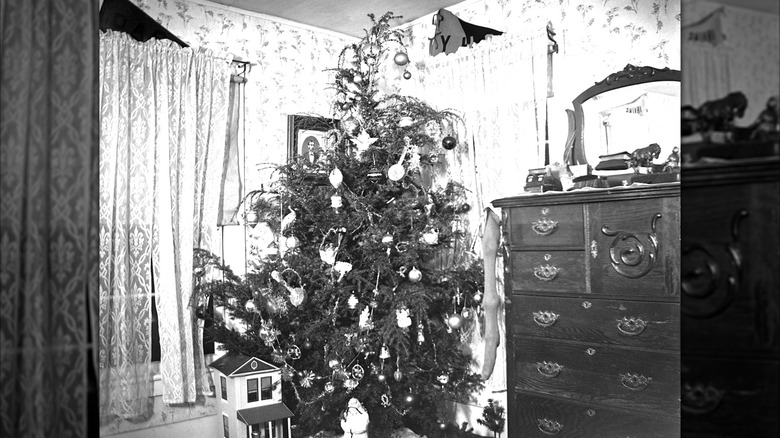
At the turn of the 20th century, the vast majority of people didn't have a lot of disposable income to spend on expensive decorations, and they weren't widely available, either, because they weren't mass-produced. So, while everyday people wanted to brighten their homes and still follow the royal and cultural tradition, they did it in their own, more affordable, way. Whatever they had to hand went on the tree. Pine cones, popcorn and cranberry garlands, fruit, nuts, and scrap paper chains would've dominated, probably along with some handmade ornaments from fabric or yarn scraps. The treasure would've been a few delicate glass ornaments put in pride of place and carefully looked after.
To channel that improvised, homely look, pick a smaller, natural-looking tree. Dress it up with handmade garlands, simple glass baubles, paper chains, handmade fabric stars, and other handmade festive motifs. Even those paper snowflakes you made when you were a kid. It gives a cozy, uneven, old-fashioned charm.
1930s: middle class Christmas trees start to enjoy affordable ornaments
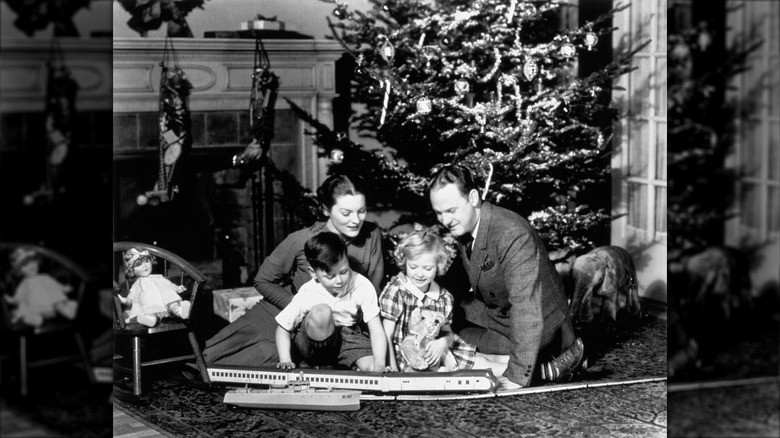
By the '30s, middle-class households could afford more festive decor for their tree. Mass-produced baubles, tinsel, and electric lights were more readily available and costs had come down. That meant more families were able to purchase decorations, but there were still a lot of handmade and make-do items, even in reasonably well-off middle-class homes. And the decor they did purchase was simple. It was also kept safe, treasured, and reused year after year. The '30s saw the introduction of the first commercially-available artificial trees, too. These were made of brush bristles and, while practical and trendy if you could afford them, didn't look terribly realistic.
To capture this antique style, go for simple glass-style baubles on a small-to-medium tree. Use tinsel in moderation and add some vintage-style festive toys, along with a few strands of string lights. Add your paper chains popcorn garlands and other handmade items to fill out the tree and keep it from looking sparse.
1940s: wartime Christmas trees with heavy tinsel and make-do magic
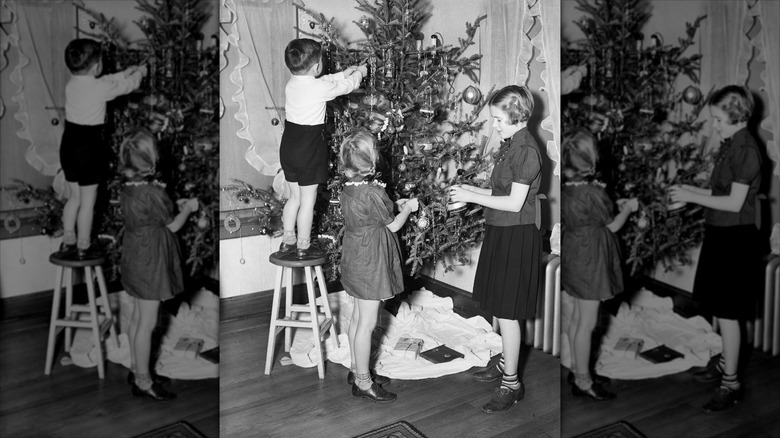
Even after the war ended in 1946, Christmas on the home front, both in England and America, was shaped by rationing and shortages. But with the true grit and determination so ingrained in both nations, we carried on. Families made do with what they had. They brought out those carefully wrapped Christmas keepsakes and hung them with pride, and added tinsel that had probably seen better days. Some homes could afford to use electric string lights, lametta (individual, unattached piece of tinsel), and other higher-end pieces they had from previous generations, and many got creative with whatever spare materials they had on hand.
If you want to echo that mood of hopeful homemade wartime spirit, get your tinsel on. That shiny stuff was a great way to hide gaps in the tree. And remember to go for a less full real tree — one with wider-spaced branches for a true '40s look. Mass-produced baubles that regular folks could afford were still comparatively plain and simple, so remember that when choosing yours. Warm white lights, but the safer, cheaper-to-run LED, type rather than the traditional period screw-in bulbs, and modest, festive ornaments really set the tone.
1950s: post-war era with tinsel, toys, and Shiny Brite
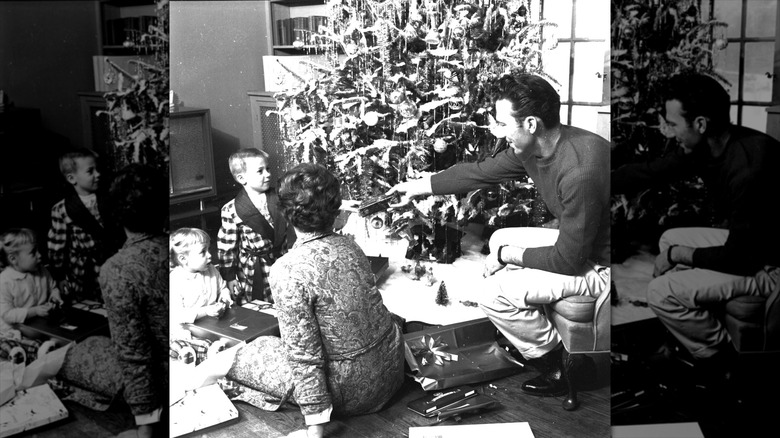
By the '50s, people were starting to recover from wartime austerity. Industry and mass-production was booming, and more could afford more things. Complex and ornate decor had been out of reach for most people until now. Shiny Brite ornament was all the rage: bold, bright, sparkly baubles with fabulous inlays and colors that twinkled in the warmth of the electric string lights. A classic middle America mid-century family tree was wonderfully gaudy, often fake, and dense with tinsel, lametta, colorful ornaments, toys, and baubles.
To recapture that '50s flavor, as people moved away from austerity, be bold and colorful. And, if you can, find yourself some real original Shiny Brites. If you're lucky enough, you'll find them at thrift stores, often in someone's old Christmas mix. That's where I've found all of mine, as they can be very pricey elsewhere. The value of vintage Christmas decor items is really surprising, and the treasure hunt is fun! Go with a mid-size, fairly dense tree and then decorate it with colorful lights, baubles, an abundance of tinsel, and plenty of lametta.
1960s: monochrome plastic-flocked Christmas trees become all the rage
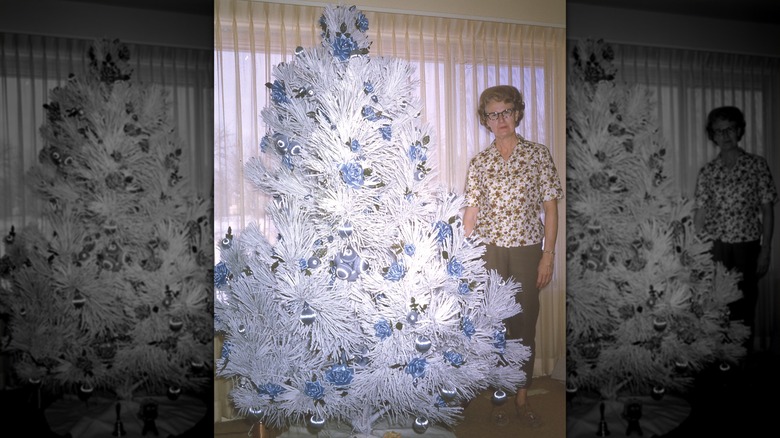
After the post-war frenzy of color and light, Christmas trees of the '60s leaned more toward tight color schemes, often monochrome. Plastic fantastic was all the rage. Heavily snowed or completely white plastic trees that were open and had comparatively few branches were trendy, as were one-color baubles or themes. I have pictures of my parent's 60s Christmas decor, and it was very much tightly themed and single or dual-colored. Very much a "less is more" vibe. The '60s was also the prime decade for the infamous aluminum Christmas tree, usually silver, sometimes gold or pink, but always bizarrely metallic. If you find one of those at a yard sale or thrifting, grab it. Even if you think it's not really very Christmasy, those things are worth a bundle.
If you want to get a totally retro swinging '60s vibe, think minimalist plastic and metallic. If you can find an original aluminum tree, use it. This is a great way to bring instant vintage Christmas decor to your holiday display. Dress it with single-color baubles or ornaments. You can even add warm white lights to soften it a bit without detracting from the quirky '60s Christmas tree feel. Or go for a "snowed" tree with an open structure. Put your tinsel, lametta, and multicolored lights away.
1970s: layered, colorful, and homey
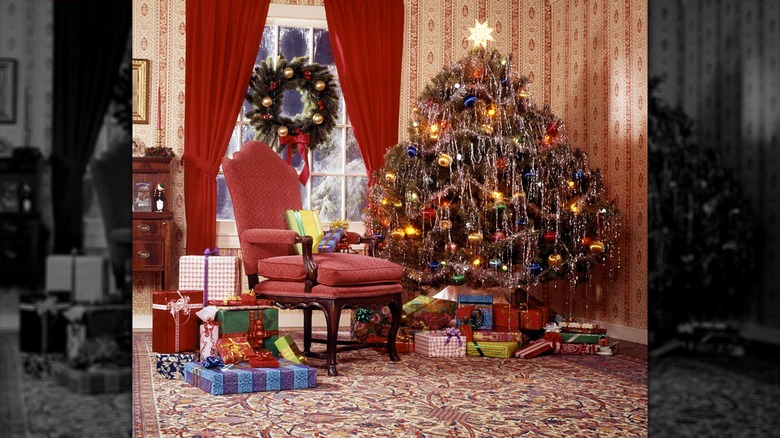
The '70s ditched the minimalist look and went right to maximalist with no in-between. A riot of color was back in a big way, as was masses of tinsel. Trees were busy and bursting with a mix of old school glass baubles and new novelty decor. I still have some of those weird spun silk baubles from this period, covered in gold, blue, red, or green threads that gave them an odd, soft, satin-like feel. Plastic ornaments and foiled glass novelty ornaments were increasingly popular. New shapes, like cartoon characters, vehicles, flowers, and birds made a big entrance. This decade blended tradition with the space age vibes.
For a fabulous '70s look, go for a fairly dense tree, get some big, obnoxiously colorful baubles. Bonus points if you can find those original spun silk ones I mentioned above! I almost forgot the weird little disco-ball baubles and the adorable glittery Santas that came in all different colors. No '70s tree would be complete without those little dudes. And lots of colorful lights, plus tinsel. And lots and lots of lametta.
1980s: full-on maximalist glitter and color
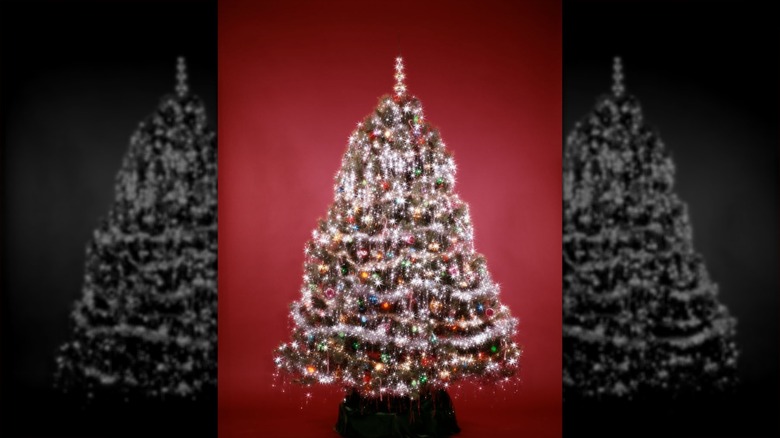
The '80s took the maximalism of the '70s and added a whole new layer of extraness to the Christmas tree. So much color and so much ... stuff! Trees were crammed full with bright lights and shiny tinsel. Ornaments were a mix of funky new themes and cherished memory pieces. Trees definitely still had plenty of traditional baubles, but there was a much stronger lean toward character ornaments, and not just creepy Santas (although they were absolutely a big thing, too). But pop culture was coming into its own in the '80s, and that was reflected in Christmas tree ornaments. Looney Toons and Disney, for example, were and still are incredibly popular Christmas tree decorations. I still have a flocked Pluto ornament that's a little worse for wear now, as he's around 40 years old and he's developed a few bald spots, but I adore him, and every year he sits on my tree.
My tree is still very much an '80s tree. And I love the go big or go home vibe of our family tree. Lights, tinsel, ornaments; stuff everywhere; and nothing matches. Everything is special, and the whole thing just screams Christmas. A tradition in our house that still exists today is that everyone has to buy or make one new thing for the Christmas tree every year. So almost everything on our tree has meaning and special memories. To bring that Christmas energy into your home, let go of your inhibitions, break the rules, and let your festive spirit run wild. Use every last gaudy bauble you can find. Break out the creepy plastic Santas and the cuter glittery ones. Add as many colorful lights as you can, then drape the whole thing in masses of shiny tinsel. Now step back and gaze in wonder at your '80s festive monstrosity that is everything a Christmas tree should be!
1990s: monochrome palettes and artificial trees

Artificial Christmas trees were all the rage in the '90s. They'd become more realistic and convenient, as well as more affordable. Trees from this era broke down into smaller pieces and the branches were often hinged, so for many households, an artificial tree just made sense. Pre-lit trees also become more common. '90s Christmas tree decor swung hard back from the '80s colorful maximalism toward monochrome or very tight color palettes. My aunt went hardcore into this trend for much of the '90s. I remember her tree and baubles all being the same icy blue-silver tone. At some point during this decade, she switched to a more traditional green tree, but every ornament was blue or silver. This decade wasn't as minimalist as the stark, bare silhouettes of '60's trees, but the monochrome was very popular and distinctive.
To get the '90s look, there are two options. You can go full monochrome with a colored tree that matches the color of your baubles. Alternatively, get a green, artificial tree, preferably a pre-lit one. Stick to a narrow color palette. Ice blue and silver were very popular, if not terribly festive, options. Matching bauble sets with some repeated shapes, like stars or icicles, also reinforce the late 20th-century style.
2000s: noughties trees were oversized and highly decorated
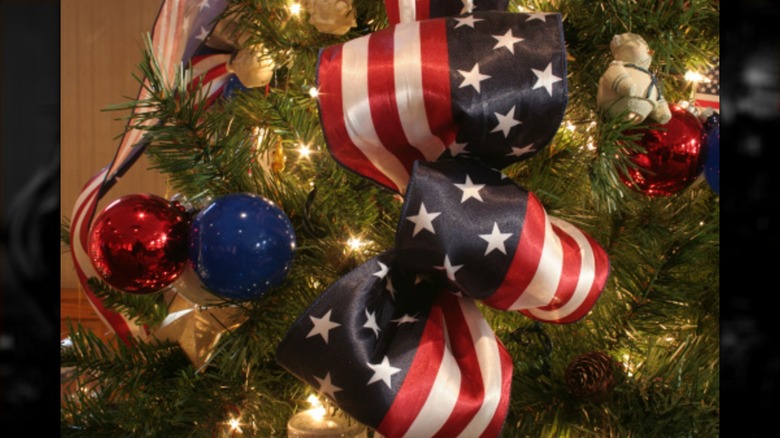
With the millennium came the bigger trees. Much bigger. Oversized real trees were the norm. Many homes went for the biggest trees they could squeeze in, in the 7 to 9-foot range. Christmas trees in the naughties were statement pieces, covered in lights and mixed, oversized ornaments. There was plenty of tinsel, lights, and metallic accents. Big bows made a big showing, as did loose themes, like patriotic pride or red, gold, and silver decor. The oversized statement trees of this decade were a little freer in their coloring and styling than the previous decade, but not as chaotic as the trees of the '70s and '80s.
If you're nostalgic for Christmases of the turn of the 21st century, choose the biggest tree your home can manage, without anyone getting lost in the branches. If you want a live Christmas tree, know what to look for and how to care for it. A good tip here is to get a flat-sided Christmas tree so you can look like you've got a big statement tree, without it taking up quite so much space, as the back is flat and sits nicely against the wall. Choose a mix of big statement ornaments, like large red-and-gold bows, and repeat them strategically around the tree, then add in your sentimental, whimsical, and glittery ones. Layer on lights and garlands, but go easy on tinsel and forget the lametta.
2010s: mixed-media, layers, and a cozy vibe
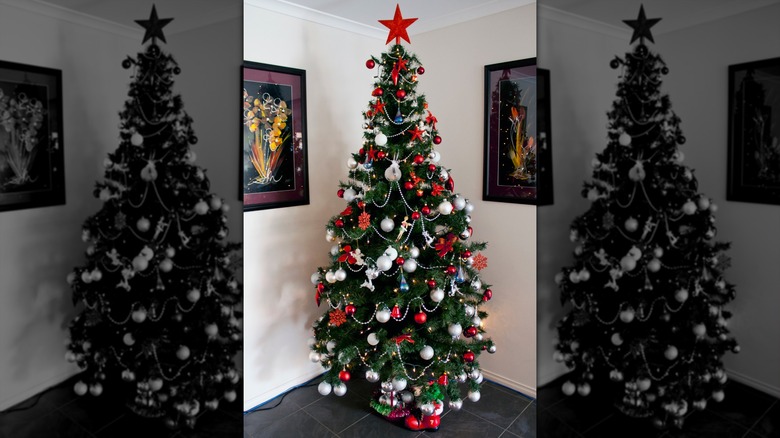
By the 2010s, Christmas trees had mostly reverted back to sensible sizes. Trends saw both artificial and real trees adorned with an interesting mix of baubles, whimsical decorations, cherished family decorations, and garlands, lights, and bead strands. Tinsel (and lametta) had pretty much fallen out of fashion for tree decor. Bold toppers, sometimes light-up ones, were popular, as were blinking, dancing, racing, musical lights. I'm not sure how many people actually left their lights playing festive carols after the initial 10 minutes of novelty wore off and annoyance set in, though.
Depending on your living space, choose a 6 to 8 foot tree, leaving plenty of room for a substantial topper. Choose a couple of dominant colors, like red and gold or blue and silver, to set a subtle theme, and fill the rest of the tree with your favorite ornament mix. Carry the color scheme through with the beads and garlands, but keep it soft, not overpowering. You can offset the dominant colors a little with fun, colorful, twinkling lights.
2020s: modern family trees with a solid, colorful mix and casual warmth

Modern tree trends for most families tend to be a real mix and very personalized. There's fewer bead garlands and tinsel, but still plenty of colorful lights. Ornaments are personal and comforting, and there's a move back toward handmade awesomeness, with lots of crafters making their wonderful creations available online. And, of course, plenty of folks, myself included, making their own. This year, I've been playing with felt Christmas decor and beaded ornaments. Last year, I made a bunch of crocheted baubles. You'll also find plenty of vintage ornaments, from those spun-silk baubles I mentioned earlier, to Shiny Brites and glittery Santas.
To capture the visual scrapbook look of the 2020s, deliberately mismatch. Choose decorations that please you. Don't worry too much about a theme, and avoid excessive tinsel or garlands, so you don't hide the cozy beauty of your family-oriented Christmas tree. Go for warm white or softly colored lights, and choose ornaments of different sizes, colors, and textures to give your tree layered interest. And, most importantly embrace and enjoy some fabulous nostalgic Christmas decor.