

16 Miniature Tools That Are Worth Having Around The House
We may receive a commission on purchases made from links.
Who doesn't love miniature stuff? We certainly do, but we especially love it when its tiny and functional. Like, let's say, fun-sized tool sets. Sure, they sound cool, but could they actually be worth buying? As it turns out, the answer is yes.
Because, sometimes, you just don't need that big belt sander for a table corner or your hammer is just too big to fit under the couch, but you've got to secure baseboards and wood flooring before they become a hazard. It's time to combine the best of both worlds and meld mini form with useful function. That's why we're rounding up 16 amazing tiny tools that are actually helpful to have around the house. We'll dive into why it's so helpful when its shrunken in size, plus give you a few ideas for where and how to use them. So, grab a tiny tool belt and your wallet, because it's time to go shopping.
Mini table vises can hold small stuff that needs fixing
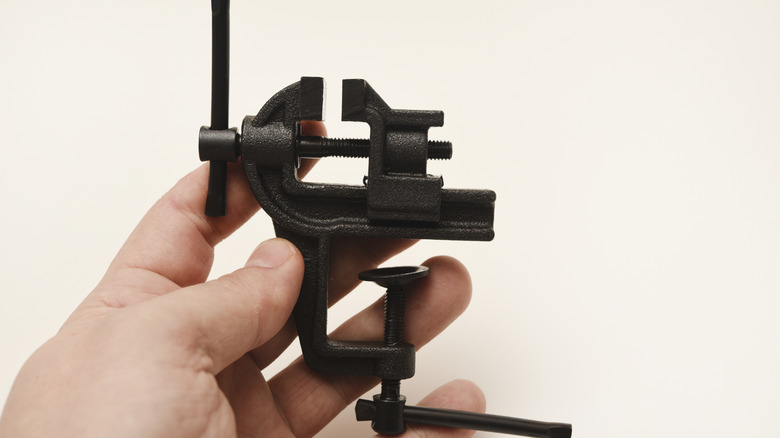
If you've ever been in a woodworking or mechanic's workshop, then you've probably seen a honking piece of metal on their work table that looks like some kind of medieval torture device. These are vises and have been around since the 1830s, and they're really helpful for when you need both hands to work on a project, but also need to keep said project in place. Vises are incredibly helpful, but, let's face it, pretty impractical for us non-professionals. Luckily, there are now mini table vises like this Sourcemall Mini Bench Vise Table Clamp, which uses padded jaws to grip delicate items without damaging surfaces. We like them because they're so much more compact — usually around 2 to 4 inches — as compared to a full-sized workshop vise, so you can easily stash them in a drawer until you're ready to use it.
These vises shine when full size ones are overkill, but precision is still key, like securing small picture frames for gluing, holding dollhouse furniture steady while painting, or clamping thin trim for sanding. They are lifesavers for eyeglass or toy repairs where your hands alone won't provide enough stability. Mount one to your countertop edge or even a shelf corner, and you'll wonder how you managed intricate tasks without it.
Mini levels are great for hanging pictures or shelves
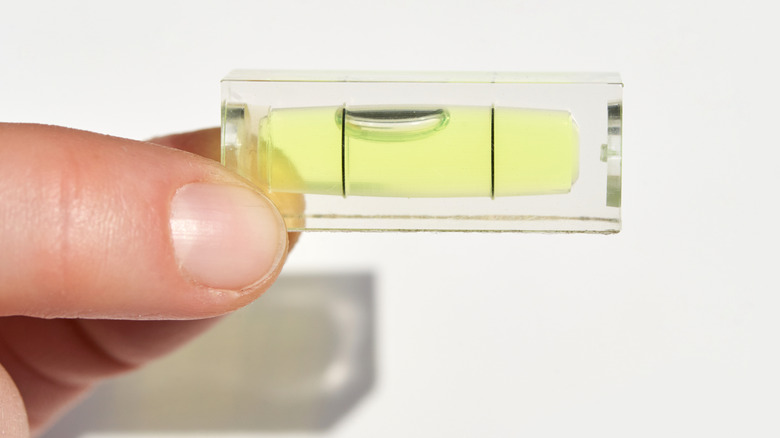
If you've ever hung a picture frame only to step back and realize it's crooked and will soon be the only thing you can notice, then you know the pain of eyeballing it. Mini levels, also known as spirit levels, solve that problem in the tiniest package possible. These pocket-sized tools have the same bubble vials as their full-size cousins, but fit in your pocket or kitchen junk drawer. The original, full-size version goes all the way back to 1661, but the mini versions like these SIZIKJXGHWYI Small Bubble Levels, in our opinion, are so much more practical for DIYers who needed precision without the bulk.
These little guys are perfect for hanging pictures, shelves, or even ensuring your cabinet doors close evenly. Slide one onto the frame edge before nailing, and you'll get perfectly level results every time. They're also lifesavers for aligning drawer pulls, checking table legs, or making sure your DIY holiday shelf is straight.
You'll be surprised at how often you'll use a mini tape measure
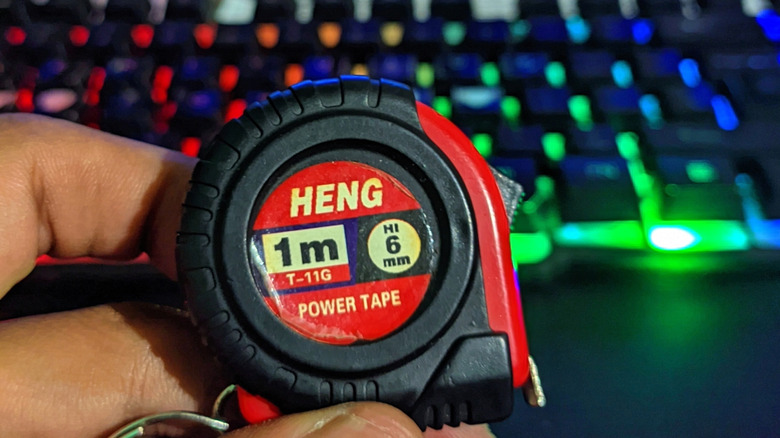
Tape measures have been household heroes since the late 1800s when Alvin Fellows patented the spring-loaded retractable version, but the mini ones take portability to a whole new level. These keychain-sized wonders, like DURATECH's Retractible Keychain Tape Measure, can pack 6 feet of tape or more into something that clips to your keys or fits in a pocket. The locking blade and bright markings make them dead simple to read, and the auto-retract never gets stuck. We really like DURATECH's version because it also includes a place where you can write measurements on its side — brilliant!
Full-size tape measures are great for big projects, but these minis get pulled out constantly for everyday wins like measuring drawer space for organizers, checking if that picture frame fits above the couch, or seeing if your new throw rug will cover the floor gap. They're perfect for recipe substitutions (is that casserole dish really 9 inches by 13 inches?), hemming pants, or even wrapping gifts when you need exact ribbon lengths. Keep one on your fridge or in the junk drawer, and you'll find yourself reaching for it way more than you'd expect.
A keychain multitool goes everywhere and is so versatile
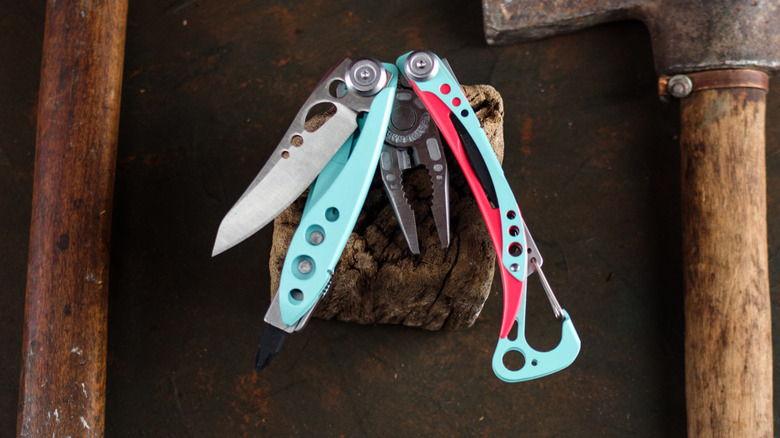
The original Swiss Army knife was created in 1891 and since then has adapted to different sizes, more tools, and has become the blueprint for modern multitools. In the 1970s, Tim Leatherman created his prototype version that took the concept mainstream, receiving his patent in 1983. Since then, Leatherman's highly rated tools keep diversifying, and keychain versions like the Leatherman Micra shrink versatility down to something smaller than a tube of lip balm, while still including a variety of tools like tweezers, scissors, knives, saws, toothpicks, and more.
The beauty is their constant accessibility: Clip one to your keys and it's always there for splitting packages, tightening loose cabinet knobs, pulling out splinters, or opening bottles at a picnic. They're lifesavers for quick fixes like adjusting eyeglass frames on the go, trimming loose threads, or even measuring small spaces. One multitool handles 10 different jobs that pop up daily around the house.
Stop looking for those hex keys and pick up a small folding wrench set
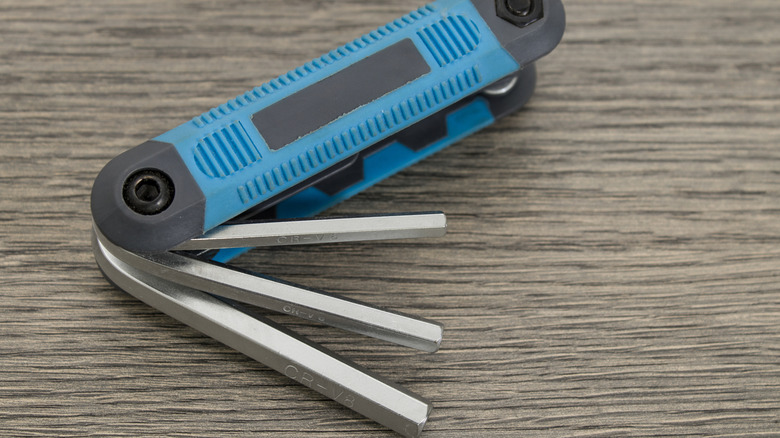
Hex keys, also called Allen wrenches, have been around since the early 1900s, when W.G. Allen created the first hexagonal head screws as a safer alternative to screws with protruding heads, which often caught his worker's clothing. While they're definitely a type of wrench homeowners must have (though you should stop using it to assemble IKEA furniture), digging through a jumbled drawer of 15 loose Allen wrenches is nobody's idea of fun. Small folding wrench sets, like SMALLRIG's Folding Tool Set with Screwdrivers and Hex Key Wrenches, solve that problem by packing multiple sizes into one compact, pocket-friendly tool that flips open like a pocketknife. These minis typically cover the most common sizes from 1 to 10 millimeters, with a handle that gives you better leverage than individual loose keys.
These sets shine for quick fixes around the house like tightening loose furniture bolts, adjusting bike seats or pedals, or assembling flat-pack shelving without hunting for the right size. They're perfect for tightening cabinet hardware or even adjusting your standing desk. The folding design keeps everything organized in your pocket or junk drawer, so you're never caught without the right size when an Allen screw decides to loosen up.
A pocket-sized ratchet set is awesome for assembling furniture
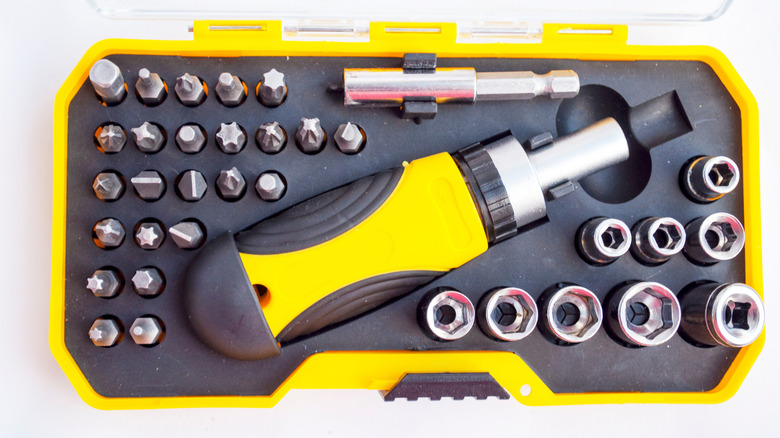
Ratchet wrenches have been workshop favorites since the 1800s, letting you turn nuts and bolts in tight spaces without removing the tool each time. Pocket-sized versions, like TUXIYA's 36-Tooth Mini Ratchet Wrench Set, shrink that genius down to something that fits in your palm, typically including multiple socket sizes from 1/4 inch to 1/2 inch drive, plus extensions and adapters. These minis give you pro-level torque in furniture assembly, without the bulk of a full ratchet set.
IKEA project builds, crib assembly, or tightening loose bed frame bolts become a breeze when you don't have to fumble with individual wrenches. The quick-change mechanism and reversible ratcheting mean you can tighten or loosen without repositioning, perfect for awkward angles under desks or behind dressers. Add it to your DIY household tool kit and flat-pack furniture frustration drops to zero.
You'll be glad you have a telescoping pickup tool when something falls behind the couch
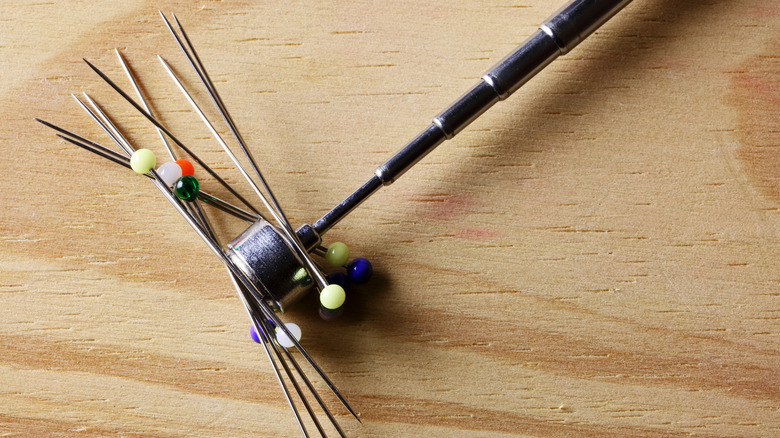
We've all been there: the remote vanishes behind the couch, a screw rolls under the fridge, or your earring back disappears in the bathroom sink. And when we say "we've all been there" we mean it; reacher tools go all the way back to Benjamin Franklin's 1786 "long arm" creation, which he used to grab books from high shelves. Today's versions, like SUNIYORS' Magnetic Telescoping Pick-Up Tool with Pocket Clip, have slim wands that can extend from 6 to 24 inches with a powerful magnet on the tip that grabs screws, nails, paperclips, or even remote batteries from impossible spots.
This tool eliminates the contortionist routine of fishing with a coat hanger or broom handle. It works on any ferrous metal item, so it's perfect for retrieving lost jewelry parts, hardware from appliances, or even that one random coin banging around the dryer vent. Keep one in the kitchen and another in the laundry room, then thank us later.
A mini claw hammer goes with you anywhere
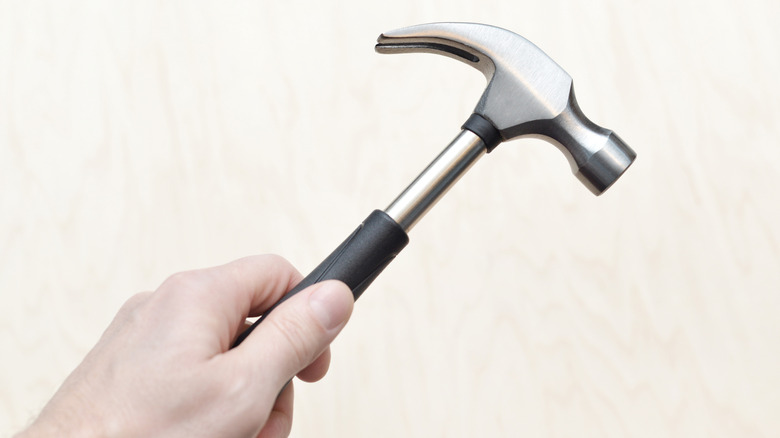
The claw hammer is one of the world's oldest tools, dating back to Ancient Rome. The version we know was created in 1840 by blacksmith David Maydole, but mini versions, like ALLWIN's Small Claw Hammer, take that classic design and shrink it down to something that fits in your pocket or glove box. These tiny tack hammers, usually 4 to 8 inches long, have the same ripping claw and striking head as their full-size brothers, but weigh only a few ounces. Perfect for light-duty work where swinging a full pound hammer would be overkill or awkward.
These minis shine for tacking up small pictures with finishing nails, pulling staples from baseboards, or prying open paint cans without denting the rim. They're lifesavers for tightening picture frame backs, removing old shelf brackets, or light furniture repairs in tight spaces. Keep one in the kitchen drawer for those "quick, nail it in place" moments, and you'll be surprised how often it gets pulled out for jobs that are too small for the big hammer.
Keep a mini handheld vacuum for coffee grounds or car crumbs
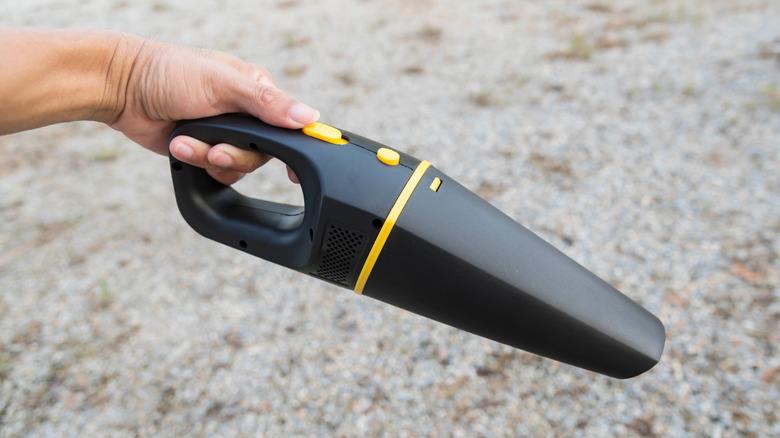
The first handheld vacuums came onto the scene in the 1970s and felt like a godsend. No more cords or heavy canisters — how could life get any better? Enter the mini version. Mini handheld vacuums, like A9life's Cordless Handheld Vacuum usually powered by rechargeable batteries, and have powerful suction in a body no bigger than a TV remote, with attachments for crevices and brushes for upholstery.
They're perfect for quick cleanups where dragging out the big vacuum feels ridiculous, like when coffee grounds get scattered on the counter, crumbs crawl into the car seat crevice, or pet hair commandeers the couch cushions. But these minis also shine for keyboard cleanups, bathroom sink debris, or sucking up glitter from craft projects before it migrates everywhere. Keep one charged in the kitchen drawer or glove box, and you'll reach for it constantly for those slightly-messy moments that would otherwise wait until cleaning day.
Keep a mini screwdriver set for small screws or glasses repair
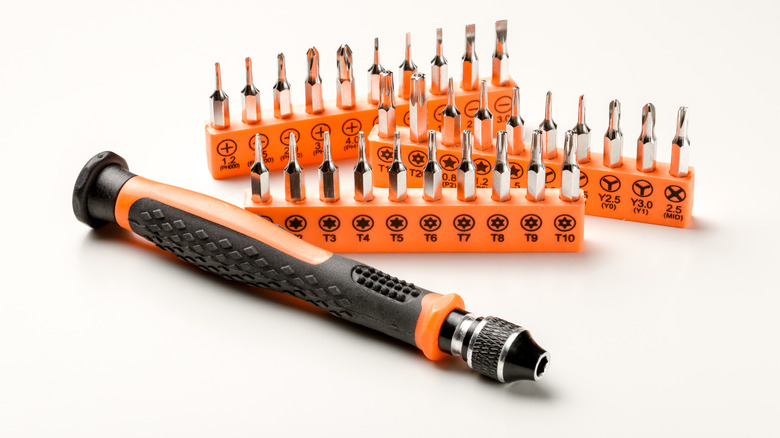
If you've ever worn eyeglasses, then you already know how valuable a mini screwdriver set can be. Mini screwdriver sets, like the JORSET 52-in-1 Precision Screwdriver Set, are a type of screwdriver that uses magnets, so quickly changing the bits is easy and the rotating handle makes tightening or loosening a breeze. The original version first came out in the 1980s and since then they've expanded into so many options, and even now include electric versions, like HOTO SNAPBLOQ's 3.7 Volt Mini Electric Screwdriver, which takes over the rotation for you and is really helpful for those who suffer from arthritis.
But sets like these aren't just useful for tightening eyeglass hinges, they're also helpful for simple jobs when a full-size screwdriver just isn't necessary. For small electronics with tiny screws, you'll be glad these small bits are around. And if you've got a watch aficionado in the family, these are handy for saving yourself a trip to the jeweler just for a battery replacement.
Mini rotary tools are great for small sanding jobs
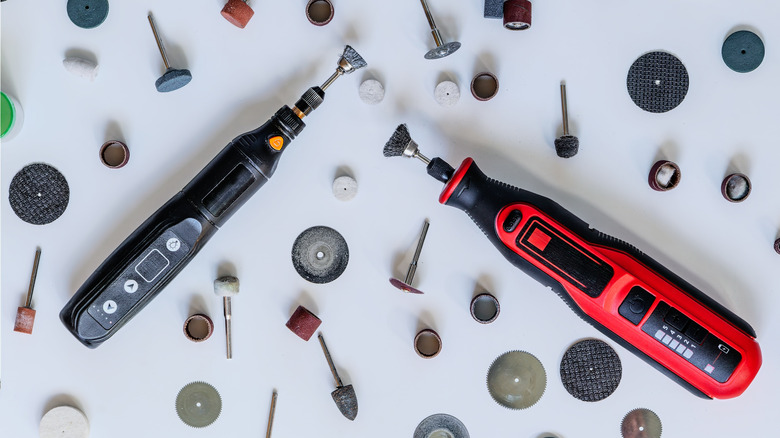
Albert J. Dremel created the original Dremel in 1932 and revolutionized small power tools, and mini rotary tools carry on that legacy for detail work. If you've ever tried to sand a tiny paint drip or smooth a rough edge in a tight corner, then you know a regular sander can feel like using a snowplow on a sidewalk. The best rotary tools on the market today instead use small, interchangeable bits that can sand, grind, carve, or polish, all while fitting comfortably in your hand. They are available in both corded, like the Dremel Stylo+ Craft Tool, or rechargeable and cordless versions, like HARDELL's Mini Cordless Rotary Tool.
Because they spin at high speeds and have petite attachments, they give you a lot more control on delicate surfaces than full-size sanders ever could. They work best for sanding chair rungs, picture frames, toy repairs, or detailed trim where you only need to knock down a rough patch. Or, you can swap in a fine-grit sanding drum to smooth wooden edges, clean up dried glue blobs, or prep tiny spots for paint touch-ups.
Keep a compact cordless cutting tool around for quick cuts
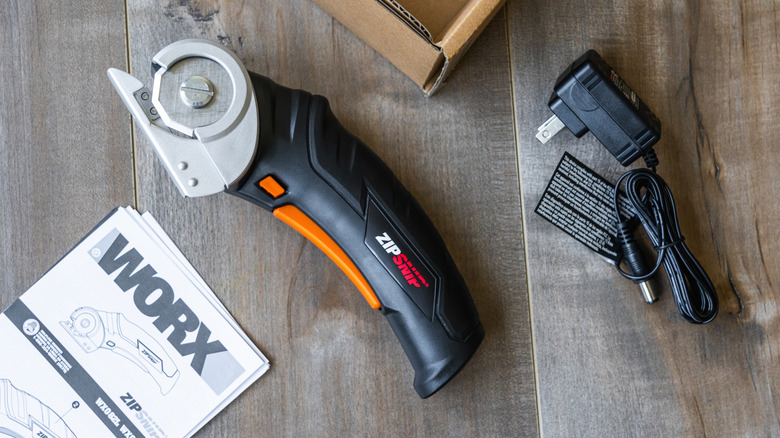
Compact cordless cutting tools, often called electric scissors, cardboard cutters, or power shears, give you precision trimming without the hassle of manual snips. These battery-powered wonders, like the WORX Zipsnip Cordless Electric Scissors, are popular with crafters and DIYers, because they slice through fabric, thin metal, plastic, or small branches with motorized blades that make clean, effortless cuts. Unlike bulky full-size shears, they fit in your hand and charge via USB for on-the-go use.
They're perfect for trimming downspouts, cutting smaller branches for holiday decor, or breaking down giant cardboard boxes. Use them to shorten window shades, trim zip ties in bulk, or notch thin wood trim for corners. If you plan to use it a lot (you will, believe us), we recommend picking up a pack of AUTOTOOLHOME Replacement Rotary Blades, too, as you'll go through the original one faster than you think.
Pocket flashlights fit anywhere and are so useful
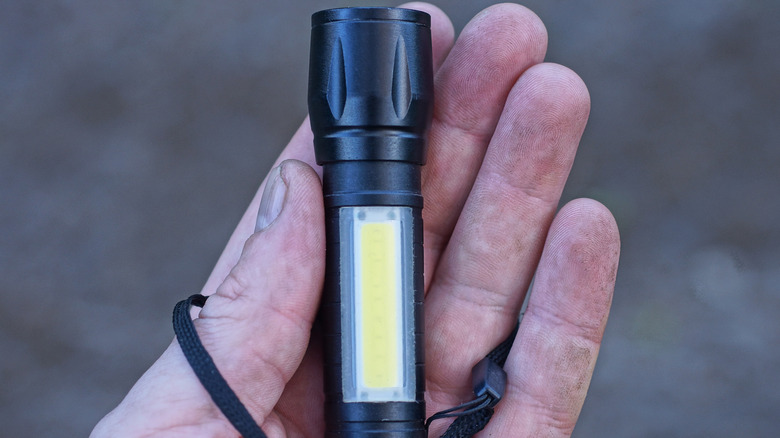
Pocket flashlights pack powerful LED beams into something that clips to your keys or fits in a pocket, and LED options came onto the scene in 1999 and made brightness-to-size ratios explode. BESTUN'S 2 Pack Flashlights with 5 Modes and other palm-sized lights blast 100 to 500 lumens when fully charged, which is the equivalent of many expensive, full-size torches. The adjustable focus and multiple modes (high, low, strobe) make them versatile for any dark spot.
They're lifesavers for peering behind the dryer for lost socks, checking fuses in a dim panel, or reading appliance manuals under the sink. Use them for nighttime garage searches, inspecting dark kitchen cabinets, or even signaling in power outages. We like having one in the car glove box, too, just in case.
Mini power banks rock for quick phone charging
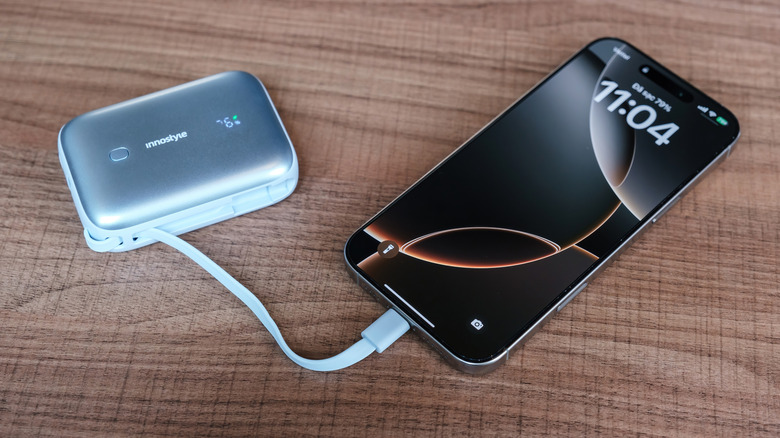
Battery packs have been around for a while, but mini power banks are more recent, and we're so thankful they're here. In 2016, inventor Liu Xinfang received a patent for his "mobile power bank" design that packed portable charging into a compact, easy-to-carry device. Since then, these tiny chargers have become everyday essentials for anyone with a smartphone, tablet, or wireless earbuds. Banks like the INIU Mini Portable Charger work by using lithium polymer batteries to deliver one to two full phone charges without bulk, with USB-C or Lightning outputs for universal compatibility. Most recharge via USB in a couple hours and have LED indicators to show the remaining juice.
They're perfect for topping off your phone during holiday shopping marathons, keeping kids' tablets alive on car trips, or saving the day when you're navigating with low battery. Toss one in your purse for restaurant waits or keep it bedside for alarm clock emergencies. Suddenly dead phones become a non-issue, and you're always connected when it counts.
Small utility knives make great box cutters
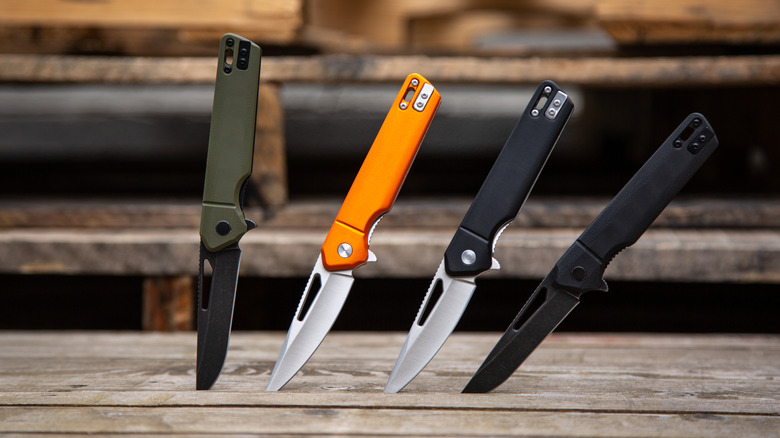
Penknives started out in the 1800s as small folding blades used to sharpen quill pens, but Amazon Basics' Folding Utility Knife and other modern utility versions take that same compact idea and turn them into everyday box-opening heroes. Today's small utility knives, which also go by the term "box cutters," tuck a razor-sharp blade into a slim, lightweight handle that fits in your hand or pocket without feeling bulky. Many, like the ones with retractable or snap-off blades, let you safely stow the edge when not in use and replace it cheaply once it dulls.
They are perfect for slicing through packing tape, breaking down cardboard boxes, trimming labels, or opening those impossible plastic clamshell packages. You can also use them for light craft work, cutting twine, or scoring drywall and contact paper. Every delivery, return, or lost scissors moment suddenly becomes a quick, easy slice instead of a wrestling match.
Finish messy caulking jobs with a compact finishing tool and grout scraper
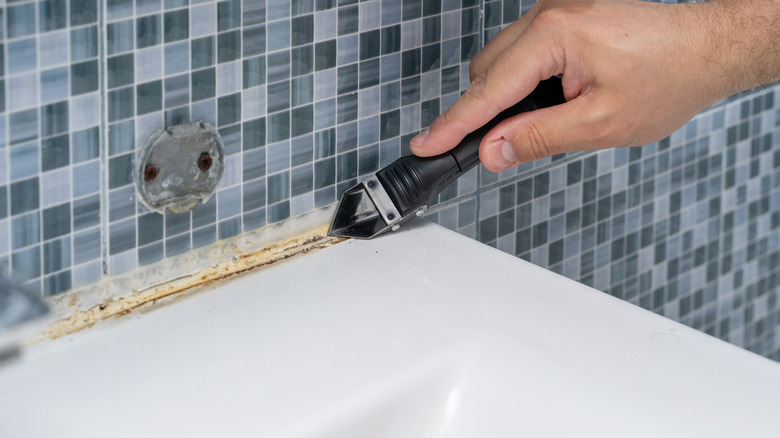
Caulking finishing tools have been smoothing out gaps since the 1950s when silicone sealants became popular, but compact versions make the job way less frustrating for DIYers. Palm-sized wonders, like the Saker Silicone Caulking Tools 3 in 1 Sealant Finishing Tool, combine a flexible blade for smoothing caulk lines with a scraper edge for grout cleanup, all in one ergonomic handle. The blade flexes just right to create perfect, professional-looking finishes without leaving ridges or gaps, and the scraper edge pops off old caulk or grout without gouging your surfaces.
Start by using the scraper edge to lift and peel away old, crusty sealant or excess grout so the surface is as clean and smooth as possible. Once the joint is cleared and wiped down, flip to the flexible smoothing edge to apply and shape a fresh bead of caulk, giving you that neat, professional look without using your finger or a roll of paper towels. They're lifesavers for bathtub resealing, window trim touch-ups, or countertop gaps where a full-size caulk gun feels clumsy.