

The Placement Mistake That Is Shortening The Lifespan Of Your Poinsettia Plant
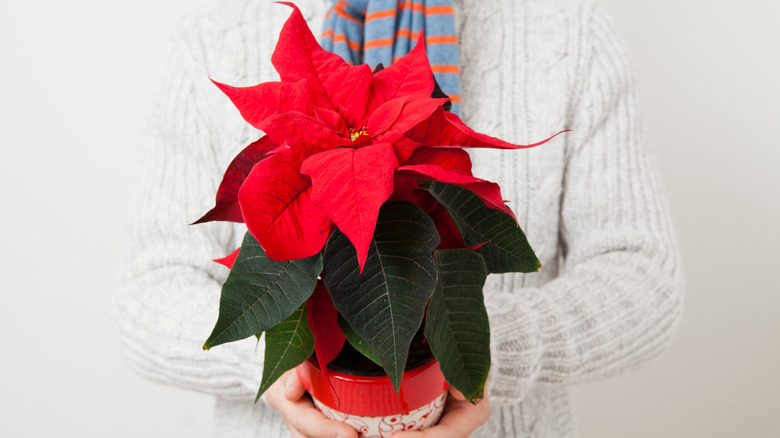
Aside from Christmas trees and wreaths, poinsettias (Euphorbia pulcherrima) are botanically synonymous with the holiday season for many people. It's common to see these potted plants adorn nurseries and supermarkets alike during this time of the year. You might have even picked up a couple of your own poinsettias to bring some holiday cheer to your home. Despite their ubiquity, though, there are many important things to know before growing poinsettias. While the plant is arguably an integral part of holiday decorations, you cannot simply leave it in any area of your home. One common mistake is to place a poinsettia in an area that's too cold for the warm-temperature-loving plant.
Not only are poinsettias gorgeous additions to holiday décor, but they also have a rich history with the Christmas holiday dating back to the 17th century, when priests started using the stunning plant in their festive processions. It's also such historical links that have possibly created the misconception that the poinsettia is a cold-tolerant plant. While their natural peak blooming times coincide with the Christmas season, poinsettias are actually tropical plants native to Mexico that have a significant aversion to the cold. This might not be much to worry about if you live in a warmer, more temperate climate. However, it can spell trouble for your poinsettia's longevity if you reside in a cooler region.
Poinsettias will suffer from cold-induced injuries when they're placed in temperatures that drop below 50 to 55 degrees Fahrenheit. Some key signs a poinsettia is damaged from the cold include blackened or missing leaves as well as discoloration of its normally vibrant bracts. Unfortunately, permanent damage can occur within moments if the plant is exposed to freezing temperatures.
How to protect your poinsettias from cold temperatures
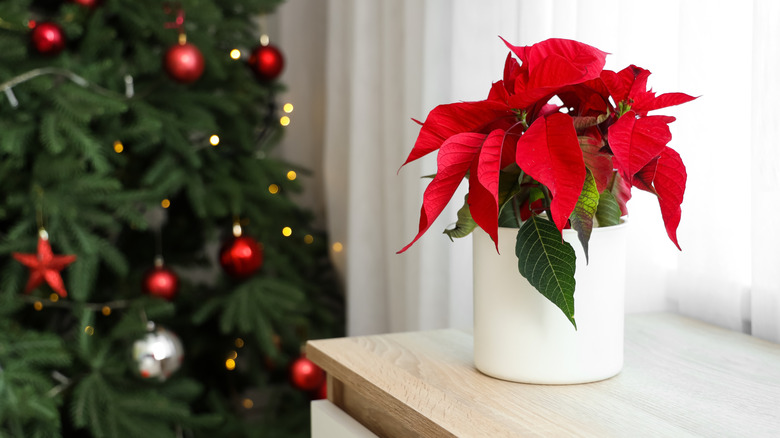
Poinsettias are commonly kept in planters indoors over the holidays. If this is your situation, it's important to make sure you keep tabs on your thermostat to ensure it's not too cold for this tropical plant to thrive. Overall, these plants do best when temperatures are kept between 60 and 70 degrees. At the same time, you don't want to place them in spaces that exceed 75 degrees, as this can also damage them. Keep your poinsettias away from air vents, as any drafts may shorten their survival time. Feel free to place the plants in a sunny location for some warmth, but refrain from allowing them to touch a cold window directly.
Generally speaking, poinsettias are best as indoor plants until the last frost has passed in your area. They're only considered hardy in USDA zones 9 through 11. If you have some poinsettias outdoors already, bring them inside during cold days and nights that drop below 55 degrees Fahrenheit. For in-ground poinsettias or those in large containers that cannot easily be moved, be sure to cover them with frost cloths to protect them from cold winter temperatures. Ensuring you follow these steps may increase the odds that your poinsettia survives after Christmas. In fact, it's very possible that a well-cared-for poinsettia can make it to spring and beyond — even into the next holiday season.