

The Plant You Should Start In Late Winter For Healthy Soil Next Season
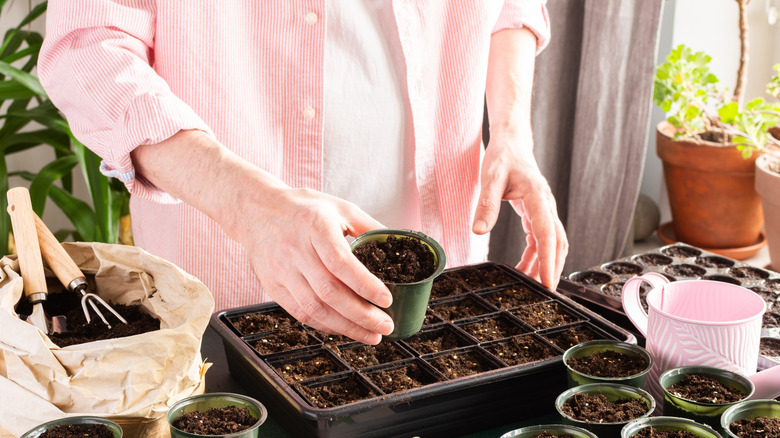
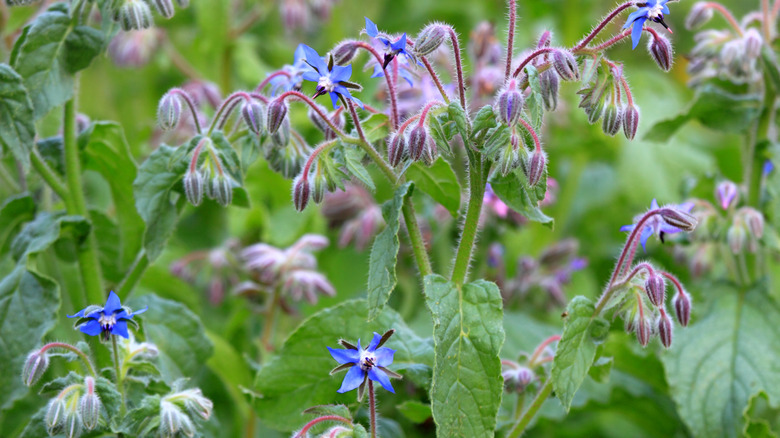
What if we told you that you can start seeds indoors in late winter for a plant that will be poised and ready to improve your soil in the coming season in two ways? Not only that, but the mature plant is gorgeous and will draw pollinators to your yard. It even self-seeds profusely, so you may not ever have to plant it again.
The plant you should start in late winter for healthy soil next season is borage (Borago officinalis), an annual flowering plant with two remarkable soil-improvement capabilities. First, borage's long taproot breaks up the soil as it descends deeply into the ground, thereby aerating the soil and boosting soil drainage. Secondly, borage is what's known as a "nutrient accumulator," also known as "dynamic accumulator," that extracts nutrients and minerals from the soil, stores them in its leaves, and then releases those goodies, including nitrogen, back into the soil when the plants later decompose. Sometimes the borage plants are first chopped up or tilled in so they decompose faster. Let's look at the best way to start seeds indoors.
Start borage indoors for soil benefits later in the garden
Sow your borage seeds indoors 6 to 8 weeks before the expected last spring frost date. Use a seed-starting mix and seed trays with deep cells to accommodate borage's taproot. Seeds should be planted 1/4 to 1/2 inch deep, placing two seeds in each cell. Maintain consistent moisture in the cells under grow lights. Seeds will germinate quickly — in just 7 to14 days. After the last frost, harden off the seedlings to get them ready to transplant.
Here's where a big caveat on borage comes in. Borage has a reputation for being challenging to transplant, and you may even read that transplanting is not recommended. That magical but delicate taproot is the culprit that makes transplanting a bit dicey, and taproot damage can manifest itself as a stressed plant that fails to thrive. You can transplant borage as long as you are careful to avoid damaging the root system. Experienced gardeners say transplanting the seedlings when they are 2 to 6 inches tall may be the sweet spot to avoiding harm to the taproot. If seedlings are clumped together, don't disturb the roots by trying to separate them — simply cut the smaller seedling near the soil line to thin them out. Plant seedlings in virtually any kind of soil, as long as it's well-drained, 18 to 24 inches apart.