

Need To Improve Your Bathroom Quickly? One Quick Change Has A Big Impact
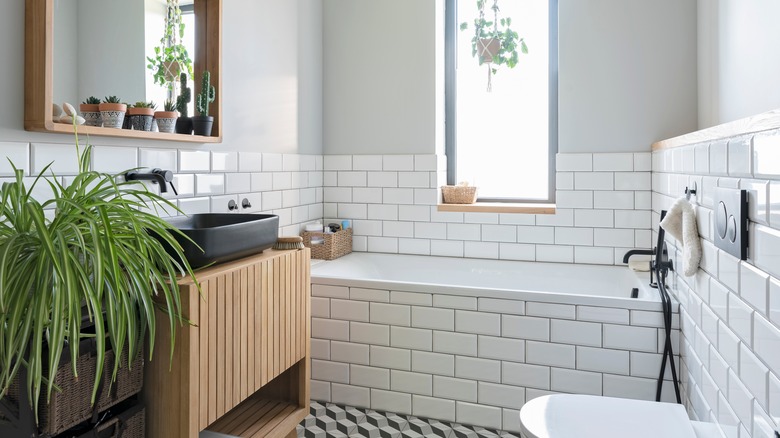
Out of every room in your home, bathrooms age in a very specific way. Usually, the tile still looks good, even clean, but it's in the grout that you can see the issues arising. Because it's porous, grout darkens and stains before anything else, which can make the whole place look older and in need of a refresh faster. Luckily, focusing on your grout, not the tiles, can be a really easy way to spruce up your bathroom.
And to do just that, grout colorant is a simple, paint-like product made specifically for grout lines. It's applied directly over existing grout and helps even out discoloration while also sealing the surface. It's the kind of bathroom upgrade that doesn't actually change anything in terms of layout, which is why it's appealing if everything is technically fine but could do with a facelift. Once the grout has dried, the whole place will look much more consistent and fresh, and that alone can make the bathroom feel cleaner without actually having to do much else. You can keep it simple, or you can research some eye-catching tile and grout color combinations if you want to make a bolder statement.
Why grout color has more impact than you might expect
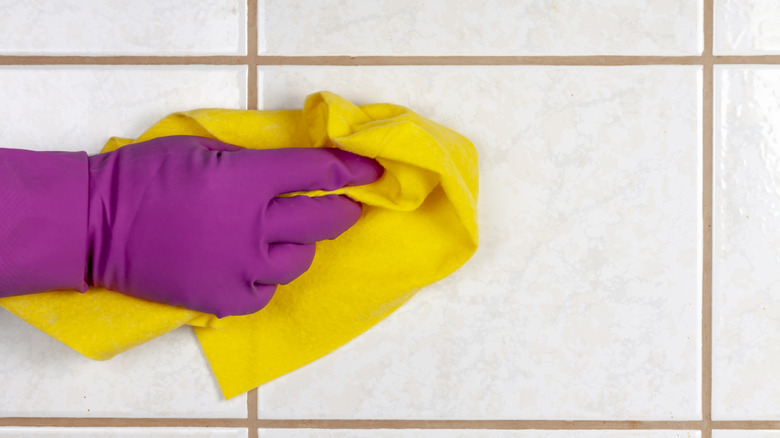
Since the grout runs around every tile in your bathroom, its color or condition ends up affecting the whole room before you have even realized it. Trust us here, you won't believe the difference a little grout refresh can make. As you consider your options on what color to choose, know that lighter grout colors are a good choice if you want to soften the overall look and even make your space look bigger. Meanwhile, darker grout will make all the lines and tile patterns stand out more, plus it hides damage for longer. But your current setup matters too — going from light grout to dark is an easy job, whereas going from dark to light may require multiple coats. Regardless, when it comes to choosing the right grout color for your tiles, it usually comes down to whether you want the grout to blend in subtly or stand out on purpose, so get clear on your final look first.
As far as design goes, bathrooms are actually a bit trickier than other rooms. The lighting in there is usually artificial, not to mention moisture is a constant issue, too. Because of this, some colors may not behave the way you expect once they're actually on the wall and in use. Certain tones, for example, could end up looking flat or slightly murky once they're surrounding your tile, but the general consensus is that almost any color works –- except pink, aka the only grout color you should avoid in the bathroom. Sticking to more grounded neutrals usually gives grout colorant the best chance to quietly improve the space rather than compete with it, but it's worth experimenting while keeping your tile colors and bathroom aesthetic in mind.