

Why People Should Start Using Carbonized Bamboo Cutting Boards (Say Goodbye To Cracks)
We may receive a commission on purchases made from links.
While you may focus on getting high-quality kitchen knives and the tool you need to keep them ultra-sharp, cutting boards are an often-overlooked food preparation tool that can make a big difference in your kitchen. Besides the aesthetic appeal of certain boards, there are also hygienic benefits. Using separate cutting boards for foods, like meat, vegetables, and bread, for example, helps prevent cross-contamination from raw foods that could be harmful, and different boards have different strengths. One type of board that may offer the most advantages, though, is made from carbonized bamboo.
Bamboo cutting boards are sustainable and have a very natural look that can lean rustic or contemporary, similar to wood. However, porous wooden cutting boards can be difficult to clean, which may lead to cross-contamination. On the other hand, the lower porosity of bamboo boards makes them easier to clean because substances cannot get inside the fibers as easily. Plus, the harder surface compared to wood reduces the likelihood of your knives damaging the block. Even better than regular bamboo cutting boards are carbonized ones.
The carbonization process is a high-heat and low-oxygen treatment that reduces moisture and tightens the fibers of the bamboo. The process makes the boards more resistant to cracking, warping, moisture, stains, bacterial growth, pest infestations, and surface damage than untreated bamboo. The process also changes the color of the bamboo to a darker, richer tone that is more appealing to some cooks. Overall, carbonized bamboo is more sustainable than plastic, more hygienic than wood, gentler on knives than glass, and more durable than other bamboo options. They may cost a bit more than other bamboo boards, but their benefits are substantial.
Buying and using a carbonized bamboo cutting board
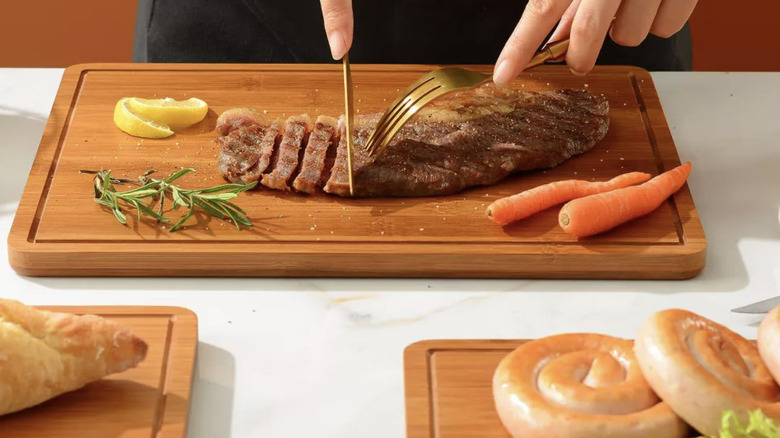
If you are starting to notice the signs that it's time to replace the cutting boards in your kitchen, then it may be time to learn about buying a carbonized bamboo cutting board. Unlike untreated bamboo cutting boards, it can be a bit difficult to find carbonized ones in stores. There are quite a few options online, and most are similarly priced at around $40 for a pack of three.
One affordable choice is these Astercook deep-carbonized bamboo cutting boards. These boards can be purchased for as little as $23.74, and they have a 4.2-star rating from over 200 customers. The set comes with three boards in different sizes, and reviews report that they are beautiful and durable, though some worry about longevity and say that the boards quickly begin to show cut marks. Luckily, knowing how to properly care for carbonized bamboo can help reduce these issues.
To maintain your carbonized bamboo boards, be sure to only handwash them using mild soap and warm water. Do not put them in the dishwasher. Immediately after washing, allow the board to dry thoroughly. To keep the boards looking nice and new, it is important to apply food-grade mineral oil every two to four weeks. Cut marks can be sanded away, but remember to reapply oil afterward. If you are enticed by the easy maintenance and other benefits of bamboo, then you may want to check out more bamboo products to make the switch to a more sustainable home.