

Help Reduce Heating Costs With These Tips For Identifying Drafts And Leaks
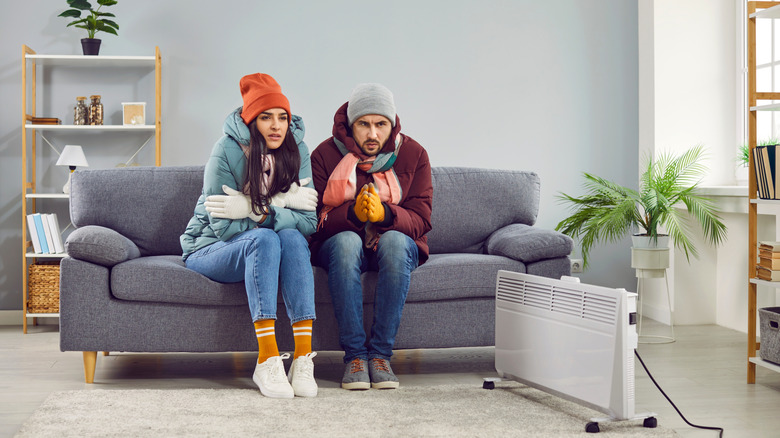
Frosted windowpanes and "Jack Frost nipping at your nose" are cute in songs, but they're far from it in real life. Winter's chill and the rising energy needs — and costs — that come with the season are no joke. Heated air that you've purchased slips through scores of spots around your home, leading to wasted money and unnecessary damage to the environment. It's both financially and ecologically wise to reduce your energy costs at home. Getting a professional energy audit is a great idea and they do a thorough job, but it can be costly. You can take on your own scaled-down sort of energy audit by checking your home for leaks and drafts. These helpful tips include visual clues, such as light coming through gaps in exterior doors, and tests to detect air currents, from the candle test to a DIY pressure test.
It's helpful to know which spots need some help preventing heat loss and wasted energy. A few of the places in our homes that typically lose energy are windows and doors; around vents, light switches, and electrical outlets; where gas, electric, or internet lines enter the home; fireplace dampers; attic hatches; and areas where two different building materials meet, like a chimney and exterior wall or the siding and your foundation. These spots and more could be siphoning away your money each time the furnace kicks on. Once you've ID'd the areas that are releasing your heat into the wild, act quickly to seal them up with weather stripping, caulk, or additional insulation.
Tips for testing home heat loss
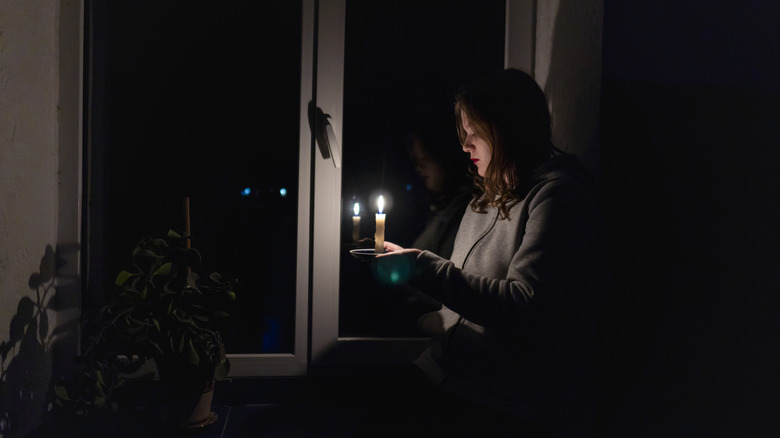
Start with your windows. The U.S. Department of Energy warns that roughly 30% of home heating loss is through these openings. If the window rattles when you wiggle it, it's a sign of leakage. Another go-to test for lost heat is holding your hand or a lit candle next to the window. If you feel a draft on your hand or if the flame moves in a draft, you're losing heat.
Exterior doors are another obvious energy suck. If you can see light through any gaps or feel a draft, it's time to act. You can do the candle test for doors, as well. Another door test involves closing the door around a piece of paper, avoiding placing it over the latch. If you can pull the paper out without it tearing or meeting much resistance, that also signals a heat escape route.
Perhaps the most comprehensive trick you can pull off on your own is a pressurization test. This process mimics the kind of test professional energy auditors conduct to a certain degree. A cold, windy day is the perfect time to try this. Turn off any combustion appliances, like a gas furnace or water heater, and close all windows, exterior doors, and chimney dampers. Depressurize the house by turning on fans that blow air outside, like bathroom vents, kitchen hoods, and clothes dryers. Pass a lit incense stick around places in your home that may be letting the cold air in; if the smoke trembles or blows either out of the house or toward you, it's time to seal and/or insulate these spots.