

The Fragrant Shrub With Stunning White Flowers That Makes A Great Privacy Hedge
Looking for a hedge you can plant in your yard that grows fast, smells wonderful in the spring, and provides excellent privacy? Hedges can cost half as much as fencing and offer not only privacy but also a barrier against noise and dust. It takes patience to grow a hedge, so one that grows relatively quickly is an advantage. One such shrub that makes an effective hedge is devilwood (Cartrema americanum), also known as American olive and wild olive, and formerly known botanically as Osmanthus americanus.
Devilwood, named for its dense, hard-to-cut wood, is a perennial evergreen that is hardy in USDA Hardiness Zones 6a to 9b and is primarily grown in the Southeastern United States. You may find it hard to resist this fragrant shrub with stunning white flowers that makes a great privacy hedge. By attracting pollinators with its sweet-smelling white flowers and supporting wildlife with its dark blue drupes (fruit), devilwood is beneficial to the local environment and is certainly a plant to consider when looking to add privacy to your yard. The shrub's dark green, glossy leaves are a standout feature. Diseases and pests should not be an issue with devilwood.
Plant devilwood as a hedge for fragrance, privacy, and wildlife support
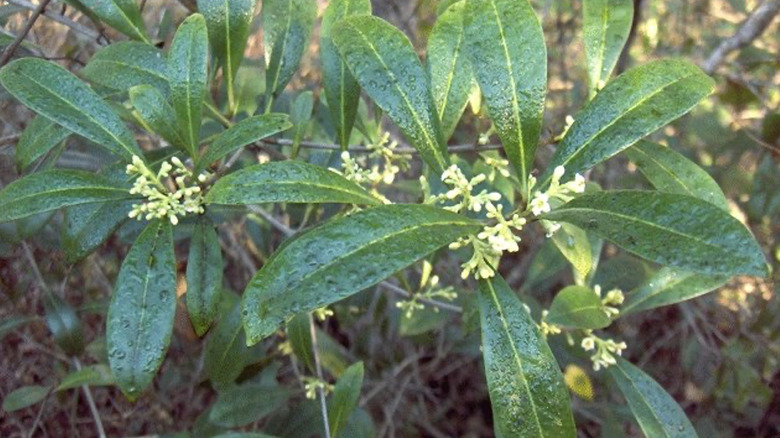
Devilwood is not picky about soil conditions but prefers well-drained, moist soil. Soil pH should range from acidic to neutral (6.0 to 8.0). The shrub can take some sun if grown in moist conditions but generally thrives in partial shade. Transplant from nursery pots in early to mid-spring and expect fragrant blooms from April through May.
Though you might think devilwood's tough wood would make it hard to prune into a hedge, the shrub actually adapts well to pruning and needs it to keep it from growing into a very large shrub (up to 10 feet tall) or small tree. Be aware that pruning may result in less flowering next season because blooms will appear only on the current season's growth. Before you prune your hedges, stop and do this first — cut windows in the tops of your hedges so light can get to the growth below. Prune in the early spring.