

Goodbye Boring Neutrals: The More Nuanced Tones You'll Start Seeing In 2026 Kitchens
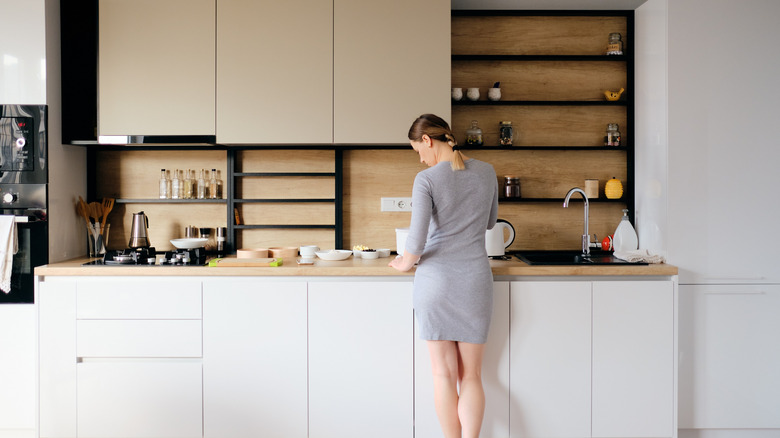
White, beige, and gray cabinets are among the kitchen trends that are being left behind in 2025 and beyond. This past year was dominated by warm shades of earthy browns, moody reds and purples, and the occasional pop of bold color. For many, however, the transition is happening at a slower rate, as they look toward warming up their neutral palette without stepping too far out of their comfort zones. The perfect shade to achieve this balance is nicknamed "mushroom," a taupe and greige-adjacent shade with all the creamy, brown-ish nuance of the beloved fungus.
According to designer Laura Stephens, per Homes and Gardens, these kinds of sophisticated neutrals are becoming increasingly popular with homeowners looking to add a little oomph to the subtlety and comfort of more typical off-white shades. "They're incredibly flattering in both natural and artificial light, and they create kitchens that feel inviting rather than stark or overly designed," she explained. Still, as trendy as mushroom is predicted to become in 2026, this is also a color that has been buzzing around interior design circles for a few good years, which should only serve as reassurance of its staying power as a cabinet color for a warm and comforting kitchen.
Bringing warm mushroom shades to the kitchen
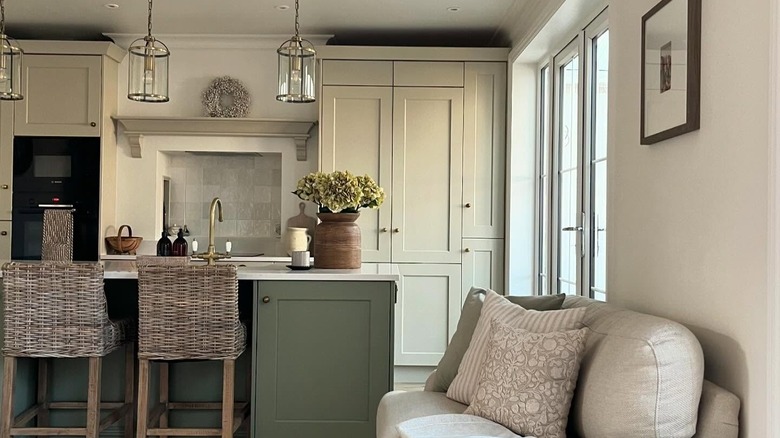
The great thing about the mushroom color profile is that it adds depth and interest without being overly disruptive. As a result, it retains the versatility and comfort that make more common neutrals so popular while simultaneously feeling fresh. It pairs beautifully with virtually every style and material but is most at home among other earthy shades and natural textures. As a result, it's a cabinet color that pairs perfectly with dark wood floors and marble countertops. Because it borrows from both brown and gray, mushroom provides a great background for trying out the mixed metal trend, blending just as seamlessly with warmer brass and copper as it does with cooler nickel and steel.
Depending on the effect you want to achieve in your kitchen, you can go lighter or darker. The former will give you an open, bright yet warm atmosphere, while the latter produces moodier, more enveloping results. You should, however, always consider the ways in which lighting will affect the shade you choose. Mushroom colors lean further toward their brown undertones in south-facing rooms. Conversely, the colder natural light in north-facing rooms will enhance their grayness. The same will happen once you switch from natural to artificial light at the end of the day, with the shade transforming under warmer and cooler bulbs. Make sure to test various mushroom tones under different lighting in your kitchen before committing.