

Influential Kitchen Trends Of The Past Decades That Are Making A Comeback
We may receive a commission on purchases made from links.
There are tons of vintage kitchen trends that are making a massive comeback, but they might not be the ones you'd expect. While there are some beautiful mid-century and late 20th century trends that are having a resurgence, it's not just the recent decades that are influencing design. In fact, we have been seeing kitchen decor from as early as the 1890s creeping its way back into modern cooking spaces.
If you want to upgrade your kitchen, the past can be a great place to seek design inspiration. Finding your personal style in interior design is really just the result of picking from elements that were popularized in the past. Combining design elements from across history will not only make your kitchen look great — it's also the key to developing an interior that feels personal and curated to your interests. We've selected one trend from each decade from the 1890s through the 2010s to serve as design inspiration for your contemporary kitchen — whether you gravitate towards the traditional, the modern, or anything in between. Pulled from the past 135 years, these are the 12 most popular vintage kitchen trends we love being used today.
Ornate Victorian cabinets with glass panels
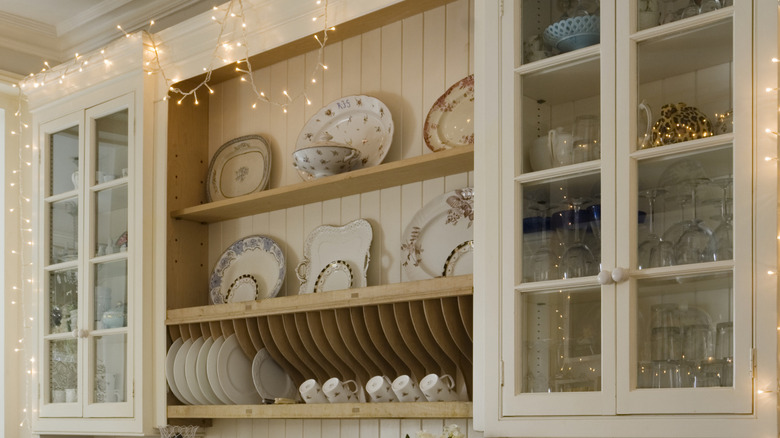
Both open shelving and cabinets with transparent glass panels were popular in Victorian kitchens of the 1890s. Not only were the cabinets themselves highly ornate, but the items on the shelves were also intended to be admired. Think of cabinets and shelving as the frame and your dishes as the artwork. Rather than concealing every dish and appliance, kitchen trends are shifting towards a more European-inspired "unfitted" kitchen to create a lived-in space that feels cozy and welcoming.
The open shelving trend and its longevity in kitchens is a hotly debated topic. Aesthetically, open shelving leaves little room for clutter to hide, which can be aesthetically displeasing to some. There is also a practical concern, that open shelving leaves dishes susceptible to collecting dust and dirt. To take inspiration from the Victorian trend while maximizing functionality, you might consider glass-front cabinets. While your dishes will still be on display, there is more flexibility with placement and cleanliness with the cabinet doors. To try out the trend without renovating your kitchen, incorporate a freestanding buffet cabinet into your space like the Maison Arts Tall Accent Cabinet.
A zinc green kitchen color scheme from the 1910s
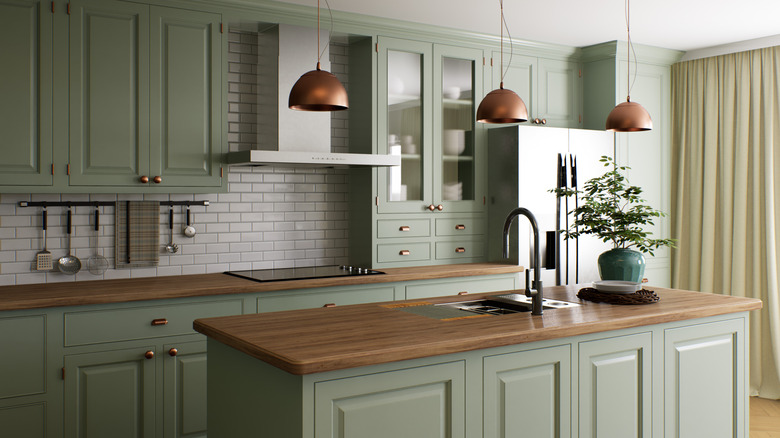
Soft green shades are rapidly becoming the "new neutrals." Bluish, sage green kitchens are a prominent modern trend, but this style actually dates back to the 1910s. Zinc green kitchen cabinets were very popular in the 1910s, as the earthy color was thought to complement organic, art nouveau designs of the time. As modern design shifts toward the natural, muted green cabinets are regarded as timeless.
If you're searching for the perfect green for your kitchen cabinets, it all depends on the atmosphere you are trying to achieve. For an saturated take on the trend, Farrow & Ball recommends calming colors like Lichen, an algae-inspired muted green with a subtle blue undertone. If you're seeking something a little lighter, Benjamin Moore suggests October Mist. For your finish, consider a semi-gloss or high-gloss paint to better protect your cabinets from splashing and spills. Once you've selected your cabinet color, consider countertop ideas that will make your green kitchen cabinets pop.
Dramatic dark wood kitchen cabinetry of the 1920s
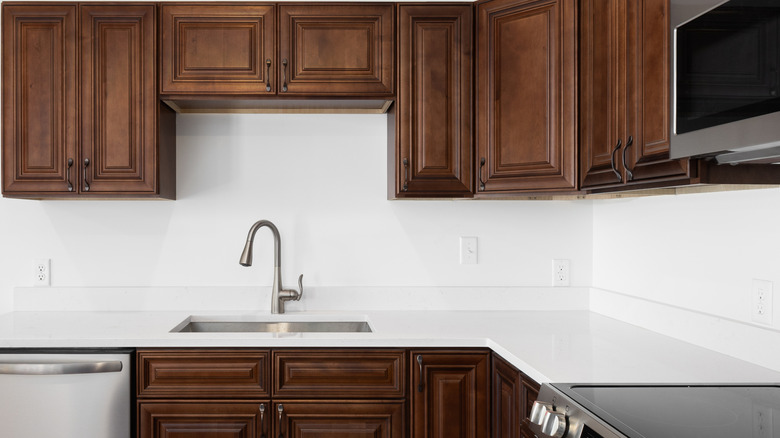
Dark wood cabinets are making a huge comeback, and we have the 1920s to thank for their past popularity. Dramatic, deep wood tones were the go-to throughout the art deco era. Modern designers are loving this shift, as dark wood can provide visible depth and effortless luxury. And our feed is filled with gorgeous wood finish cabinet inspo that proves they don't have to look dated.
If you want the true 1920s look, try pairing your mahogany or cherry wood cabinets with jewel tones and warm hardware. But if you're worried about your kitchen looking too dark, you can always pair dark cabinets with light countertops. Quartz or marble surfaces can look beautiful with dark walnut wood, and they will make your space look current and intentional. Warm hardware can also help prevent your space from looking too heavy. Satin brass, brushed nickel, and copper are a few trending hardware finishes that will complement your dark wood cabinetry.
The beloved kitchen breakfast nook of the 1930s
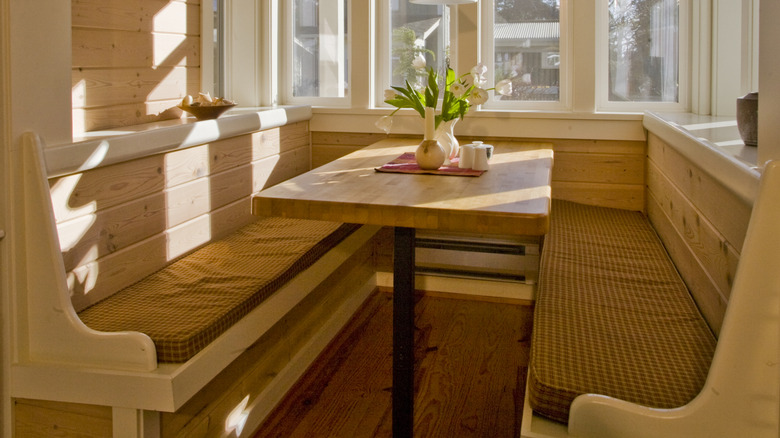
The breakfast nook was popularized in the 1930s, and its vintage appeal only waned when minimalist open concept kitchens with oversized islands took the spotlight. Now, cozy and casual spaces like breakfast nooks are coming back in style. The intimacy of a breakfast nook is very appealing to modern homeowners and designers, as it represents time spent with friends and family – something we have come to value more in the post-pandemic years.
There are endless options when it comes to designing your breakfast nook. If you have a free corner near your cooking space, this can be a great place to add a corner booth and round table. If a corner isn't available, try placing two padded benches directly across from one another with a rectangular table in between. Another option is to build your own custom breakfast nook underneath a large window, like an extended window seat. If you think your kitchen is too small for a nook to make sense, keep in mind that the banquettes can also double as storage, like these Tamune L Shape Storage Benches.
Gingham curtains and valances from the 1940s
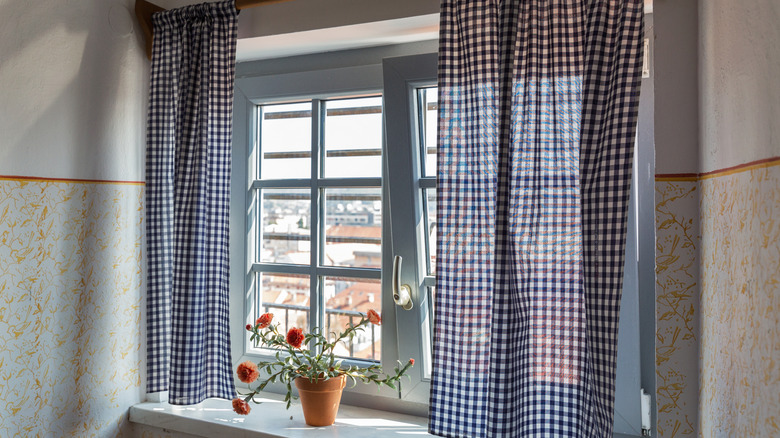
Café curtains are back in style, and gingham patterns are only adding to the shabby-chic charm. Gingham curtains and valances were huge in the 1940s, and this rustic approach to kitchen decor is popular once again because of the trend toward coziness. For those who want to embraced a lived-in interior, these patterned window treatments are a great way add texture and character.
Before you hang your new checkered café curtains, it's important to make sure you're hanging them correctly. First, consider aligning the rod with one of your muntins or glazing bars. If your curtains are hung in the middle of your grid, they can look out of place. The key is to follow the architecture of your window, to make it look like the short curtains were always meant to be there. If you need to adjust the hem to get the right length, avoid a having to sew by using an iron-on hem product like Klangfeiler Iron-On Hemming Web.
Playful wallpaper backsplashes of the 1950s
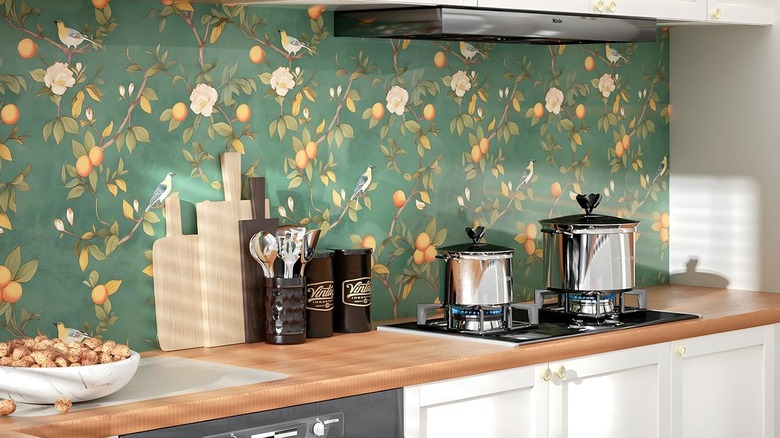
It's no surprise that affordable upgrades and materials are gaining more popularity among the current "recession-core" shift. One of the budget-friendly upgrades getting trendier by the day is using wallpaper as a backsplash. This was very popular design choice in the 1950s, with playful patterns taking center stage. The affordability and the fact that it can be easily changed makes it ideal for those who don't want to spend a fortune on their kitchen remodel.
Erin Napier, of HGTV's "Home Town," upgraded a partial backsplash with vibrant lemon wallpaper. Her concept is proof that you can use wallpaper to give your cooking space a lighthearted dash of personality. Another option is to apply embossed, vinyl wallpaper above your sink and counters. This will not only add texture, but adds a water-resistant layer to the wall. For a 1950s-inspired approach, try wallpaper with playful mid-century patterns like this Spoonflower Peel & Stick Wallpaper. If you find a non-vinyl wallpaper you really love, don't forget to add a protective cover like this Cosnight Clear Contact Paper.
The pass-through kitchen windows from the 1960s
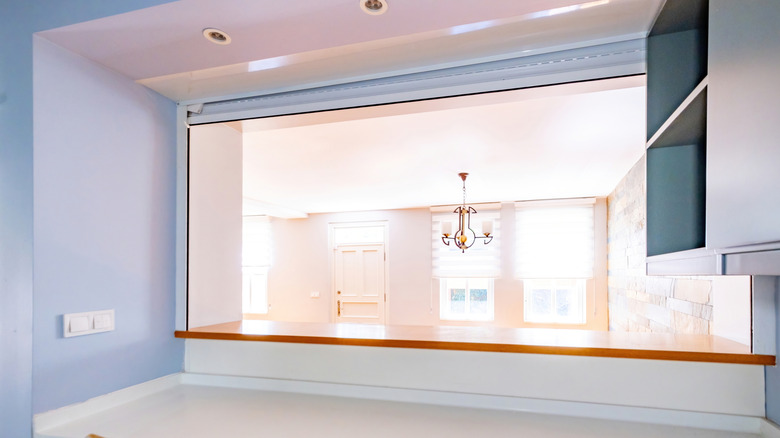
As we move away from entirely open kitchens, functionality when hosting still remains an important consideration. Instead of completely closing off your cooking space, take a cue from the 1960s and try a pass-through window. These interior windows allowed items to be passed easily from the kitchen to dining area. This once-popular vintage kitchen item is making a comeback in 2026 due to its convenience and nostalgic quality.
Adding a pass-through window between your cooking and dining space is not the only way to implement this feature. If you don't have a formal dining room, you can still install a pass-through window from your kitchen to your living space. Another option is to add a pass-through window from your outdoor dining area into your kitchen. This is an excellent solution if you don't have an outdoor cooking space. For added functionality and potential seating, consider installing a bar surface to the pass-through window.
Geometric tile backsplashes from the 1970s
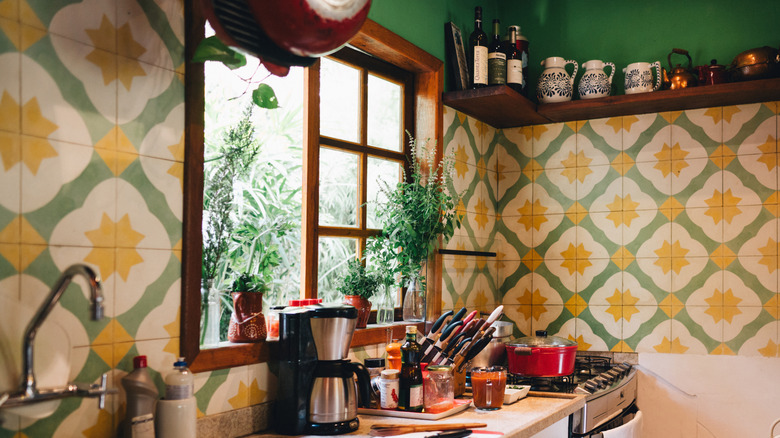
Not only are the earthy colors of the 1970s coming back in style, but the era's geometric patterns are also becoming sought after by designers. 1970s kitchens often incorporated these eye-catching, geometric designs as tile backsplashes. This was a direct reflection of the playful energy that permeated the decade's decor. They are an easy way to add visual interest to a kitchen that feels dull or dated, which is why modern homeowners are head-over-heels for this trend.
The selection of geometric tiles is practically endless. You can take direct inspiration from the 1970s and go with a patterned tile that includes a mix of retro colors like gold and avocado green. Orange is also a 70s-inspired shade that will instantly brighten up your kitchen. Mosaics are another popular tile trend of the time that is creeping back into contemporary spaces. For a subtle nod to the 70s that still feels current, try installing micro tiles in terracotta tones
Tiled kitchen countertops from the 1980s
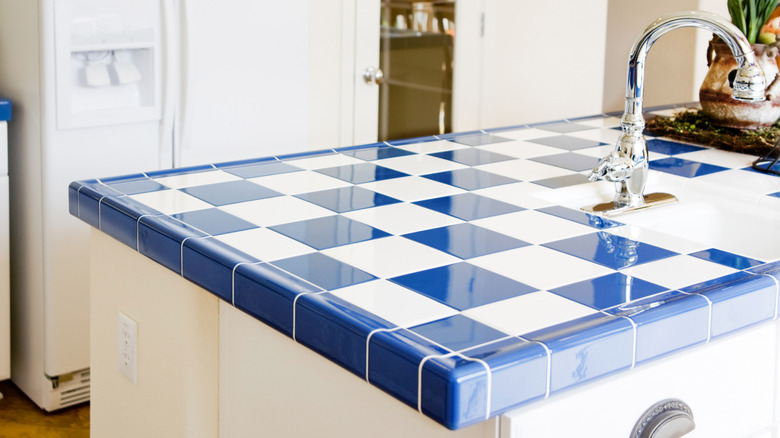
Speaking of tiles, backsplashes aren't the only space where they are taking over. In fact, tiled countertops are the most popular they've been since the 1980s. At that time, tiled countertops were the go-to, rather than the stone slabs that have become standard in more recent decades. Tiled countertops are popular for the same reason today as they were back then. They are very budget-friendly and can be customized according to the homeowner's personal taste.
If you want to curate a modernized version of the 1980s tile trend, try a textured stone or clay tile countertop. Taking your tile from the countertop, up your wall can also give your space a more contemporary feel. If you actually prefer the retro look, copy 1980s interiors with square, glossy tiles. You can go with a clean, classic white finish, or a playful pastel like soft pink or baby blue. If you need more inspiration, there are plenty of gorgeous tile countertop ideas that will transform your space.
Honey oak wood kitchen cabinets from the 1990s
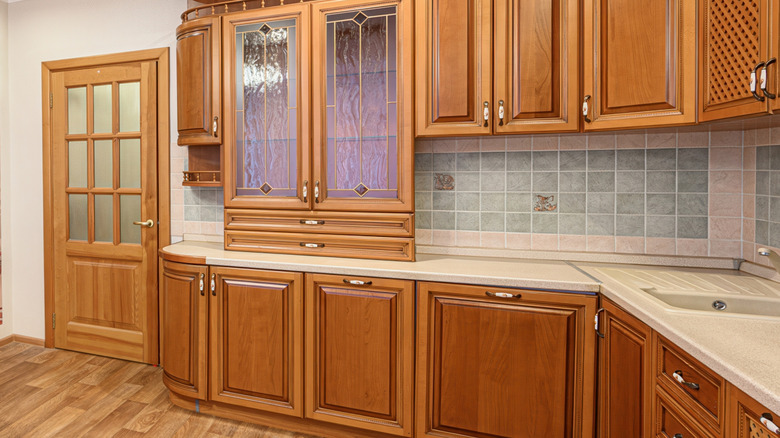
For a trend that most designers never thought would return so soon — honey oak cabinets are making an unexpected comeback. These warm-toned, wood cabinets were everywhere in the 90s, and now homeowners are embracing the homey look once again. This shift may be the result of too many gray kitchens in modern spaces. As designers and homeowners grow tired of cool-toned cooking spaces, the pendulum has started to swing back toward warm woods.
Just because you opt for honey oak cabinets doesn't mean your kitchen has to look straight out of the 90s. For example, matte black hardware and appliances can balance the wood with a contemporary edge. If you prefer a more natural look, try peppering other organic textures like linen, stone, or clay throughout your kitchen. For years, homeowners tried to distract from the honey oak finish, but today it's all about embracing its organic, warmth.
The Tuscan kitchen trend from the 2000s
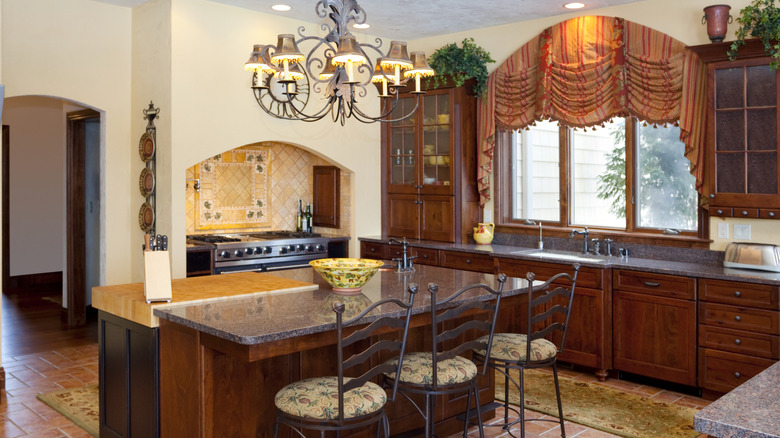
Echoing the growing love for warm-toned decor, the Tuscan kitchen is experiencing a new wave of appreciation. Generation Z is particularly fascinated by the Mediterranean-inspired cooking space that appeared in countless upscale homes in the early 2000s. From the wrought-iron details to the oversized oven hood, there are tons of Tuscan features that are finding their way back into the kitchens of today.
For an updated approach the trend that combines the best of classic and contemporary design, try using a lighter color palette than the traditional Tuscan kitchen. Go for taupe instead of dark brown and light terracotta over burnt orange. You can also stray away from a fully-monochromatic space, and feel free to add cool accent colors like blues and greens. To bring Tuscan style into the present, a focus on natural materials and cozy features should be the priority. Striking architectural elements, like copper oven hoods or wrought iron chandeliers, should act as the focal points of your space. You can also add some Tuscan style to your kitchen with these cabinet ideas.
The farmhouse sinks of the 2010s are still very much in style
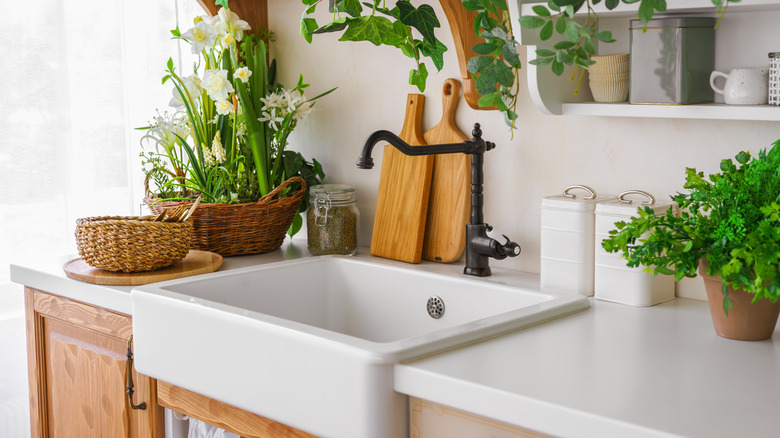
Although Joanna Gaines' farmhouse style is now outdated for the most part, there's one feature of the design that remains trendy. Popularized in the 2010s, the farmhouse sink excels in practicality and timelessness. One of the primary reasons farmhouse sinks are still so popular is because of their undeniable functionality. Because of their deep basin, they make washing up so much easier. Weather you're washing dishes or even clothing, you really can't go wrong with an oversized farmhouse sink.
If you want to give the sink a stylish twist, consider a copper or stainless-steel basin. Although fireclay and cast iron will always look timeless, a metallic finish can pack a visual punch. A textured option like this Sinkology Lange Copper Farmhouse Sink offers intrigue without being too ornate. But if you want something even more eye-catching to standout in an otherwise minimal kitchen, a copper sink with an embossed design, like the Barclay Concord Farmhouse Sink would do the trick.