

Why Your Popcorn Ceiling Is Peeling (And How To Fix It)
We may receive a commission on purchases made from links.
Popcorn ceilings were popular back in the 1950s to 1980s, when they became a cheap and easy way to hide imperfections on drywall. This textured finish got its name because the sprayed-on material resembled the look of popped kernels, and while they did offer practical benefits like fire resistance (due to the materials used), they eventually became viewed as dated and difficult to clean. There are ways to cover dated popcorn ceilings without the hassle of scraping to help modernize the room's aesthetic, but many homeowners still prefer the look of this ceiling choice.
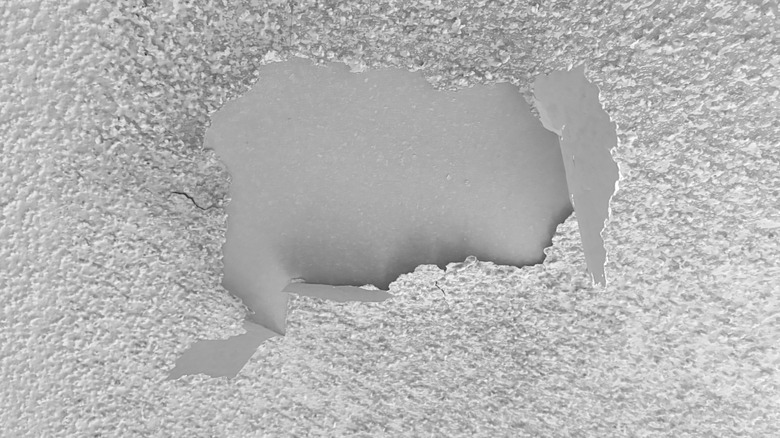
One common problem with popcorn ceilings is peeling, where the adhesive bond between the textured material and the underlying drywall fails. This ultimately causes chunks of the surface to fall off, leaving just the drywall underneath. The most common reason for a peeling popcorn ceiling is water damage or excessive moisture, such as from a roof or plumbing leak or high humidity. Another reason why a popcorn ceiling might peel includes improper surface preparation, but even something like minor shifting of the house may cause the texture to crack and peel away. Luckily, there are steps you can take to fix a peeling popcorn ceiling so it looks good as new. Essentially, you'll need to prep the area, repair the drywall if needed, and apply a new popcorn texture. This process is best for small patches rather than widespread damage, allowing you to blend the new ceiling texture with the old.
How to fix your peeling popcorn ceiling
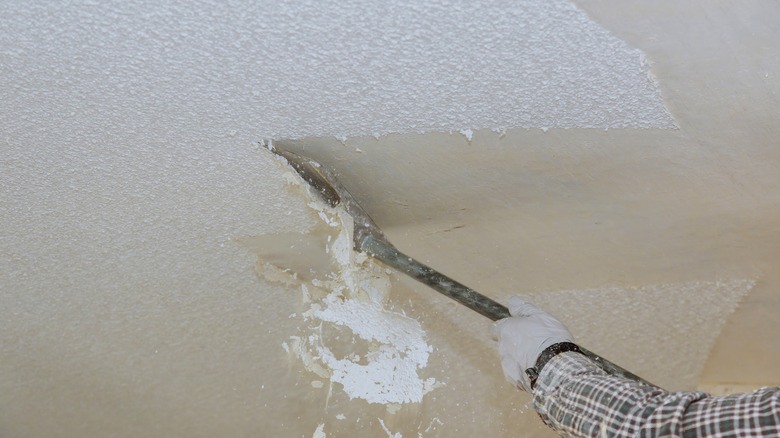
If your home has a popcorn ceiling and you notice some textured material falling off, you'll just need some supplies and some DIY know-how to tackle the repair. Before getting started, it's crucial to know if you're dealing with asbestos. If your home was built before the mid-1980s, the popcorn texture may contain it. Unless you've previously had testing done and know for sure, it's important to have a professional test your existing popcorn ceiling before you scrape or disturb the surface. Additionally, you'll need to identify and fix the root cause of the peeling — if you don't, the repair will ultimately fail, and the peeling will return. This means fixing any existing leaks and controlling excessive moisture issues, which are the likely causes of a peeling ceiling.
Next, prep the area you're working in by laying drop cloths on the floor and covering any furniture. Gently scrape away any peeling popcorn texture with a putty knife or ceiling scraper. To make removal easier, you can lightly mist the area with water from a spray bottle to help soften the texture and minimize dust. As you scrape, you'll need to check the underlying drywall for water damage or mold. If you see any suspicious-looking areas, cut them away and patch with new drywall.
If the area was water-stained, you'll need to apply a coat of a stain-blocking primer to seal the stain and the drywall. Finally, it's time to apply the popcorn texture. You have a few options for this, including an aerosol spray or a pre-mixed patching compound, like Zinsser Popcorn Ceiling Patch. After following the application instructions, allow the new texture to dry completely (usually 24 to 48 hours).