

Can You Clean A Clogged And Smelly Drain With This Kitchen Essential? Here's What We Know
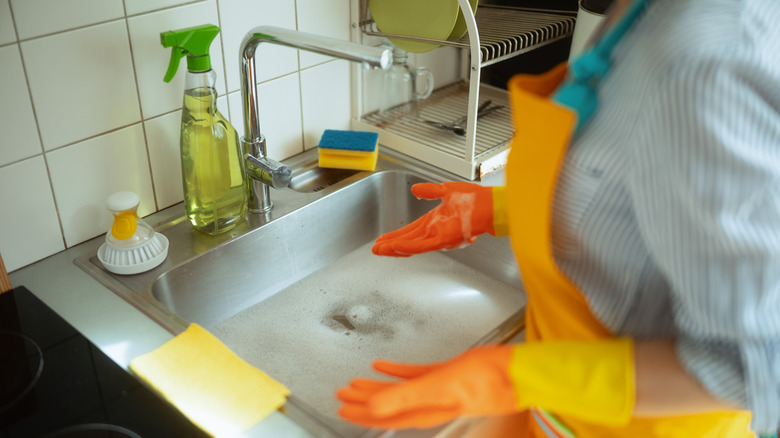
It happens to every homeowner: you walk by the kitchen and you're hit by a smell that makes you wonder, "When did we last take out the garbage?". That's when you might notice your sink is draining a little slower than normal, and a quick sniff confirms it: you've got a clogged, smelly sink drain. Chemical drain cleaners are powerful, but for many, the risk to your plumbing (and the environment) just isn't worth it. A quick online search for all-natural ingredients to clear a clogged drain will turn up the usual suspects, like baking soda and white vinegar. You might also find some people crediting one unexpected kitchen essential for unclogging their drains: dry yeast.
Once activated with warm water and a food source like sugar, dry yeast awakens and expands, emitting carbon dioxide bubbles. In theory, those bubbles can loosen the grease and grime coating your drainpipes. Once loosened, the grime is ready to be rinsed away with hot water, leaving behind sparkling clean pipes. But does this trick actually work?
In short, it's unclear. While there isn't much scientific evidence to support that yeast is an unexpected household item that can unclog your drain, some plumbers and DIYers have divided opinions on this hack. A few plumbing blogs agree with anecdotal evidence that it works, while other forums disagree, claiming that the yeast is, at best, ineffective at clearing clogs — and at worst, could damage your plumbing.
Why dry yeast may not be the best choice to unclog a drain
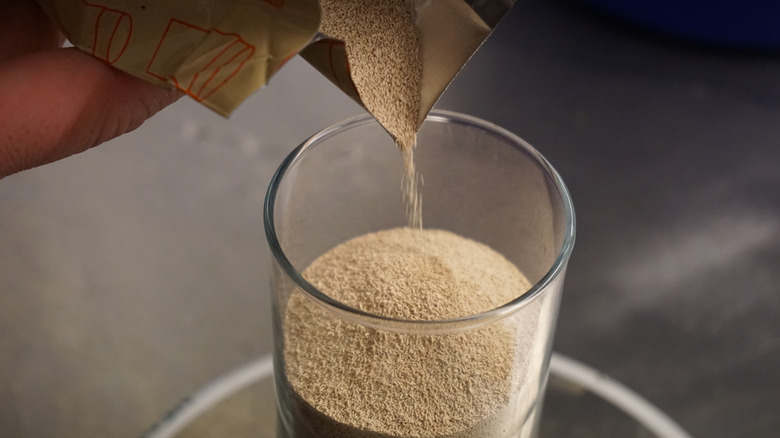
While the yeast hack may look like an eco-friendly way to clear minor clogs and eliminate odors, most professional plumbers probably wouldn't recommend pouring yeast down the drain due to the potential for pipe damage and septic tank disruption. Tipping yeast into the drain without activating it first may damage your pipes or make clogs worse when the yeast wakes up and grows.
Even if it makes it through your pipes safely, yeast can continue causing problems. If you're one of the 20% of homes in the U.S. that have a septic tank, you're better off skipping this trick. While some anecdotal evidence claims that adding yeast to your septic tank can keep it running efficiently, professional plumbing sources warn it could disturb the balance of bacteria and therefore slow down the breakdown of waste.
However, there are other environmentally-friendly, affordable ways to remove minor clogs that don't carry the same risks. Plumbers often recommend tackling small clogs with a plunger or a drain snake (you can DIY one with items you already have in the house). For a smelly drain, try pouring a kettleful of boiling water down the sink.