

Not Once A Week, Not Once A Month, Here's How Often To Fertilize A Peace Lily Plant

If you have an affinity for houseplants, you are likely to have a peace lily (Spathiphyllum) in your home. This is a popular plant known for its large leaves and white flowers. Though generally considered low maintenance, it can be particular about its growing conditions. Peace lilies require warm indoor temperatures. They do not like too much water or being placed in direct sunlight. There are even rules about fertilizing the plant, such as only doing it during its growing season with several weeks between feedings and watch for signs of over-fertilization.
Fertilizers ensure that plants have enough nutrients so they can thrive. In this case, it helps the peace lily bloom. The caveat is that these plants don't like a lot of fertilizer – this includes both quantity and frequency. Unlike fast-growing plants that might be fertilized on a weekly or monthly basis, peace lilies don't need that many nutrients due to their slow growth rate. In fact, too much fertilizer can burn its roots and leaves. You might choose to skip the fertilizer altogether if you find that the risk of overfeeding could outweigh any nutritional benefits. Such fertilization guidelines are among the hacks you need to know to help your indoor peace lilies flourish.
Tips for fertilizing peace lilies
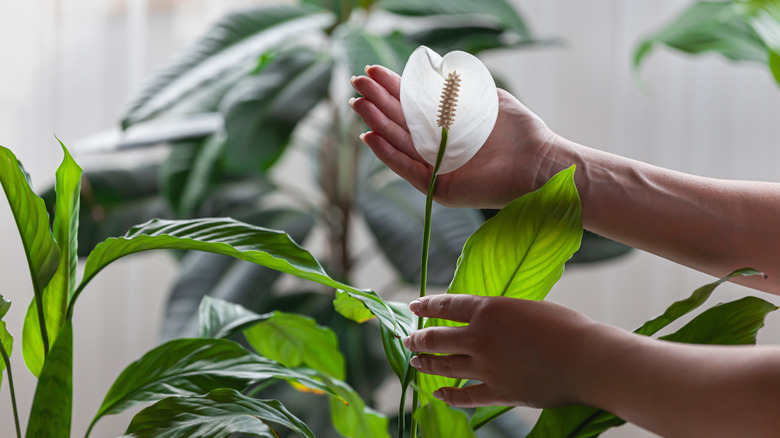
If you decide to fertilize your peace lily, only do so while it's actively growing, which is typically during the spring and summer. They only need two to three feedings during this time. Clemon University's Cooperative Extension recommends that you apply the fertilizer about six to eight weeks apart. The type of fertilizer used is also important. Liquid versions are ideal because they can be diluted with room temperature water before applying. You can also try a 20-20-20 version for more balanced nutrients. North Carolina State Extension suggests using only one-quarter of the strength that's indicated on the fertilizer package. Follow up with water after applying the diluted fertilizer to prevent root burn. You might also reduce the risk of burning the plant by watering the soil in between each application. This can require extra care, as you'll want to bear in mind the plant's pickiness for too much water at one time.
Lookout for signs of over-fertilization. In peace lilies, this can present as brown burnt-like spots on the leaves or green areas around normally-white flowers. If your peace lilies are still showing signs of burnt foliage or flowers despite infrequent feedings, hold off on fertilizing. Continue with regular watering sessions when the soil is dry to flush out the remaining excess nutrients. Unless your peace lily isn't blooming, you might not need any fertilizer for the rest of the season.