

Sustainable Tiles: How To Incorporate Them Into Your Kitchen And Bathroom

Sustainability has become a major factor in interior design over the last decade. Homeowners are much more dedicated to building homes that are energy efficient, and builders are designing homes with sustainable materials. Tiles are among the most durable and, therefore, sustainable materials on the market, but there are several different types of tiles to be aware of.
Although it is made from natural components, cement is incredibly pollutant and energetically wasteful to produce. Meanwhile, some types of plastic tiles like laminate and vinyl can be toxic and need to be properly disposed of to prevent dangerous soil and water pollution. As such, these types of tiles won't make for the best sustainable options.
When choosing a sustainable tile for your kitchen or bathroom, you'll want to consider the material's chemical composition, the environmental footprint of production and transportation, the working conditions of the people harvesting and making the ingredients that go into a single tile, the longevity of the material, and how it might eventually be discarded. When incorporating sustainable tiles in kitchens and bathrooms, look for options that match some of that criteria, then consider the area and the purpose those tiles will serve. Make sure to pick tiles that can withstand humidity as well as heavy use, since these are two of the busiest rooms in the house. Ceramic and porcelain are great options, but they're not the only ones.
The best sustainable tiles for kitchens and bathrooms
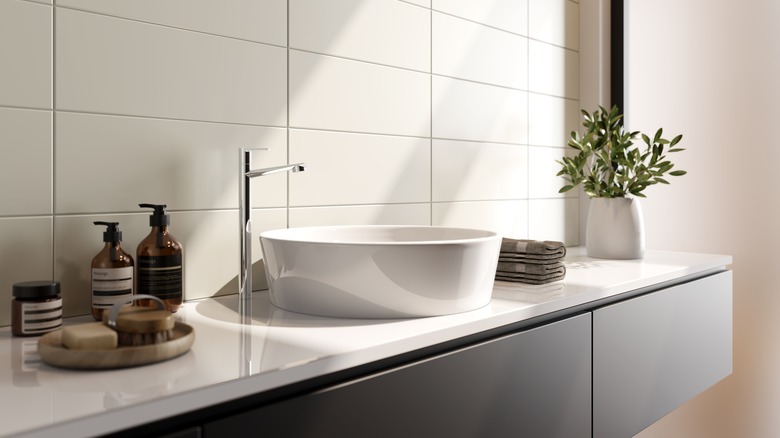
Stone is a fantastic, durable, and natural material for sustainable interior decor, but its porous nature and laborious upkeep, including the frequent need for potentially toxic sealant, mean it's not the best fit for these high-traffic areas. Besides, not all natural stones are equally sustainable. If you're married to the idea of using stone, reduce its ecological footprint by choosing local stones that are minimally processed and sustainably quarried.
The most sustainable types of tiles to use in your kitchen and bathroom are ceramic, porcelain, recycled glass, and recycled stainless steel. Although the high-temperature production of the first two is energy-intensive, they're made from naturally abundant clay, which is relatively non-invasive to mine. They're waterproof, durable, non-toxic, and, long-lasting.
Glass shares a lot of these qualities, including water-resistance and durability. It can be made even more sustainable by opting for recycled tiles, thus extending the product's lifecycle. Stainless steel is also 100% recyclable. Aesthetically, this might not be the most appealing choice, but its resistance to corrosion makes it an incredibly durable, easy-to-maintain solution for bathrooms and kitchens. On that note, choosing timeless tiles that you won't grow tired of in a few years is essential for sustainability. Colorful, loud designs may be fun and trendy, but they will prompt a remodel much faster — resulting in unnecessary waste.