

How To Give Orange-Toned Wood A Modern Look Without Refinishing
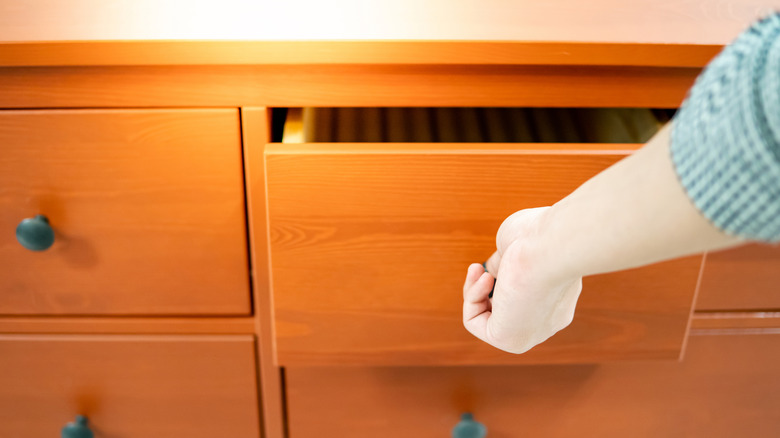
Once popular in the '90s, orange-toned wood can make otherwise beautiful furniture feel dated and out of place in a modern home. Stain color is often to blame for orange-toned wood, but it could also be caused by natural aging. Over time, oxygen and ultraviolet light react with oil-based varnish or aged polyurethane, causing the wood underneath to darken and appear orange. Luckily, you don't need to commit to a full refinishing project to give orange-toned wood furniture a face lift. Stripping and re-staining are time-consuming, messy, and often intimidating for beginner DIYers. There are easier ways to refresh orange-toned wood while preserving its original finish.
With the right products and techniques, you can neutralize the unwanted wood finishes that are dating your home and achieve a more balanced, natural look using one of two methods. One method involves using a blue-green toner to cancel out warm tones rather than refinishing. Another method involves using paint to neutralize the orange. By doing one of these woodworking projects that even beginners can do, rather than harsh removal methods, you also avoid damaging the wood while still making a noticeable transformation.
How to neutralize orange-toned wood
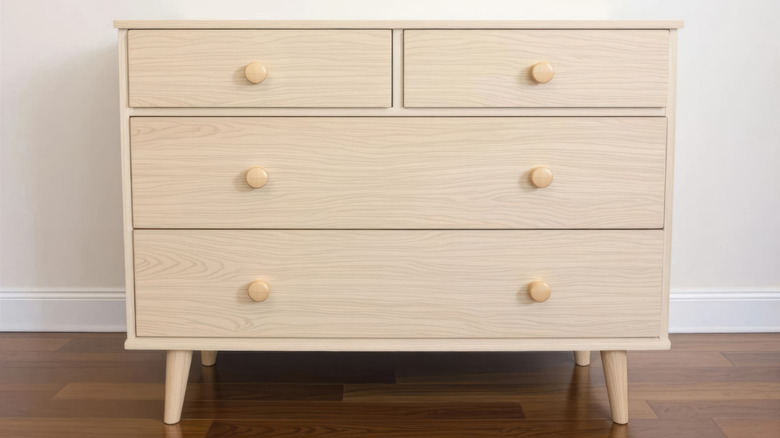
Every project starts with the right tools, and this first method only requires a few materials. For this DIY, you'll need 220 grit sandpaper, a gray sanding pad, blue-green dye toner, and a clear, waterborne topcoat. First, prepare the wood by lightly sanding the surface with your sandpaper and gray sanding pad. Using a damp cloth, wipe the surface of the wood clean to remove any dust from sanding. Apply a thin coat of blue-green dye toner as a wash coat to neutralize the orange tones. Less is more with this project. Once the color is balanced, seal the piece with a clear, waterborne finish. This type of finish won't discolor like oil-based or polyurethane finishes.
You can also use a paint wash to cool down orange-toned wood with a slightly different look. For this project, you'll need 120 or 150 grit sandpaper, your paint of choice, and a soft bristled paintbrush. Start by sanding down your wood piece to create a rough surface for the paint to stick to. Use a damp cloth to remove any sanding dust. Then, prepare a solution of 2 parts water to 1 part paint. White is a common color choice, but many people also choose brown or gray. Whatever color you choose, make sure it has a blue undertone to neutralize the orange. Apply a thin coat of paint, following the grain. Once you're happy with the result, let it dry and apply a clear finish.