

The Popular Cleaner Pet Owners Should Stop Using (& A Better Alternative To Try)
We may receive a commission on purchases made from links.
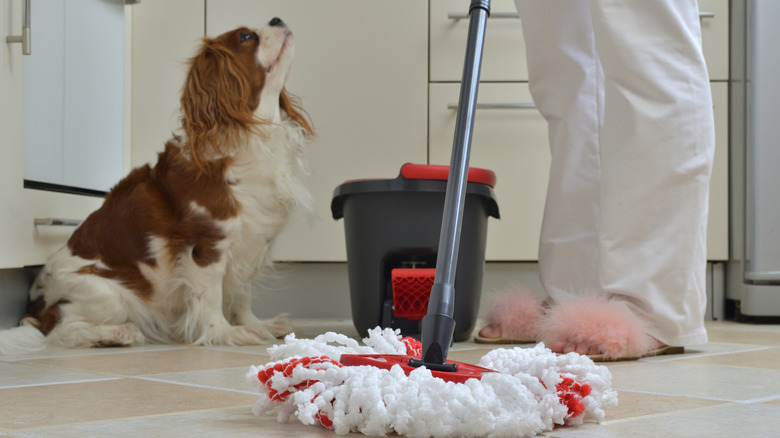
If you're lucky enough to have pets in your family, you know the joy and love they bring to your household. Just like us humans, pets require a bit of upkeep if you want a clean home — whether you're dealing with shed fur, tracked-in dirt, or the occasional accident. You might also be an avid user of all the natural cleaning ingredients that you want a healthy stock of in your home, such as the ever-popular white vinegar. It turns out, however, that vinegar may not be the best choice for cleaning up pet accidents. Not only is vinegar unsafe to use on certain household surfaces, it also doesn't solve pet problems like enzyme cleaners can do.
There's no denying you can use vinegar to keep your house clean. The acidic solution can tackle stains, rust, and even mold. Vinegar may also remove certain odors from surfaces and kill some germs. Vinegar is popular because it's accessible, affordable, and relatively non-toxic. If you're both an eco-conscious and budget-friendly shopper, then vinegar probably checks a lot of boxes. The problem is that trying to apply vinegar to animal urine, vomit, or poop stains is unlikely to remedy your messy situation. In fact, it could cause more issues. Chiefly, it can intensify pet odors instead of neutralizing them, amplifying the problem. Another issue is that vinegar stains some fabrics, leaving you, unintentionally, with a bigger discolored patch than the one your pet made. It's also quite a strong solution, making it unsafe for use on wood, marble, or natural stone surfaces.
For pet messes, try enzyme cleaners over vinegar
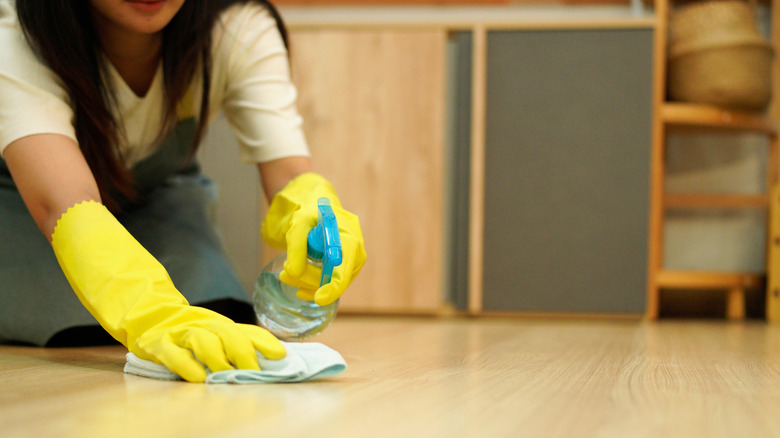
Let's say your pet has had an accident indoors. Despite its broad usefulness for cleaning, vinegar simply cannot remove the stubborn odors left behind. In fact, it could even encourage your pet to pee in the same spot again. This is a job for enzyme cleaners, which clean best in this specific situation. The strong smell of vinegar simply masks the odor; it doesn't destroy it. The proteins in an enzyme cleaner work to break down odor-causing chemicals (called soils) in pet stains and turn them into harmless — and more importantly scentless — carbon dioxide and water. As a bonus, enzyme cleaners, like Bioda Multi-Purpose Probiotic Enzyme Cleaner and Deodorizer, are gentle on carpeting, rugs, and upholstery and safe to use around pets.
You've got guests coming over and you need something to address a recent pet mess right away. If vinegar is the only cleaner you have on hand, you may still be able to use it with a few important modifications. First, blot up the mess using a paper towel and pour fresh water over the area. Repeat the process, but this time using white vinegar diluted in water at a 50:50 ratio. Never use undiluted vinegar around pets, as accidental ingestion can cause gastrointestinal upset and pain. Blot the area with a dry towel until the surface is clean and odor-free. As soon as you're able, follow up this quick clean with an enzymatic cleaner to ensure there are no lingering stains or smells.