

Can A Vintage Moka Pot Become The DIY Air Freshener You Need? Here's What We Found
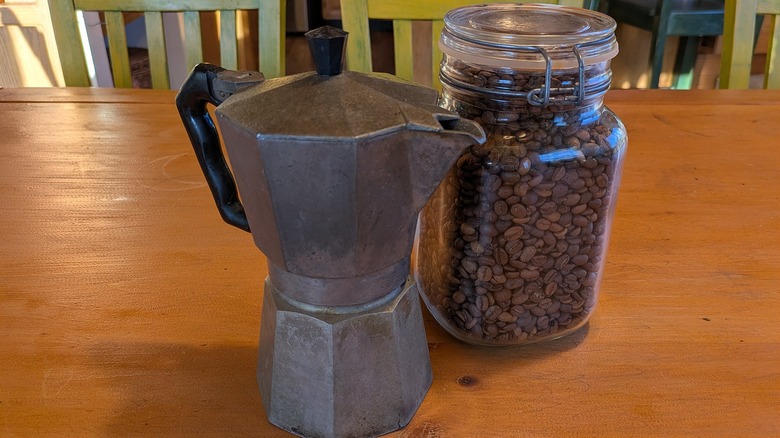
A moka pot hissing as boiling water bubbles up through freshly-ground coffee is one of my favorite sounds, also leading to one of my favorite scents. A pot I nabbed a quarter century ago in the Dominican Republic is a sentimental favorite that's been relegated to the role of stylish, vintage kitchen decor. I learned of a new side-gig for my old coffee maker as a sort of "simmer pot" that involved stocking the pot's filter cup with something aromatic like citrus peels, spices, or dried flowers, and percolating up a potful of steamy, scented water. These typically octagonal stove-top espresso makers consist of three separate metal parts that screw together; a vessel for boiling water sits on a heat source, a funnel-shaped filter basket holds ground coffee on the mouth of the water vessel, and the receptacle for brewed coffee screws over another small filter and gasket to combine all of the pieces.
I had absolutely nothing to lose ... except the lingering aroma of my doggy roommates. My three-dog household isn't terribly stinky, but it's far from smelling fresh. I like how simmer pots fill spaces with both aroma and extra moisture (important in my Colorado home), and I was curious whether my old moka pot would be able to stand in as a charming stove-top scent diffuser.
Preparing a moka pot-simmer pot
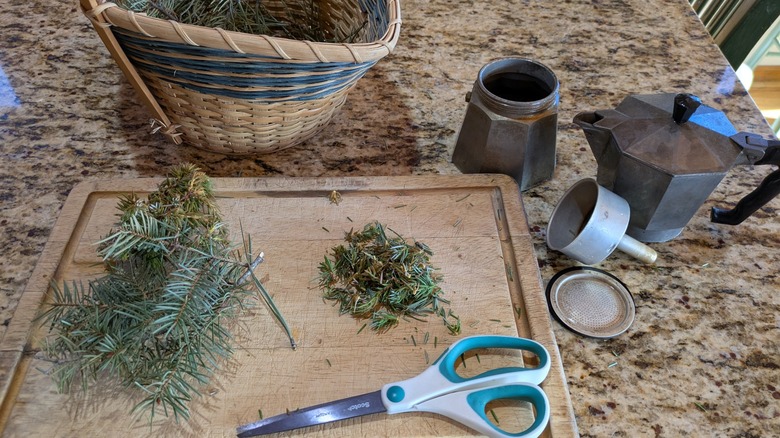
As winter was upon us, giving my home a fresh holiday scent sounded both apropos and pleasant. From my wooded acreage, I snipped small sprigs of juniper and Douglas fir and plucked ponderosa pine needles that I'd subject to a simmering. I harvested a decent collection, since I figured the more material I put in the filter, the better chance I'd have of getting a strong evergreen essence. I was a bit doubtful, since moka pots aren't really meant to simmer liquid for long periods of time. Once the espresso bursts through the filter, it's ready to enjoy.
I snipped a generous amount of greenery into small pieces and placed them in the filter basket. The basket wasn't packed tightly, just full to its rim. I placed more snipped juniper and pine needles in the receptacle for a better chance of aroma once the water had boiled up from the lower container. After the water boiled and rose through the snipped greenery, I set the burner to low heat. Making a simmer pot involves leaving the lid off the pot for the scented steam to escape, so I left the moka pot's lid open.
Will a moka pot stand in for a simmer pot?
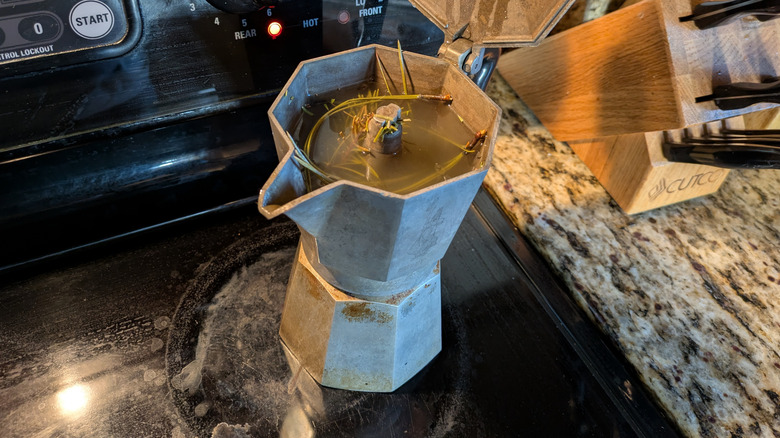
Would a quick spurt of boiling water through the aromatics actually extract any scent? In all fairness, moka pots do a nice job extracting coffee — and the smell — from the grounds, so maybe the mechanism and the boiling water had a better chance of perfuming my home than I'd suspected.
I stepped out of the house for a few minutes — long enough to clear my nose of prior scents — and re-entered for a thorough sniff test. The kitchen was pleasantly perfumed with pine. I picked up a very subtle pine aroma in the seating area of my open-plan living area; this spot is about 15 to 20 feet from the kitchen stove. I caught a faint whiff in my office that's the next room over, but the aroma didn't exactly give my house a refresh.
For the sake of comparison, and since I had a basket full of evergreen cuttings, I put together a more traditional simmer pot in a 7-inch saucepan. Reduced from a boil to a simmer, the infusion filled my space with a forest freshness in a matter of minutes. It spread beyond my living area and into nearby rooms, as well.
A moka pot-simmer pot is cute but not effective
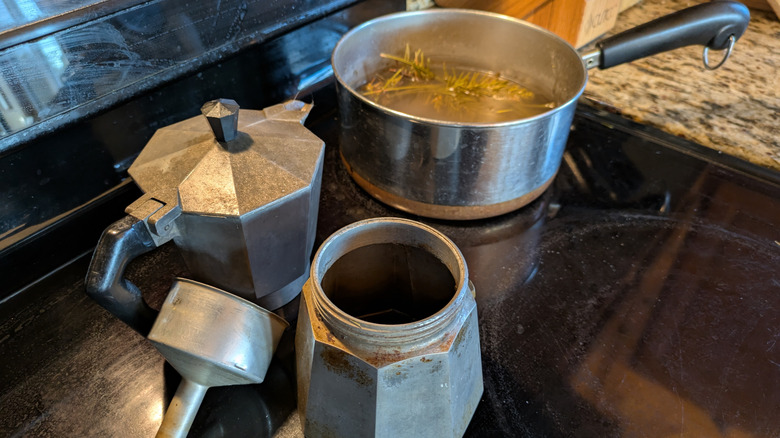
With its lid open and slightly steaming with piney water, the moka pot looked more charming on my stovetop than a saucepan did. But, the limited surface area of the pot and how little time the water spent in contact with the greenery (even the extra bit in the receptacle) just didn't put out enough aroma to make it worth the effort.
I didn't exactly expect the moka pot trick to banish dog odors from my home, but an essentially free and non-toxic means of perfuming the place had its appeal. Yet, the 4-inch opening of the moka pot didn't provide much surface area for piney steam to waft out. Plus, with a volume of only 1 ½ cups, letting it simmer on the stove seemed like it'd evaporate too quickly. Having to snip the greenery into smaller pieces to fit in the filter basket was also a bit of a pain, too. A handful of greenery tossed into about 3 cups of water and set to simmer in a saucepan was simpler and gave off a much stronger fragrance in little time.