

14 Ways To Keep Visiting Birds Safe Throughout Winter
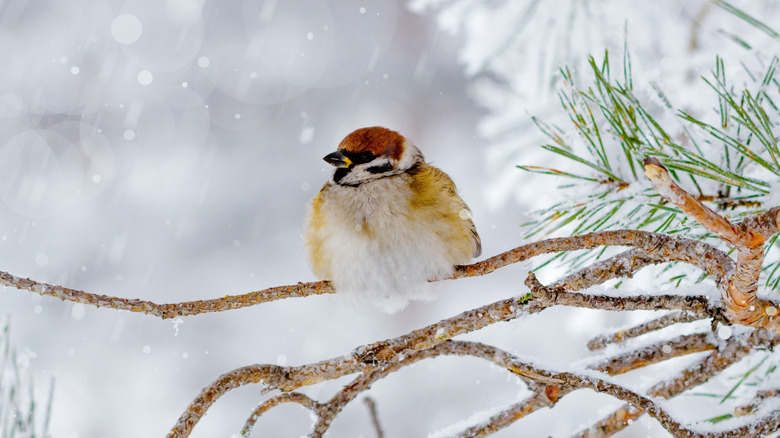
With a few simple additions, it's actually quite easy to turn your yard into a sanctuary for wildlife. This is especially true of birds, who are sure to be thankful for a well-placed bird bath, a few trees on which to perch, and perhaps some feeders hung strategically out of reach from your cat. However, just because your garden provides a haven for birds in the summer, that doesn't necessarily mean it'll cut the mustard when the bitter winds of winter begin to blow.
If you've become rather attached to the winged wayfarers who visit your yard in the warmer months, then you'll surely want to keep them safe throughout the colder months, too. After all, the winter is a tough time for birds. It's colder, for starters, with brutal winds that leave them searching for cozy spots in which to weather the storms. It's also far more scarce in terms of food, which makes careful management of your feeder more important than ever. The same can be said for your water bath, especially if you live in an area where water is likely to freeze in the winter.
Fortunately, there are a few easy tips you can follow to keep your yard attractive when the mercury starts to drop. Not only will heeding them help keep birds safe, fed, and watered through the winter, but it'll also allow you to enjoy the colorful flashes of myriad feathers when the hues of your summer flower beds have fallen fallow.
Provide shelter from the elements with evergreen trees and plants
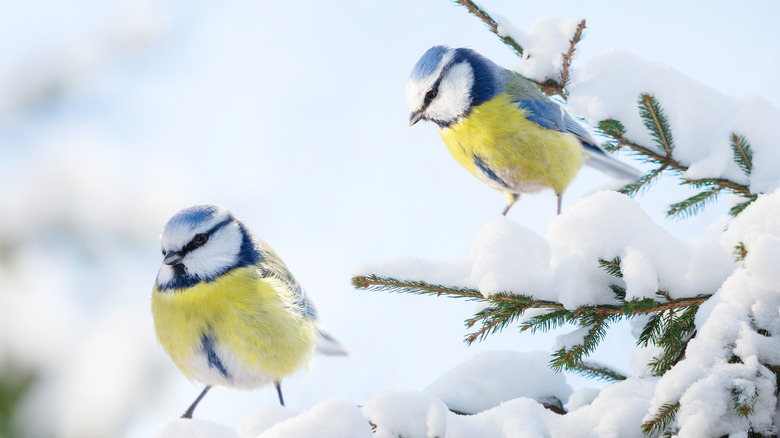
If you hope to attract more birds to your garden in the winter, then you need to provide them with suitable shelter. Unfortunately, while the deciduous trees of summer may seem like the perfect hiding spot for the array of birds visiting your yard, once the leaves start to drop, the shelter they provide from the weather becomes increasingly inadequate. Evergreens, on the other hand, especially those that are densely planted, provide precisely the kind of cover that birds need in the winter. Now, you shouldn't just plant any evergreen. Instead, look for species that are native to your region, as native birds are more likely to recognize and accept them as a source of shelter.
Generally speaking, conifers are a great choice, especially when planted densely to provide maximum cover from harsh winds. Certain species will hide in the branches, while others, like juncos and sparrows, will take shelter at ground level under the boughs — especially if the trees are planted closely together. To take it one step further, you could plant native trees that fruit in the winter (more on this later), effectively providing your birds with room and board.
Consider leaving leaf litter in place
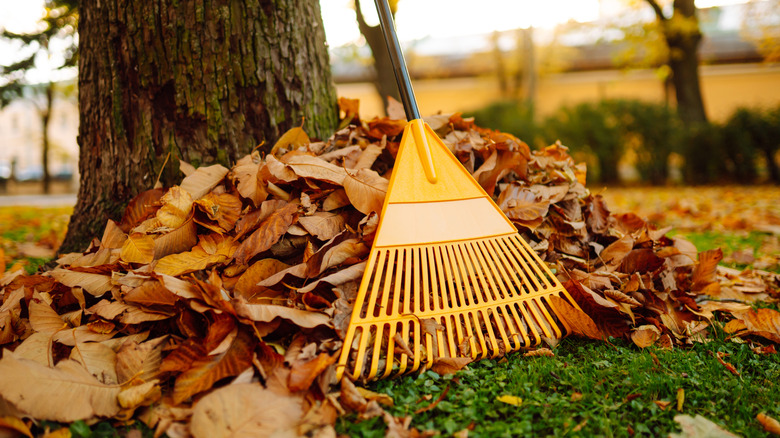
Winter is the season of scarcity. For humans, a simple trip to the grocery store is enough to keep our cupboards plentifully stocked. But for birds, sources of winter food are very much at a premium. With this in mind, bird lovers are advised to do as much as they can to keep the food flowing for their favorite feathered visitors. And one of the easiest ways to do this is to leave those fallen leaves in place.
Now, we'll admit that too many fallen leaves in your yard can cause several issues. However, by leaving some in place, you'll provide a rich seam of sustenance for overwintering birds. These piles of leaves harbor tiny insects and insect eggs, which in turn provide a useful source of sustenance for overwintering birds. You needn't leave them in place exactly where they fall, either; doing so can lead to other problems around your lawn that you might prefer to avoid. However, by raking them into a pile in a spot where you're happy to have them (and where they're unlikely to be blown away by the wind), you could minimize lawn damage while laying on the kind of banquet that birds love.
Build brush piles in sparse gardens to provide shelter
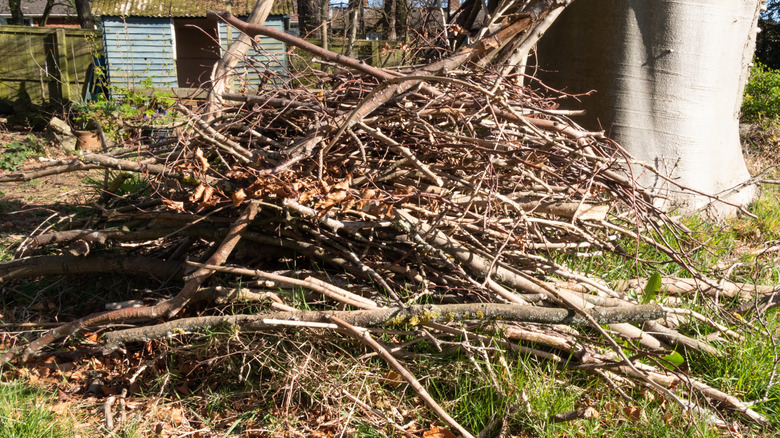
If you want to turn your yard into a wildlife haven through the cool season, then one of the easiest ways is to use the debris that naturally gathers around your yard. It could be that you had a heavy pruning session towards the end of summer. Or perhaps a storm blew through recently and left your garden strewn with blown-off branches. Either way, simply gathering them up and throwing them into a pile can provide a welcome habitat for overwintering birds, lending them some extra protection from both the weather and from predators.
As for how to do it, you needn't be especially creative. Just throw your twigs and branches into a rough pile, and top it up as and when new branches fall. You could also consider layering some fallen leaves into the pile. As these break down, they'll attract insects, which in turn will provide additional food for your favorite birds.
Use multiple bird feeders
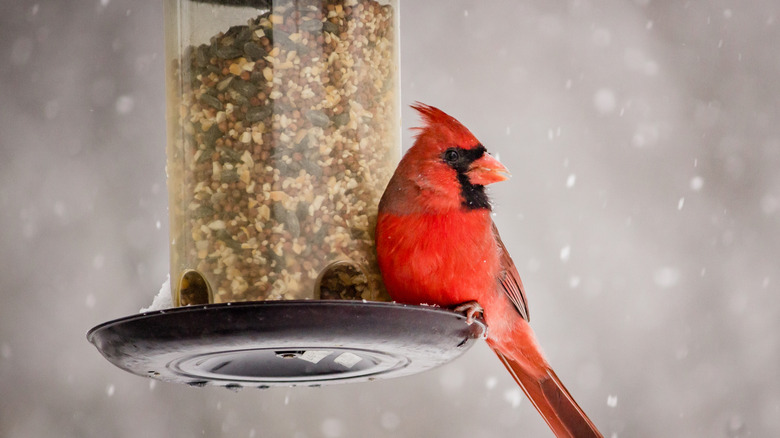
Given the scarcity of natural food during the winter, birds can use as much of our help as they can get. A single feeder is sure to attract them; however, since not all birds prefer the same type of food — and since food is more scarce — you may not be helping your feathered friends quite as much as you think with just one bird feeder. You could end up promoting competition between birds, and if you only feed with a single type of food, you may be leaving certain species having to sing elsewhere for their supper.
Instead, try to up the ante and attract more birds to your yard with multiple feeders. This doesn't mean arming yourself with dozens of them. Even just a few larger feeders can do the trick, allowing you to offer a variety of feeds while keeping competition among feathered foragers to a minimum. Just bear in mind that birds eat a lot during the winter. In fact, birds require up to 50% more food at this time of year, which means you should keep an eye on the feeders and regularly top them up. Do that, and you may just be surprised by how many (and how quickly) birds start to visit your winter garden.
Ensure that you feed regularly enough
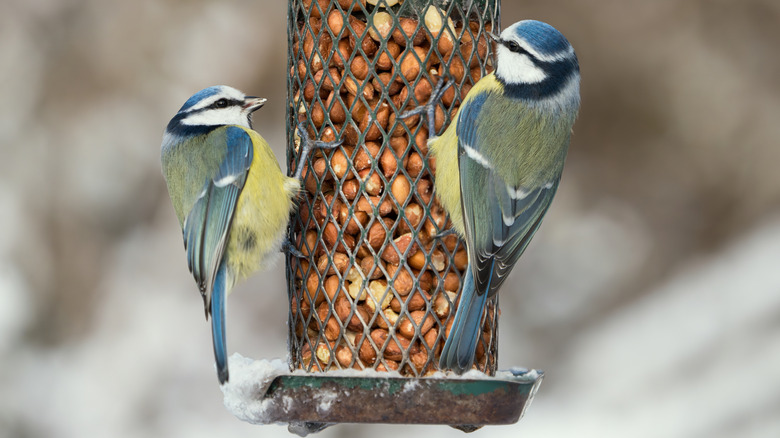
While you may prefer to stay in the warmth of your house on cooler days, keeping a warm coat handy and regularly checking on your feeders is key to keeping your local birds happy. It seems counterintuitive, but despite the scarcity of food in the winter, birds actually need more of it at this time of year than any other. And if you're one of only a few in your neighborhood going to the effort of feeding them, you may well be surprised by how quickly your feeders get cleared.
With this in mind, keep them regularly topped up, and make sure you have a plentiful supply of seed stashed in the shed to ensure you don't run out. Be consistent with your feeding so that birds know they can rely on your garden for sustenance, and if you're away for the holidays, consider asking a neighbor to keep the feeders topped up. Depending on the number of birds in your area, you may need to top them up daily — perhaps even several times a day. As for when to top them up, it's hard to say. Generally speaking, the best time to refill your bird feeders is when birds are unlikely to see and be scared by you. However, given the importance of food for birds in the winter, it's better to make your presence known and ensure they're fed than to let them go hungry for fear of making them nervous.
Use well-drained trays to keep ground feeders fed
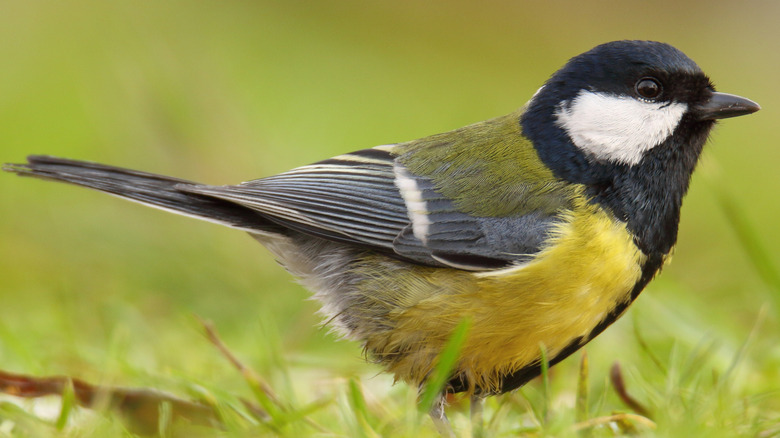
If you're putting out multiple feeders around your garden to keep the myriad species in your area fed with minimal competition, then don't forget to include some ground-level feeders. Some birds are quite content feeding from the feeders in your trees, but there are others that are much happier munching off the ground. The problem during the winter is that, in certain regions, snow can quickly cover up any seed that you happen to have sprinkled over your lawn.
More than that, consistent rainfall can quickly cause birdfeed to spoil. With this in mind, keep an eye out for signs of spoilage, and take steps to remedy any mold that builds up in your bird feeders. Consider using a tray for ground feeders, as this can be moved outdoors when bad weather threatens. You can also perforate the tray by drilling small holes into the base, which should allow any water to drain away and prevent the seeds from spoiling too quickly.
Avoid feeding with bread, milo, and cracked corn
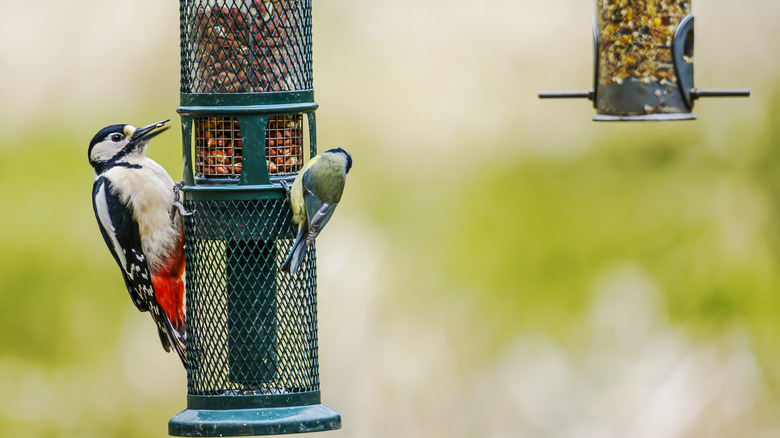
It's important to feed with the right type of bird food at any time of year, but it's especially essential in the winter. The issue with bread is that it leaves birds feeling full, yet provides very little in the way of nutrition. It can also cause digestive issues. At a time when they need to get the maximum bang for their beaky buck, all of this leaves much to be desired when feeding with bread.
As for cracked corn and milo, these are certainly viable feeding options. The potential drawback with using them is that they can attract birds like starlings and house sparrows. This isn't an inherently bad thing. However, these particular species have a tendency to crowd out other species. In other words, they may be better encouraged to forage for food elsewhere. Especially if you've gone to the trouble of putting out multiple feeders in order to keep several species happy, you could find your hard work quickly becomes undone when sparrows and starlings get wind that the getting's good.
Provide energy-rich foods
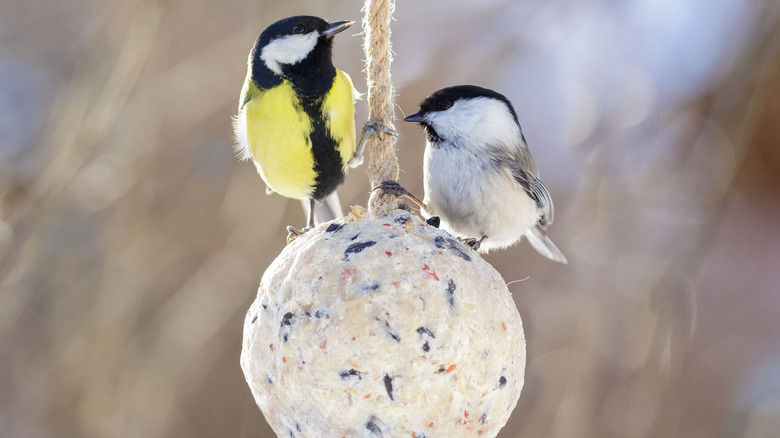
Birds' dietary needs change somewhat throughout the year. During the summer, especially when they undergo their annual molt, high-protein foods are the sustenance of choice. In the winter, however, energy is king. Foods rich in energy can help to keep spirits high among birds who are simply trying to survive, and even just a few morsels of something that's energy-dense can go a surprisingly long way.
Peanuts, seeds, suet, and even peanut butter are some of the best winter bird foods. Large seeds (like black-oil sunflower seeds) and peanuts are especially great for overwintering cardinals, blue jays, and finches. If you have chickadees, nuthatches, or woodpeckers winging their way into your yard, they're also sure to thank you for a proverbial platter of peanuts. If you went to the trouble of putting out multiple feeders, then catering to such an array of visitors is easy. Just be sure to keep a reasonable store of your chosen foods handy in the shed, and monitor your feeders to ensure they're suitably topped up.
Place your feeders and bird baths in safe spaces
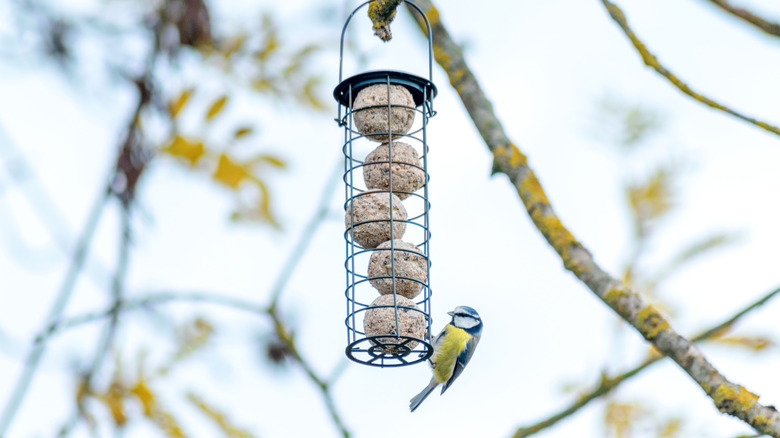
It's all very well placing multiple feeders and filling them with myriad morsels to cater to the various species visiting your yard, but if you have a cat, then careful feeder placement is key. If you do, or if you have cats frequently visiting your yard, then the best place to hang your bird feeders is where they can't reach them. You may need a ladder, but by hanging feeders at least 12 feet from the ground, you can prevent opportunistic felines from attacking your birds.
Of course, cats are usually quite happy to climb. However, if you choose appropriate bird feeder hanging spots, like high branches, then at least your feathered friends will have enough time to see what's happening and fly their way out of dodge. If you're unable to hang them from trees and are instead mounting them on poles, then consider adding a baffle to the poles beneath the feeders. These will help block your cat from jumping up to the feeder, thus scuppering their chances of successfully catching their quarry.
Provide clean and cozy housing
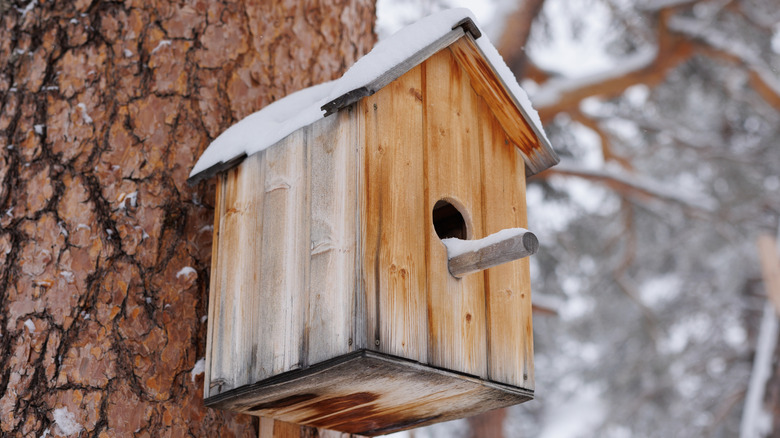
If you don't yet have birdhouses in your garden, then ahead of the winter is a good time to add some. Such structures can provide a welcome reprieve for birds seeking shelter from severe winter storms, and it's surprising just how many birds can huddle together in a single box. In fact, according to the RSPB, the record number of birds found in a single nestbox is 63 wrens!
In order to ensure your birdboxes get used, try to place them in a spot that's easy to find. Different species of birds will favor different habitats, so a little research here can go a long way. Generally speaking, a box near a steady supply of food and water — like your feeders and bird bath — are sure to be attractive, and if you're choosing to make your own charming birdhouse, ensure that you line it cozily. Materials like wood shavings and dry leaves are a good choice, and while you're winter-proofing them, aim to plug any ventilation holes to keep out the worst of the wind.
Finally, if you have existing birdhouses, then it's important to give them a spruce ahead of the winter. If you don't, you risk spreading parasites and diseases. To minimize the risk of this, remove any old nesting materials from previous tenants, and give the structures a good wipe-over, inside and out, with a 10% solution of Clorox and water.
Keep frozen bird baths replenished with fresh water
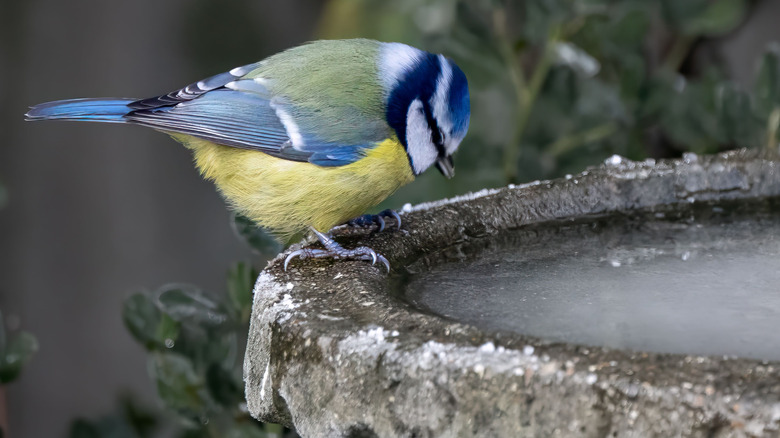
While there is plenty you can do to keep your bird bath water clean, whether or not it freezes is largely out of your hands. After all, you can't control the weather! If the water in your bird bath freezes, then there's a good chance much of the available water in your area has frozen, too. To ensure your local birds are still able to score a drink, keep a close eye on your bird bath in cold weather. Break up any ice that collects, and keep it topped up with fresh water.
Alternatively, you could choose to use one of the many types of heated bird baths currently on the market. These are a boon to bird lovers in the winter, particularly in areas that experience extreme winters, helping to keep the water suitably thawed. You'll still need to top up a heated bird bath regularly, and whether or not your bird bath is heated, keeping both the bath and the water clean is essential to prevent the spread of nasty pathogens.
Keep your bird bath and feeders clean
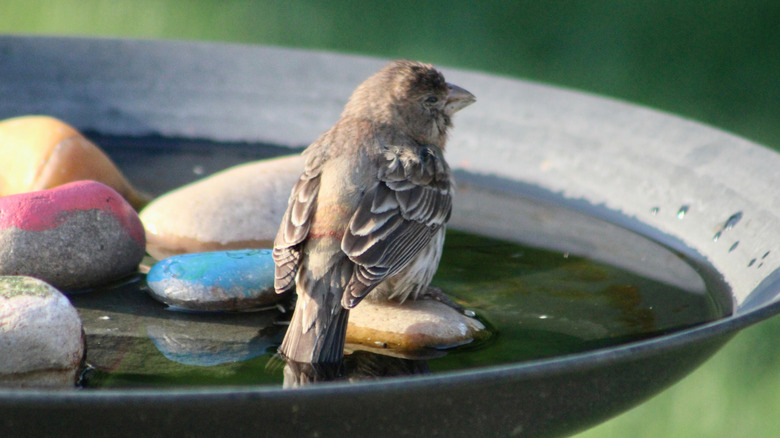
Knowing how to properly clean your bird feeder is important throughout the year. But in the winter, birds become more vulnerable to the pathogens that dirty feeders and bird baths can harbor. This means that while you may not be as inclined to take your cleaning equipment outside when the winter winds are howling, it's actually the time when you need to be your most diligent. If you're not, and if other households in your area aren't as generous with their supply of food and water, then you could find yourself with more birds than ever at this time of year. In other words, your bath and feeders could be busier than ever, and if you don't keep the feeding and bathing sites clean, you risk allowing diseases to spread.
So, keep them nice and clean! If you have a bird bath fountain, ensure that you clean the water tubes, and be sure to change the reservoir water periodically (and clean the reservoir) to keep pathogens from spreading. As for how to clean it all, simple hot water is usually best. Don't be tempted to use bleach; this can contaminate both food and water, and could easily cause more harm than good.
Consider winter-fruiting plants
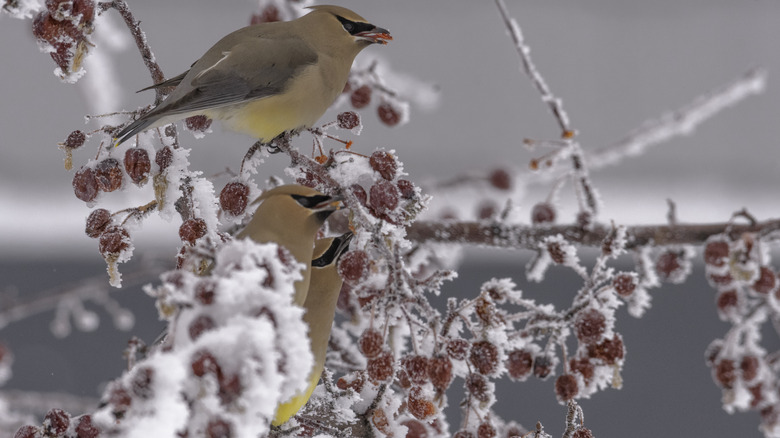
Reminiscent of a Christmas card, there's nothing like a winter-fruiting berry tree or bush to bring a dash of color to an otherwise dull winter garden. The other benefit is that many of these bushes can provide a welcome supply of nutrient-rich food to birds. At a time when food is scarce, this can help turn your yard into a wonderland for winged wanderers.
As for the plants you use, they don't necessarily need to be fruiting types. Plants like coneflowers, sunflowers, rudbeckia, and goldenrod all provide much-needed, seed-based sustenance. But if you want to plant something that yields fruit, then native hollies, beautyberries, and spicebush are some of the best choices, providing berries for hungry birds. Try to go for something native to your region. The point here is to provide birds with winter sustenance, and if they don't recognize the plants you add to your garden, they may be less inclined to eat the fruits of your labor.
Add perching branches to your bird bath
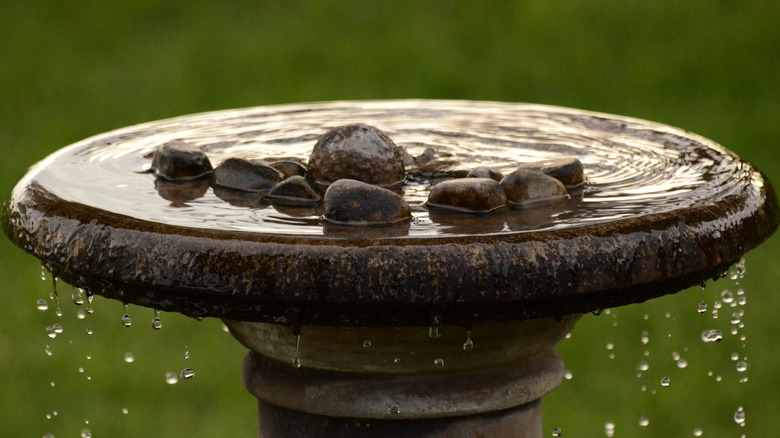
One of the best tips to attract birds to your bird bath is to provide them with a handy place to perch. In the summer, filling a textured bowl with water is a good bet, providing an anti-slip surface for birds to stand on while they drink. In the winter, though, birds prefer to keep their bodies as clear as possible from icy cold water, and if we're honest, we can't blame them.
With this in mind, consider adding something to your bird bath to help them perch without standing in the water. One idea is to place stones in the bottom, ensuring that the tops of the stones sit clear of the water's surface. Another is to place branches in the bird bath, although, once again, you should leave some clearance between the branches and the water, to ensure the birds can keep warm while drinking.