

What Does It Mean When You See A House On Stilts?
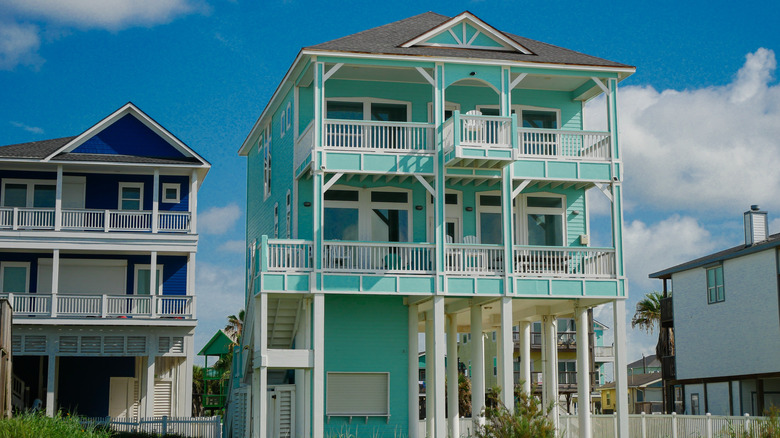
Houses come in all shapes and sizes, ranging single to multi-stories, as well as those with basements or with large attics that can be transformed into extra rooms. Many homes are also built on top of concrete slabs without any basements or crawl spaces. On the opposite spectrum is the curious home on stilts you might come across from time to time. True to their names, stilt-built homes are those that are built upon platform foundations supported with pillars. In most cases, houses that sit on top of stilts indicate that the neighborhood is in a flood-prone area, with the extra elevation providing extra security in the case of water-related disasters. A more concerning (but less common) reason is a home placed on temporary stilts due to structural problems.
If you've ever been in a coastal community or a neighborhood near a river, chances are you've seen many of the surrounding houses on stilts. These types of homes can be aesthetically appealing, and the added altitude may provide residents with a wide-ranging view of their surroundings. Historically though, the main goal of stilts is to help keep the home safe from flooding. Depending on the overall risk of flooding, some regions are even required by local building codes or FEMA flood zone laws to elevate homes off the ground by a certain level. Stilts may help builders meet these requirements, and some homeowners might even elevate existing ground-level houses onto stilts at a later time. In other cases, the stilts can serve as temporary structures to lift a home while important repairs are made.
The pros and cons of homes on stilts
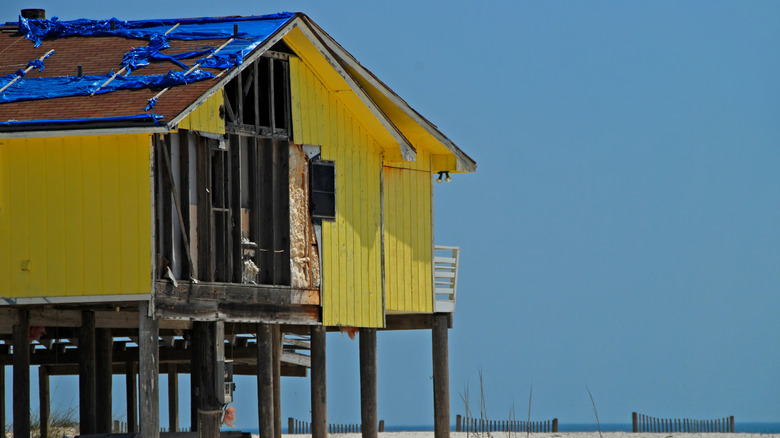
The greatest advantage of a stilt-built home is its elevation if you live in a flood-prone area. Whether this is along a beach, river, or in another type of at-risk area for storm surge, having your home above ground may help provide some protection against water damage. Some home flood insurance companies might also provide discounts on premiums for this added safety measure. Aside from these practical advantages, some homeowners also prefer stilt-built homes due to their reduced impacts on the environment as well as their overall aesthetic appeal.
Perhaps the biggest downside to a home on stilts is the fact that it's likely in a flood-prone area. This can inherently mean more stress during hurricane season, as well as more frequent evacuations due to storms. Also, while homes on stilts offer elevation against flooding, no stilt-built home can be guaranteed to withstand water damage completely. This is especially the case with significant water rises from storm surges and other devastating events. It's also important to know that stilt-built homes are more vulnerable to wind and earthquake-related damages. No matter what your elevation, it's important to have an essential storm checklist to prepare your home.
Another downside to a stilt-built home has nothing to do with flooding whatsoever. If you are in an inland neighborhood, it's quite unusual to see these kinds of houses. Sometimes a house is physically lifted onto temporary pillars due to problems with its foundation. A key giveaway is seeing signs of a former concrete foundation underneath the house along with wooden or concrete blocks that don't quite match its overall architectural design.