

12 Of The Best Tips & Tricks To Make Shoveling Or Removing Snow Easier

We may receive a commission on purchases made from links.
Snow removal can be one of the most labor-intensive seasonal chores there is. Not only that, but there are so many rules to follow while doing it, like not simply piling the snow onto your neighbors yards, and other pieces of snow shoveling etiquette. Luckily, there are plenty of tips and tricks to make shoveling or removing snow easier, no matter your fitness level or the amount of bad weather you receive in your area this winter.
When you prepare for the big task ahead of you before the first flake even hits the ground, you'll find that the chore isn't as bad as it's always seemed. All it takes is some careful consideration about how you plan to attack the blanket of snow, as well as investing in a few tools to make your life a lot easier. Combined with a little bit of patience (and a strong warm up, as after all, it can be a very physical chore), this winter will be your easiest yet.
Warm up your body first

Of all these tips, properly preparing your body for this physical chore is the most important. Everything will be easier and safer if you don't just dive right in. "Shoveling a little snow off your sidewalk may not seem like hard work. However, the strain of heavy snow shoveling may be as or even more demanding on the heart than taking a treadmill stress test, according to research we've conducted," Barry Franklin, a professor of internal medicine at Oakland University William Beaumont School of Medicine, told Newsroom. "For example, after only two minutes of snow shoveling, study participants' heart rates exceeded 85% of maximal heart rate, which is a level more commonly expected during intense aerobic exercise testing. The impact is hardest on those people who are least fit."
This is dangerous because sudden, strenuous exercise can cause strain to your cardiovascular system, resulting in a heart attack. You definitely don't want to lose your life over something as little as a snowy sidewalk. A recent Canadian study indicated that after heavy snowfall, the odds of men being admitted to the hospital for a heart attack increased by 16%, and their chance of death from the event increased by 34%. Doing some stretches and planning to take plenty of breaks while shoveling can be helpful, but the most important advice is to know your limits. When in doubt, remember to never lift the shovel above your heart to throw snow over your shoulder, for example. The name of the game is low and slow!
Create smaller paths first, then widen them
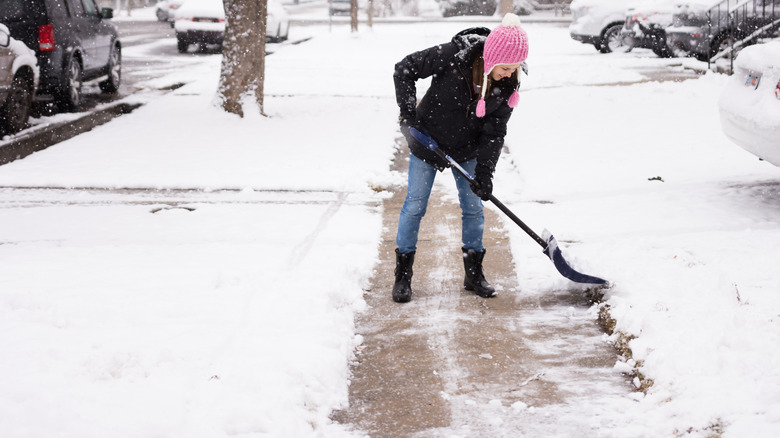
Having a plan in mind before you start shoveling snow on your property can reduce your risk of injuries, as well as your overall frustration with the enormity of the chore. First, consider whether you just want your driveway clear, or if you also need a way to get to your shed, etc. Then, in an effort to keep things as simple as possible, carve out a path just wide enough for you to walk through first, then you can go back and widen it later. This way, you're not breaking your back for hours only to still not be able to get to your mailbox. When shoveling snow, you should aim for the overall usability of the space first and not total perfection.
This approach also keeps you from random patchwork shoveling. You can stay focused on accessing different parts of your property with small, focused pathways which makes the task overall more manageable. Finally, you should also consider where you plan pile the shoveled snow. Forgetting to plan for this is the crucial snow-shoveling mistake that can cause harm to your yard and garden. That is, the weight of the piled snow can compress your lawn, while the salt mixed in with the shoveled snow can also cause damage to plants. For this reason, pick a "non-green" spot to shovel your snow, like in the corner of your driveway, or simply along its edges.
Use a rake to clear snow off a gravel driveway
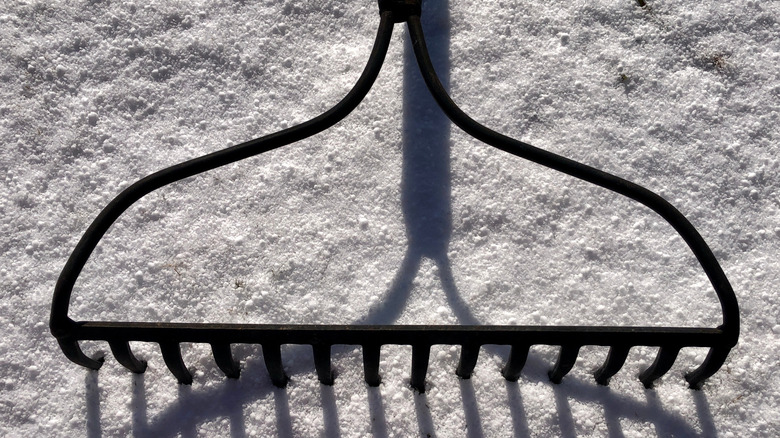
When you have a gravel driveway, using traditional snow removal methods can be frustrating. This is because you might feel like you are removing half your driveway with each pass, as plenty of gravel gets mixed in with the snow while you're working. If this is the case, a great hack to make things easier is to use a rake instead of a shovel. The trend has been taking off on TikTok, with its DIY users seeming to have great success.
The key to this rake trick that makes removing snow and ice from a gravel driveway a breeze is to flip the rake so the teeth face up towards the sky. Then, you should push it across the snow like a broom. This way, the gravel won't get caught, but the snow will still move. It's a lot physically easier than using a shovel, since you are pushing snow across the ground, not picking it up and tossing it.
A leaf blower can remove freshly fallen snow
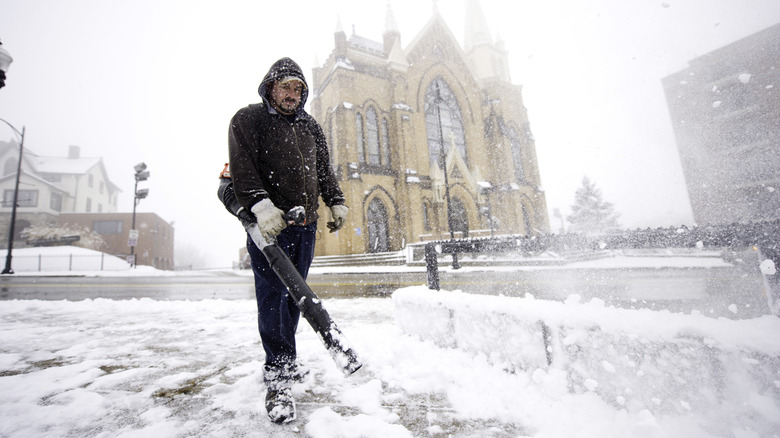
When a fresh layer of snow has just fallen, it tends to be powdery and light. To remove new snow without much effort, a great trick is to just use a leaf blower instead of a shovel. You can use the stream of air to move the powder out of the way. However, if the snow is very deep, or has melted and refrozen, this hack might not work because there will be too much mass for the leaf blower's capacity. It won't be able to move it.
When it is an option, however, something like the LAZYBOI Cordless Leaf Blower works well because it doesn't need to be plugged in during use. This way, you have more flexibility for where you can use it on your property. If you find that the leaf blower isn't working, there are more powerful, purpose-built machines like snowblowers that can move heavier snow. The Westinghouse WSnow20 Corded Snow Blower is an example. But, if you live somewhere that it doesn't snow very often, and when it does, it tends to stay light, this leaf blower hack should work just fine. You won't have to break your back outside with a shovel, either.
You can move snow directly into the sewage system with a wet/dry vacuum
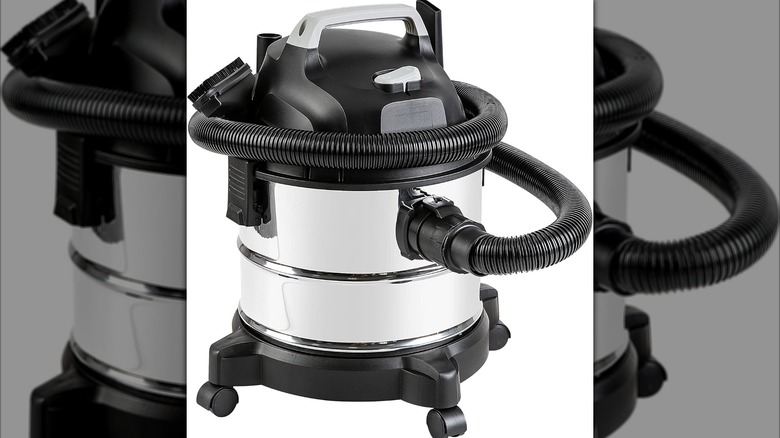
Getting rid of the snow you shovel can be one of the hardest problems to solve, yet using a wet/dry vacuum is the hack you can use to easily remove snow in a pinch. It's really as simple as it sounds. Set the machine to "suck" and fill the tank with the snow you want to remove. Then, as long as it's really just snow and not clogged with other debris, you can change the tank to the "blow" feature and push it directly into the sewer. While this is a great way to get rid of small amounts of snow, depending on the size of your machine, it might be quite labor intensive for larger drifts.
If you don't yet own a wet/dry vacuum and want to buy one to make snow removal easier, or for other chores around the house, you have plenty of options to choose from. The Amazon Basics Wet Dry Vacuum Cleaner is inexpensive at $54, making it a good entry point. The Armor All, 2.5 Gallon 2 Peak HP Wet/Dry Utility Shop Vacuum is smaller, but quite portable, making it a good choice for harder to reach spots, like around your deck or in your side yard. Finally, the Vacmaster 5-Gallon 3.0 Peak HP Wet/Dry Vacuum has a cleaning reach of 16 feet, making it a good choice for longer driveways, or homes with limited outdoor outlets.
Shovel first thing after snowfall
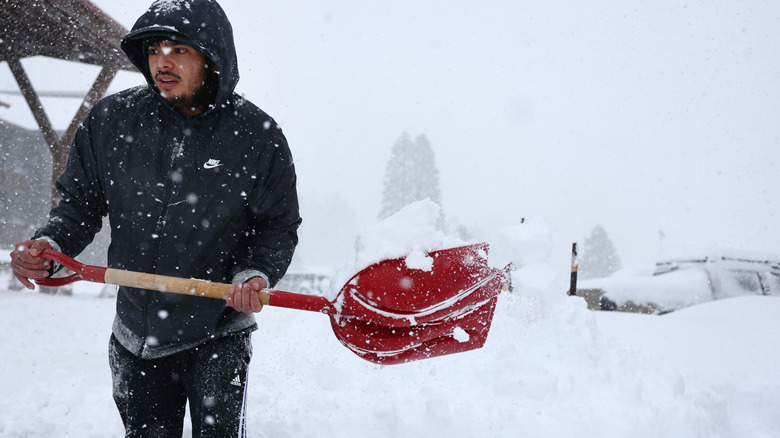
Snow is easiest to work with when it's still nice, light, and fluffy. To make removing it easier, one of the best tricks is to get out and shovel before anyone can walk or drive on it and it becomes compacted, and as a result, a lot more difficult to move. So, the best time to shovel snow for easier removal is right away — meaning attacking the chore first thing. It often tends to snow more overnight, so making time before anything else in the morning is essential to the chore being easier. You want to start working before the snow has a chance to get tamped down, or can melt and freeze up again.
Getting out ahead of the freeze/thaw cycle is one of the best things you can do — even if it makes you wake up earlier in the winter. Trust us, you'll be thanking yourself when the chore isn't nearly as difficult, even if waking up for that first alarm is one of the hardest things you'll do all year.
Don't just buy just one type of snow shovel
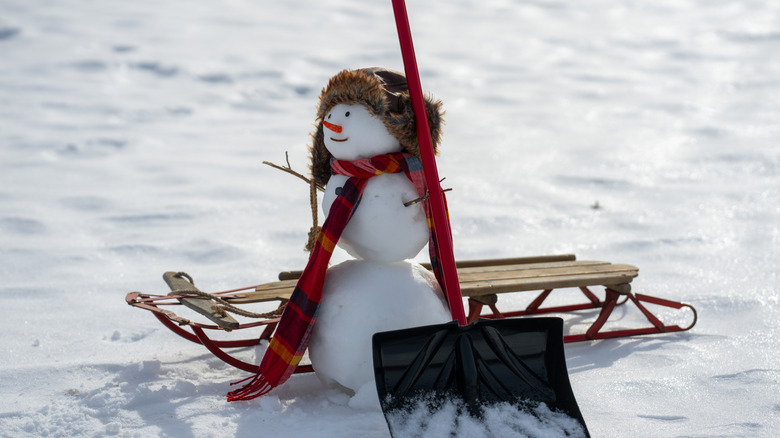
Clearing snow quickly and effectively means having the right tools on hand for the chore. While you might think that just one shovel will get the job done, this often isn't the case. That is, plastic shovels tend to work well for getting snow off cars, where scratching the paint is a real concern. Because most of this work occurs off the ground, plastic shovels are also easier to use in these instances because they are typically very light. However, their flexibility also means that they can break when used on tougher surfaces like concrete, so you'll need a metal one for more heavy duty jobs.
When thinking about plastic versus metal snow shovel, remember that the answer is more often than not both of them. Having one smaller plastic shovel for lighter jobs, and a metal one for tougher work is typically going to be your best bet. However, if storage is tight, you can also reach for a combo option, like the Yeitsnow Ergonomic Design Snow Shovel, which is plastic, but with an aluminum strip along its lips so it doesn't get caught on the pavement. You can also purchase an electric shovel, like the Snow Joe 320E Electric Snow Shovel, which is more expensive than a classic shovel, but also does most of the work for you.
Salt your driveway well before the first flake falls
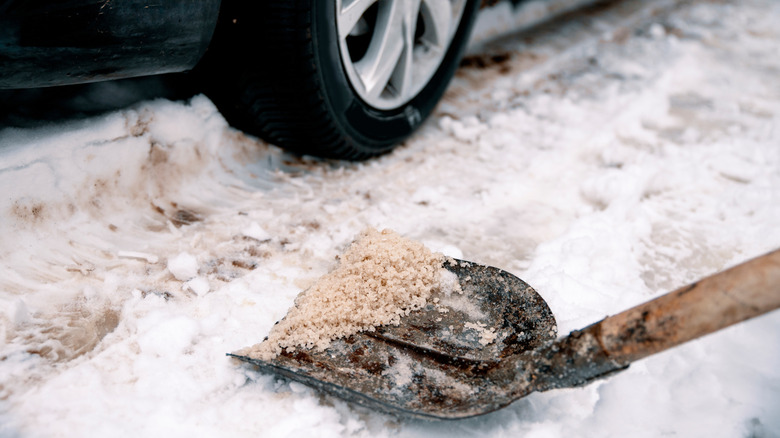
If you're newer to living in a snowy climate, you might not understand why there's salt everywhere in the winter. The idea behind this is that salt lowers the freezing point of water to below its typical 32 degrees Fahrenheit. The molecules in salt make it harder for water molecules to stick together and form ice. This means snow with salt in it is more likely to evaporate than form icy sheets on your pavement. It's important for the ice to be on the ground before the first snow, so to make clean up easier for yourself, spread it on your patio, driveway, and sidewalks when you see snow in the forecast.
There are different types of salt. Table salt is called sodium chloride, but if your local government is doing the salting, it will typically use a type of salt called calcium chloride instead, because its molecules are more aggressive when preventing ice from forming. However, gentler options are available, too, like calcium magnesium acetate, available as Snow Joe Premium Enviro Blend Ice Melt. To make things easier, you can even use a fertilizer trough to spread salt around your property. This way, you don't have to handle the salt with your hands, and can spread it more evenly. Just clean it thoroughly when you're done, so you don't accidentally salt your plants come spring. You can also use a shovel.
Put industrial snow melting mats on your driveway
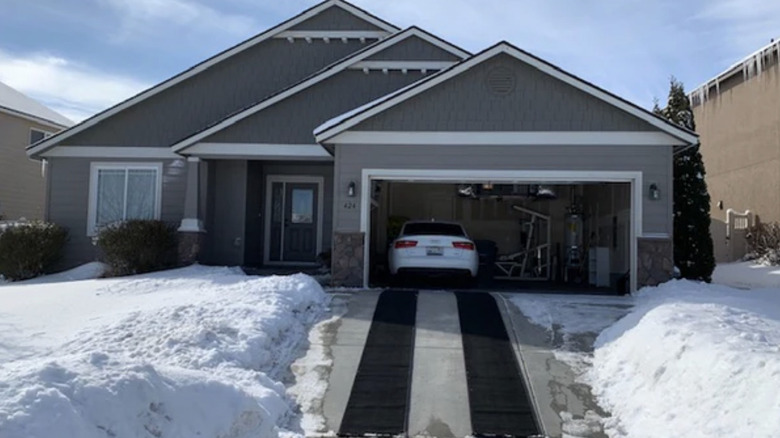
Having a driveway and sidewalks that melt the snow for you, without you needing to lift a finger, is possible. It's expensive, but it's totally doable. To achieve this dream, there are two main avenues for you to take. The first is to install radiant heating underneath your driveway. This is a good idea if you already need to repave your driveway, as you'll need to rip up the concrete. It typically costs around $13,000 for installation. But if it's in your budget, it means you never have to do this chore again.
The second option is to invest in heated mats that do much the same thing, but they are rolled out over the pavement seasonally, instead of being installed underneath. One option is the HeatTrak Heated Snow & Ice Melting Driveway Mat. Starting at $980 for one 24 inch by 10 foot mat, meaning you would need a starting investment of $1,960 for the pair it would take to melt paths for both sets of your car's tires. When it starts warming up outside, you simply unplug the mats, clean them off, then stash them out of the way for summer storage.
Use a roof rake to safely remove heavy buildup from your roof
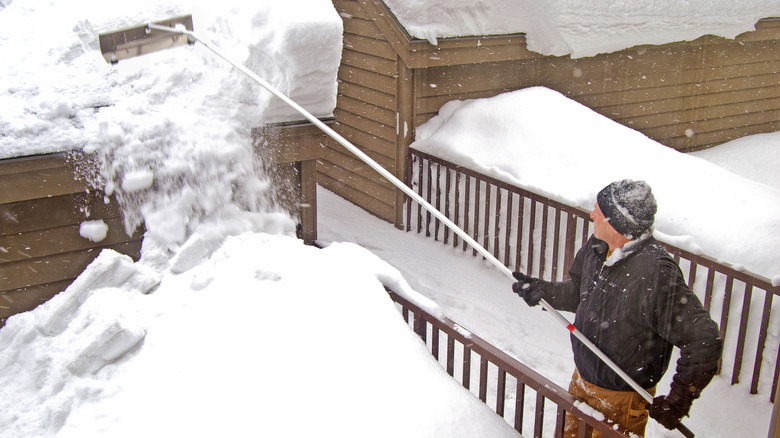
Sometimes the best hack for making a chore easier is just having the correct tools. When it comes to safely removing heavy snow buildup from your roof, there aren't many ways around it. You need a roof rake. Sure, there are more old-fashioned ways of removing roof snow, like getting up on the roof with a buddy and using a rope to slice small sections of the snow off at a time, letting them fall as you go. However, anything that involves climbing onto a frozen roof can be dangerous. It's better to stay on the ground or leave it to the professionals.
Yet, if you can't wait for a professional to come out to clear the snow, using a roof rake is likely the safest alternative. This situation would typically involve snow built up so high that the roof is sagging or you are concerned about the weight of the snow causing a roof collapse. Using a tool like the Extreme Max Poly Roof Rake can help you pull small sections of snow down at a time, but from the safety of the ground.
Use a cover on your car to reduce build up
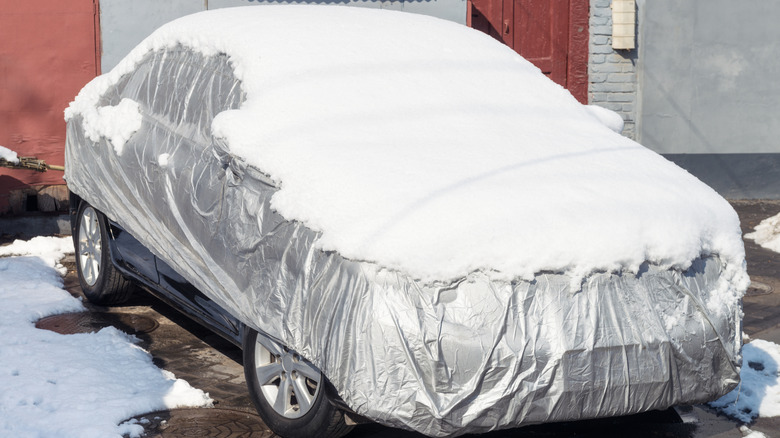
Getting snow off of your car and de-icing the windshield can be one of the most annoying parts about winter. It's just one more thing to add to the list during mornings that are likely already jam-packed. To make things a little easier on yourself, consider using a cover on your car to reduce overall snow build up. This way, you don't have to scrape anything off. You can just remove the cover and shake the snow off.
There are different types of car covers available, so you can choose the one that works best for you. The first is the EzyShade 10-Layer Car Cover, which covers the entire vehicle. You can use it year-round, as in the summer, car covers protect your vehicle from things like bird poop, leaf build up, and interior overheating. As an alternative, the EcoNour Windshield Cover for Ice and Snow keeps snow and ice off just your front windshield, and you can let the rest of the snow fall off once you start driving.
Keep up with snow berms quickly
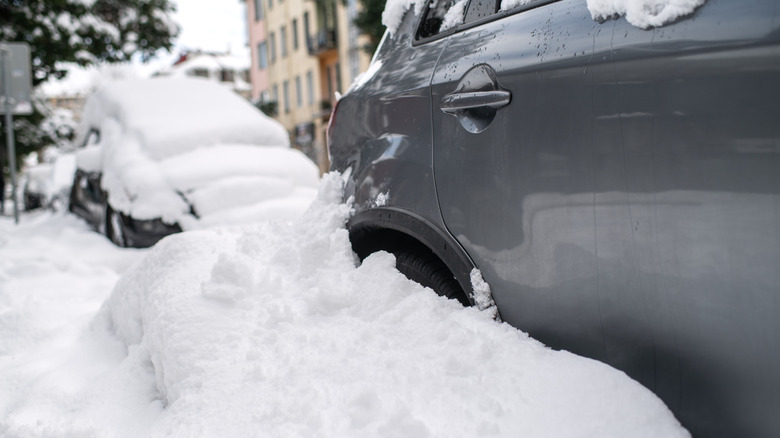
After it snows, your local government is likely to plow the streets of your neighborhood. As the snow plows come through, they can move snow off the main roads, but it often accumulates along the edges of the street. These packed walls, called berms, can block driveways. And, unfortunately, they can become rock hard quite quickly — blocking your vehicle in place. While many areas have policies in place to try and prevent the creation of these snow berms, as they can be quite annoying, it doesn't mean they are never going to form. So, you need a plan to deal with them.
The best course of action is, as soon as you hear the snow plows go by, get out there and clear off the end of your driveway. However, remember that there is still some etiquette around what to do with the snow. The general rule is to shovel it to either side of your driveway, and not back out onto the street. Also remember that if your city or county has placed "snow stakes" near your driveway, don't remove them. When the ground is covered in snow, these stakes guide the plows.