

Why You Should Avoid This Sunset-Esque Houseplant If You Have Pets
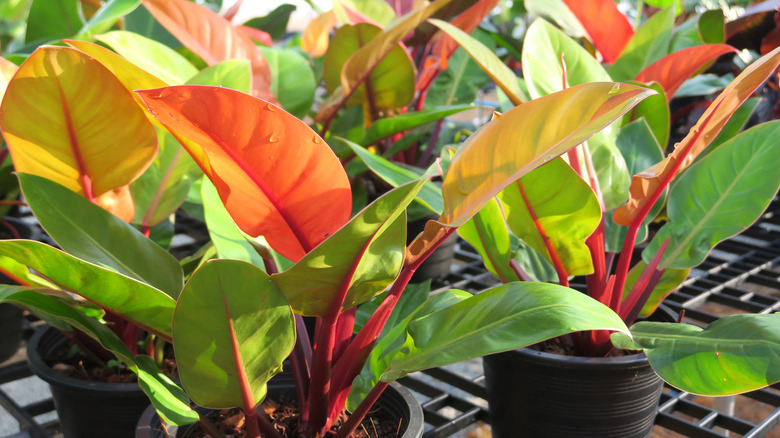
With so many green-leaved houseplants, those with colorful foliage are hard to pass up. However, the 'Prince of Orange' philodendron (Philodendron erubescens 'Prince of Orange') is a houseplant you should never grow in a home with pets. This plant features color-changing, sunset-esque leaves. New growth emerges in bright orange shades and slowly shifts to yellow or copper before maturing to a deep green. Unfortunately, those beautiful leaves are also what make this plant a poor choice for homes with animals, as they're toxic if ingested. While the toxicity is considered low and often manageable with basic at-home care, chewing on the leaves can still cause painful irritation in cats, dogs, and other animals.
Not only is this plant poisonous to cats and dogs, but philodendron species can also cause adverse reactions in small mammals like rabbits, as well as birds and other types of animals. So, regardless of the type of pets you have, it's best to opt for a non-toxic alternative. Even in households without pets, caution is still advised, as philodendrons are also toxic to humans. Curious kids may be drawn to the bright orange leaves and be more tempted to chew on the foliage. When this happens, they can have symptoms that include mouth burning, blisters, diarrhea, nausea, and even swelling of the tongue and mouth. If they get residue in their eyes, it can also lead to corneal irritation or damage. Contact a medical professional immediately if you suspect your child has ingested this plant.
Why 'Prince of Orange' is toxic to pets
Although pets can get sick from ingesting too much of any plant, the reaction to this plant goes beyond a typical digestive upset. Philodendrons, including the 'Prince of Orange' variety, contain calcium oxalate crystals that are toxic to several types of animals and humans. Plant species containing these crystals use them as a defense mechanism. When bitten, the leaves and stems release the crystals into the mouth, causing immediate discomfort. Some symptoms for pets include drooling, nausea, vomiting, and diarrhea. In severe cases, your pet may experience throat swelling that makes it challenging for them to breathe. If you catch your dog or cat pawing at their mouth or shaking their head, it's a good sign they've nibbled on the leaves.
If your pet has chewed or ingested some of the 'Prince of Orange' philodendron plant, let them lick a small portion of yogurt, vanilla ice cream, or milk. However, be sure that anything you offer is free from toxic ingredients, such as xylitol. Dairy products may help soothe some of the irritation when offered shortly after exposure. Although your pet is unlikely to experience any long-term effects, it's always a good idea to contact your veterinarian. A professional can determine how severe the exposure is and may be able to offer something for their pain or discomfort. Once treated, move the plant out of your pet's reach or replace it with a colorful houseplant that's safe for pets, like a calathea.