

What Is A Concrete House, And Is It Right For You?
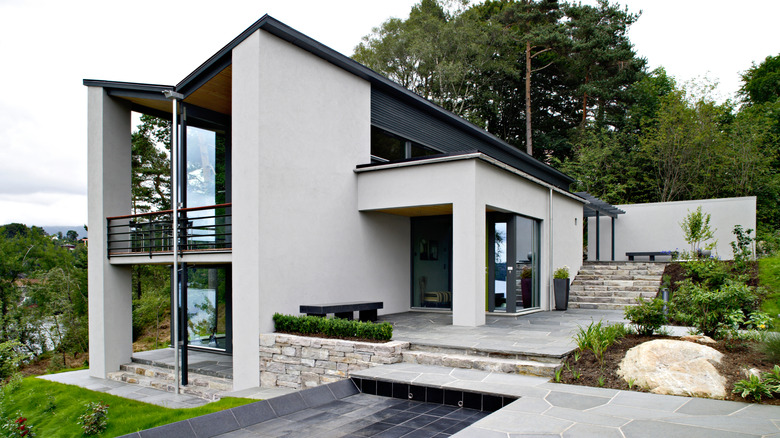
Despite being ubiquitous in countries around the world, particularly in Europe and South America, concrete homes are still fairly rare in the United States when compared to the hegemony of wood. According to the National Association of Home Builders, concrete frames were used in just 5% of single-family homes completed in 2024, a far cry from wood's whopping 94% dominance. This preference for wood construction dates back to colonial times. Still, this commonly used home-building material may be worth reconsidering, as concrete's widespread use globally suggests it could be a viable option for some U.S. homeowners as well.
Concrete is made from cement (typically limestone and clay), mixed with water and aggregates (sand or gravel). In construction, it can be used via precast blocks and panels, or cast in place using forms. The most common type of concrete construction is done with foam-based insulating concrete forms (ICFs), which, unlike removable forms, are left in place to provide thermal and acoustic insulation. Long used for foundation construction, ICFs can be applied to an entire building.
If this sounds more complex than nailing a few pieces of wood together, it's because it is. Concrete homes generally take longer to build than wood-framed homes, which, along with higher costs, helps explain their lower popularity. Nevertheless, many still choose concrete for its durability, safety in the face of extreme weather, and energy efficiency.
Concrete homes resist extreme weather events
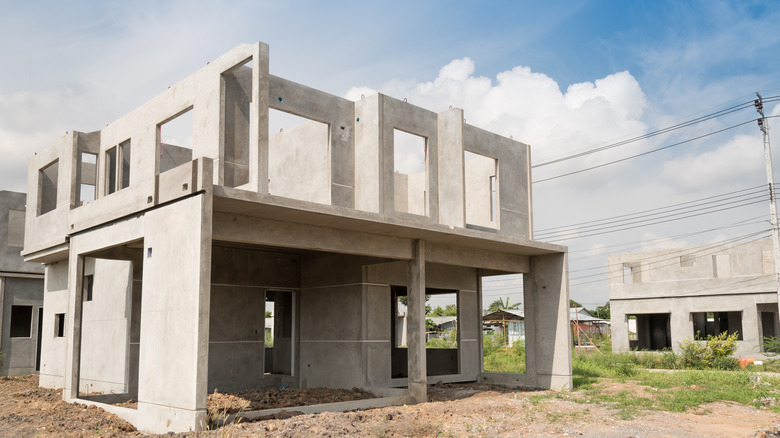
Whether you're buying a home or building a home, understanding the particularities of a construction's make-up is essential to prepare for the present and the future. When it comes to upfront costs, concrete construction is significantly pricier than wood. This material, particularly in precast form, is more difficult to transport and requires specialized labor, which may be scarce and, thus, more expensive. It only makes sense that there are fewer construction-related resources available for homes that constitute such a small percentage of the nation's total.
However, this scenario may soon change. As climate change increases the severity of weather events, the strength of reinforced concrete, which includes steel for added flexibility, is becoming more attractive to home builders.
Although timber homes have long been regarded as cheaper and faster to rebuild and repair in the case of catastrophe, the evolution of concrete to withstand impact, on top of its fire-resistant qualities, as well as the rise in lumber prices, is tipping the scales in its favor. In fact, concrete's durability may even translate into cheaper premiums on different kinds of construction and home insurance, which, in turn, could result in long-term savings. Consequently, a concrete house may be right for you if you live in an area affected by wildfires, tornadoes, hurricanes, and even earthquakes, provided the material is reinforced.
Other benefits (and drawbacks) of concrete houses
Although durability and strength are definitely concrete houses' biggest selling points, there are a number of other benefits worth considering. For starters, with concrete houses, you don't have to worry about pests, such as termites, beetles, and woodworms. There is also less chance of moisture-induced warping, sagging, or rotting. However, because concrete is porous, it can be susceptible to mold growth if moisture is not properly managed. Additionally, with reinforced concrete, humidity may start to cause corrosion of the steel rebar. Over time, this corrosion can lead to cracking that is costly and potentially dangerous to repair. Corrosion-resistant metals like stainless steel and aluminum can help solve this issue, but they're expensive and therefore not widely used in concrete house construction.
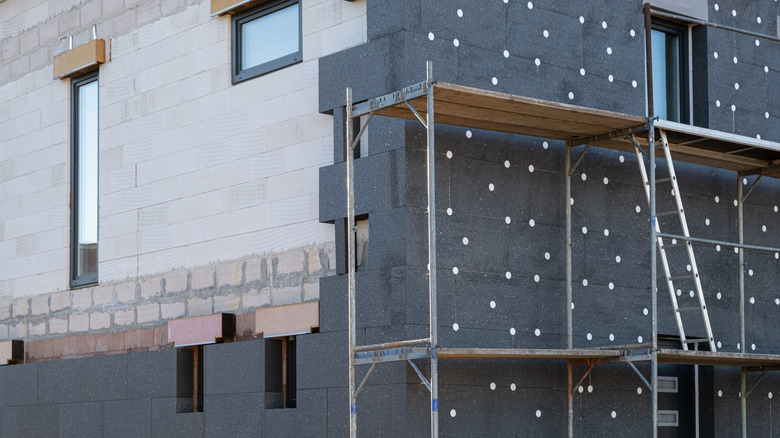
Insulation, both acoustic and thermal, is another advantage of concrete homes. The former will particularly interest those living in bustling urban areas, while the latter is beneficial to pretty much anyone. While no material on its own can beat wood's natural insulating properties, concrete can significantly help reduce your energy costs at home when correctly padded. As mentioned, ICFs already integrate some insulation in the cast-in-place form, namely foam panels, but there are other ways to insulate concrete framing, even when it's precast. Spray foam, rigid foam, fiberglass batt, or cellulose help prevent moisture from seeping through and control the flow of heat to ensure your home remains cool in summer and warm in winter.