

The Storage Mistake That's Causing Your Dahlia Tubers To Go Mushy Over Winter
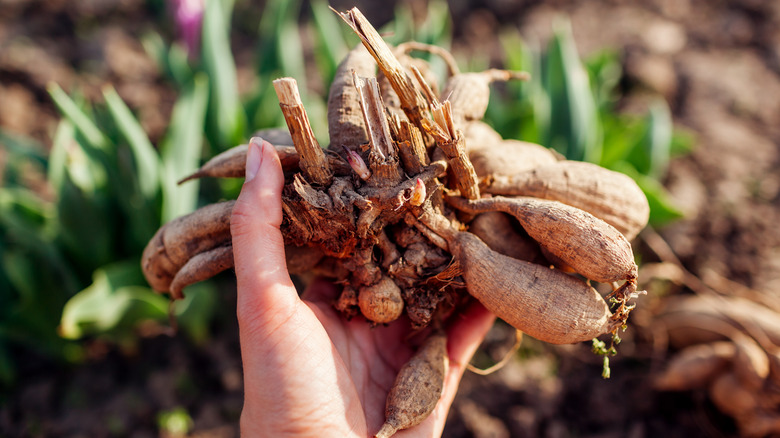
Digging up and overwintering your dahlias is an excellent, forward-thinking fall task. These beautiful flowers are only winter hardy in zones 7 to 10, but that doesn't mean you need to let them die when the freeze hits if you live in a colder climate. Dahlias can be kept for years when they're overwintered properly, meaning that you get lush blooms summer after summer. However, there are a few winter storage mistakes that could hurt your chances of success in the spring. To ensure that your dahlia tubers last, it is important to keep an eye on them over the winter months and avoid improper storage.
If you have experienced mushy tubers over winter, rot is probably the cause. Rotten tubers are soft, discolored, and will usually have a funny smell to them. Rotting tubers can be caused by a number of things. Although they do need some moisture in storage, a wet medium can result in rotting. Furthermore, not curing them properly before storing them or allowing the tubers to touch one another can cause these issues. The storage medium, containers, and location also play their part, with certain storage media retaining too much moisture for what the overwintered tubers need. If your dahlias have started to rot in storage, you need to remove them straight away. The rot may spread to other healthy tubers that are nearby if not dealt with quickly.
Cure dahlia tubers before placing them in moist medium in a cool location
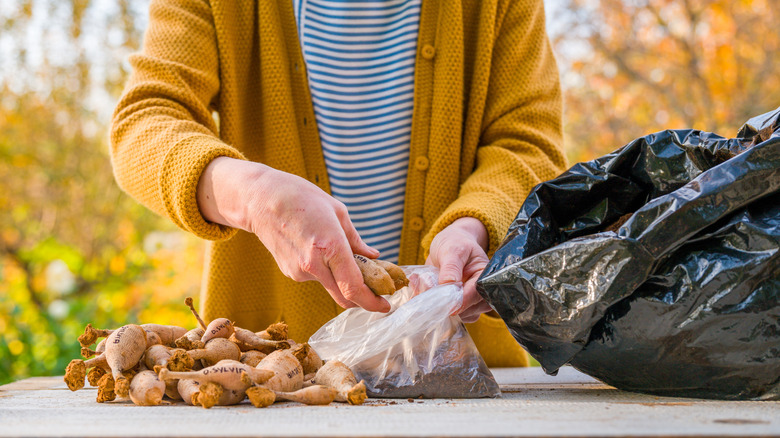
To help your dahlias stay healthy during winter storage, you need to cure them properly beforehand. Curing is essentially drying them out, which helps prevent fungal rot from developing. To cure your dahlias, place them in a well-ventilated area, out of direct sunlight. Ensure that the temperatures are around 60 to 70 degrees Fahrenheit. Leave your dahlia tubers for a few days to make sure that they are cured properly, and then get them ready for storage.
The storage medium you use for your dahlias can affect the moisture and, therefore, promote mushy tubers. Wet peat moss, for example, may cause rot. So, use sand, vermiculite, or wood shavings instead. Moisten the storage medium beforehand, but do not soak it. Place the storage medium you are using in a cardboard box or plastic bag to allow for ventilation, then add your dahlia tubers and cover them with more of the medium. If you are putting multiple tubers in one container, make sure they are not touching each other by placing a decent amount of storage medium between them.
The container you are storing them in should not be airtight, as this can also cause your tubers to go bad. Once you have prepared your tubers, place them in a location that is at a constant temperature of around 35 to 45 degrees Fahrenheit. A garage, root cellar, or basement is usually a good place to store dahlia tubers over the winter.
Monitor stored dahlia tubers for signs of rot or lack of moisture

Even if you have packed them correctly and found a perfect location, your dahlia tubers may still suffer over the winter months. This means that it is essential to check them regularly for signs of rot, wetness, or dryness. Any tubers that have gone mushy need to be removed straight away. However, if your dahlia tubers feel wet but do not show signs of rot, you can still save them, but it is important to act fast. Carefully remove the tubers from the storage medium and leave them out to dry for a few days. Then, repack them with fresh storage medium. You may want to think about how much water you gave them previously and reduce the amount to prevent the issue from happening again.
Too little water can also impact the health of your dahlias, so watch out for shriveled or shrunken tubers. If they are dry, use a spray bottle to add a little bit of moisture back in to keep the tubers healthy. Remember that a little does a lot when it comes to moisture, though, so never overdo it! By keeping an eye on your tubers, you can grow beautiful dahlias year after year without even having to take a trip to the garden centers.