

The Vibrant '80s Color No One Expected To Make A Comeback
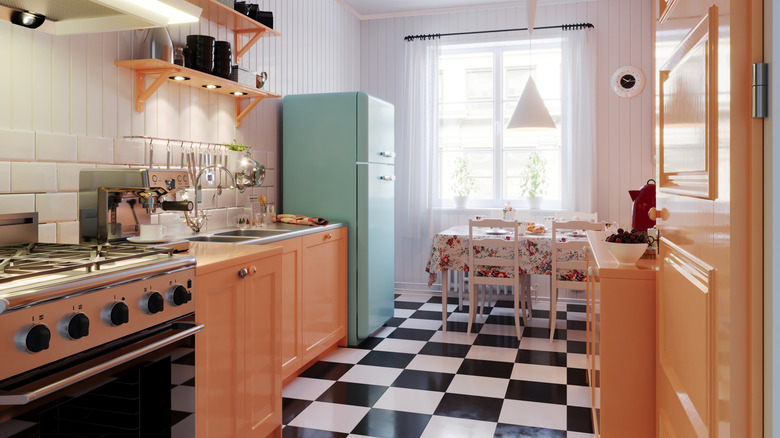
Close your eyes and take a minute to picture these items: Dixie cups, roller rinks, leg warmers, prom dresses, and wind breakers. What do all these things have in common? They were all commonly found in the 1980s and often came in a vivid shade of teal! If you've personally lived through the 1980s — or you've spotted relics of the era in your parent's photo albums — then you may have expected that overly vibrant colors like teal were likely to be left in the past. However, to the surprise of professional designers and interested parties alike, this incredible shade has actually begun to make a comeback.
But if you weren't a fan of the color used in the 1980s, or you're worried about the startling vibrancy of the shade, you don't have to stress. No doubt to the relief of many, this color has been revived in a slightly different form. "[Before], teal showed up as a statement wall or accent pillow — bold, but not necessarily integrated," interior designer Brad Ramsey told House Beautiful. "Now, we're seeing a more sophisticated take." Rather than being as bright as possible and used alongside other loud shades like orange or pink, it is now typically styled as a slightly darker hue more reminiscent of rich, deep seawater than baby blue eyeshadow. With that in mind, you may be more interested in trying out this teal version 2.0 for yourself. However, it can be difficult to know how to style this shade, which colors perfectly complement teal, and how to ensure that the hue feels modern rather than like a trip down memory lane.
How to style teal for modern design
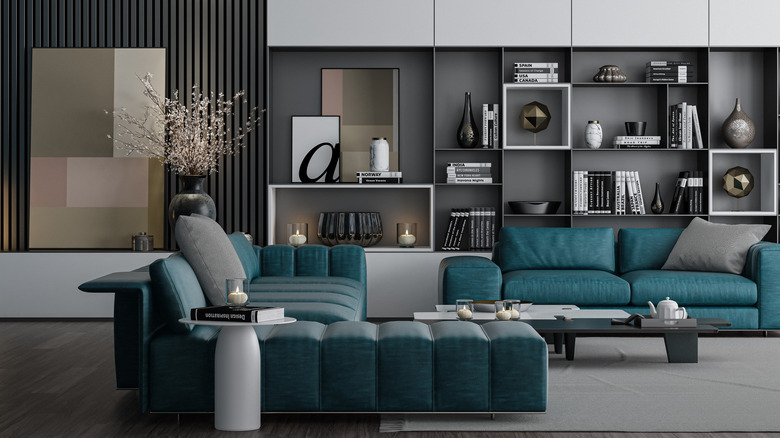
Given that the new taste for teal approaches more of a rich jewel tone than a pastel or neon shade, a great way to style this color to make it feel modern and luxurious is to pair it with metals. There are a few different options here. For example, teal is a color that pairs beautifully with your copper hardware finishes, or you can style it with a cool-toned metal like nickel or steel for an ultra-contemporary feel. Be careful, though, not to mix too many metals as this can cause your space to feel overwhelming and can dominate the hero color you're trying to highlight — teal.
It is helpful to remember that teal is a dominant color, so to avoid your home looking like the inside of a 1980s department store or sitcom set, it may be a good idea to utilize the shade in a few key places and balance it out with other colors. For example, using a teal couch as the centerpiece of a living room or teal cabinets in the kitchen can be great for drawing the eye to a certain area of the room without completely overwhelming it. A benefit of teal is that it is relatively versatile, so depending on which colors you pair it with, you can achieve a different result. For a bright, optimistic feel, try combining it with a sunflower yellow. Alternatively, use teal and a creamy white together to create a lovely modern farmhouse style effect. If you prefer an elegant, contemporary look, teal can also be toned down using slate gray and silvery accents.