

Deter Spiders With A Popular Plant That'll Thrive Indoors Or Outdoors
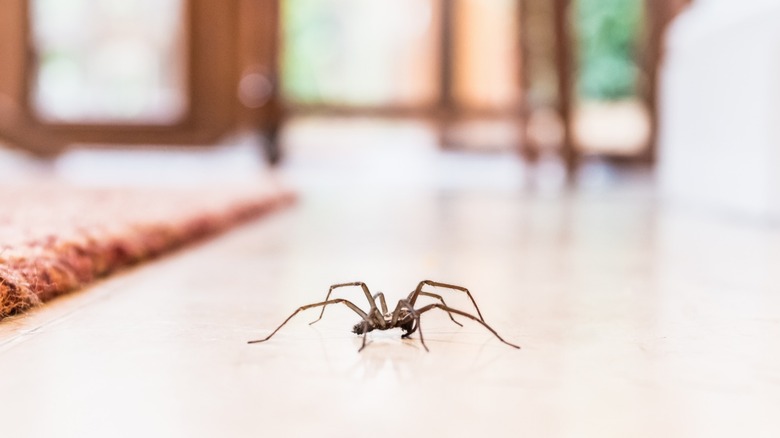
In the world of creepy crawlies, there is none that makes people squirm as much as the spider. These eight-legged creatures can strike fear into even the toughest of hearts, so even though they may actually be beneficial to your garden and home because they eat insects, it makes sense that many of us don't want them nearby. If you want to make sure you see as few spiders as possible, it is particularly helpful to avoid plants that attract spiders to your yard and garden and focus on bringing in those that repel them. One plant that may deter spiders is catnip (Nepeta cataria). Catnip is a member of the mint family and notoriously has quite a strange effect on our furry friends. Cats love rubbing and chewing on this plant, and if you're one of the many people who bring it into your home or yard to treat your beloved feline babies, why not get some extra use from it as a natural spider repellent?
The reason cats love catnip may also be why it deters spiders. The active chemical in this plant is nepetalactone, which creates that fuzzy, euphoric feeling in cats. Studies have shown catnip's insecticidal qualities against different pests, with a 2025 study finding that catnip oil was one of the most effective essential oils at repelling wolf spiders. Interestingly, nepetalactone was even patented by Iowa State University in the early 2000s as a spider repellent. And although it isn't really used in commercial repellents, it may be useful to grow this plant in your home or garden to see if it can help reduce your spider population.
How to grow catnip to help you deter spiders
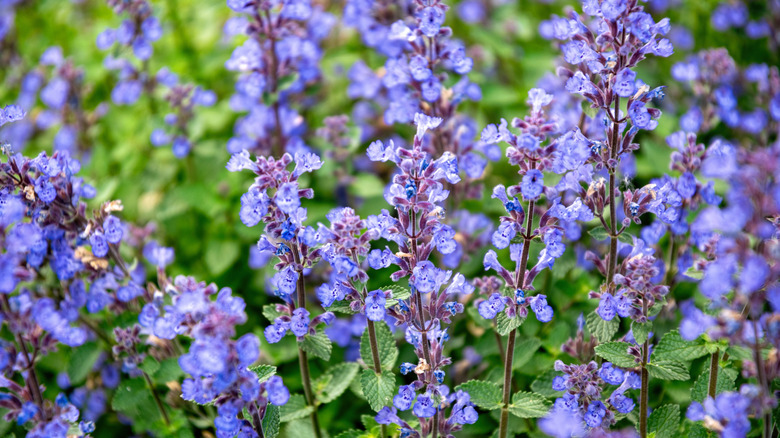
Catnip is hardy within USDA Hardiness Zones 3 to 9 and can be grown in full sun or partial shade. However, before planting catnip in your garden, you need to be aware that it does spread vigorously. This means that you may wish to grow this herb in a container garden to control it and deadhead it after flowering to reduce the spread of seeds. There are some states that consider it invasive, so always check before planting. Catnip is resilient and will grow in poor-quality soil but does best in well-draining, dry to medium environments. The plant is usually grown from seed, which can be directly sown in your yard. As your catnip grows, pinch it back regularly if you want it to look more compact, and make sure you know when to cut back your catmint for the healthiest plant possible.
You could also grow this plant to help keep spiders away from your home by sowing and maintaining it indoors. Start by stratifying your seeds, and then plant them in starter pots by burying them ⅛ of an inch deep. Keep them moist, and the seedlings will pop up in about seven to nine days. Once they are a few inches tall with at least two sets of leaves, you can transplant them to bigger pots and place them on a sunny windowsill. Water them regularly, and they will soon take off, grow profusely, and continue to help control spiders as long as you maintain them.