

The Affordable, Old-School Kitchenware To Look Out For At The Thrift Store
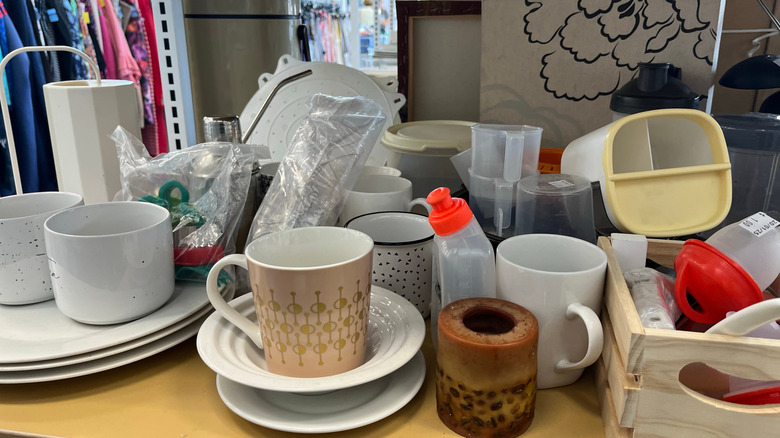
Are you looking for kitschy, old-school kitchen items that add a vintage vibe to your home while still being highly functional? Look out for vintage enamelware the next time you're at the thrift store. From cute cups and plates that will make you reminisce about picnics to kettles and complete sets of pots and pans, you can fill your kitchen with enamel cookware and serving dishes. While enamelware is still being made, the new pieces don't match their retro counterparts. It seems the new items may dent more easily than the originals, so that's even more reason to watch out for these pieces when thrifting.
Enamelware originated in Germany in the 18th century and reached the U.S. around 1850, after its introduction in Europe, in the form of the pots and pans we're familiar with. Enamelware's popularity declined in the 1930s as other materials, such as stainless steel, plastic, and Pyrex, gained popularity. It experienced a resurgence in the 1950s thanks to the French company, Le Creuset. However, La Creuset's enameled cookware was expensive, heavier, and made differently from the original enamelware, using enamel-coated cast iron instead of the original metal sheets. When thrifting, be aware that vintage enamelware should serve as decorative, since many old pieces contain contaminants.
How to tell if your enamelware is vintage
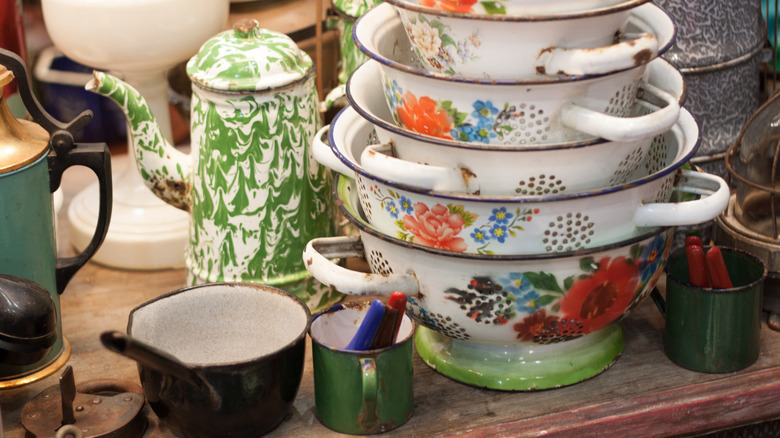
While thrifting for enamelware collectibles, you'll want to know what you're looking for, as there are various colors and designs to choose from. White is probably the most common, often with a single ringed line of color, such as red. There are mottled gray-and-white pieces sometimes referred to as graniteware. If you find orange enamelware, consider yourself lucky, as some deem it rare. Those aren't the only colors or patterns, though. You can find options with florals, pink mottling, and more.
You'll want to know how to authenticate them. One of the most telltale signs is that vintage pieces tend to weigh more than modern-day reproductions. If you tap it with your fingernail and it produces a faint sound, it's newer. The piece's patina can also be a giveaway — if it looks faded, it might be old. If it has rust in scrapes (another reason not to use it for food), it's likely a vintage piece. While some enamelware pieces can fetch thousands of dollars each, most basic pieces are affordable — and, as we all know, thrifting can bring you items that are worth a lot for a little. The more affordable pieces were often not stamped with manufacturer information, making it harder today to determine which pieces are original and which are reproductions. Some, however, will have a manufacturer and possibly a date on them, so it is worth looking the piece over before you add it to your cart.
What to do with your enamelware
Of course, reproductions may be safer for use in dining and cooking, as older items may contain contaminants such as uranium and cadmium, which are toxic and can leach into food. These are kitchen essentials you should never buy at a thrift store unless you plan on using them for something other than food. But, enamel kitchenware is a great nostalgic kitchen decor that instantly brings back all the good vibes.
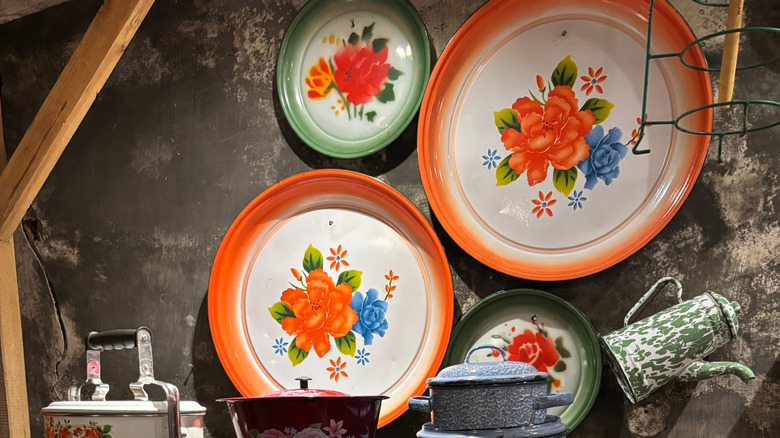
Even though you shouldn't use your enamel cookware and dishes for food, there are still many wonderful uses for them. Old kettles, pictures, and even cups can be used to display flowers, new or fake. Bowls, plates, and cups are great for holding things — from the pens on your desk to jewelry on your nightstand. You can also skip adding items to them and use them to adorn shelves throughout your home. Plates can be hung on the walls like unique artwork. They're an excellent addition to help you devise the ultimate cottagecore decor and complement your rustic collectibles.