

The Dusting Tool You Need If You Have High Ceilings
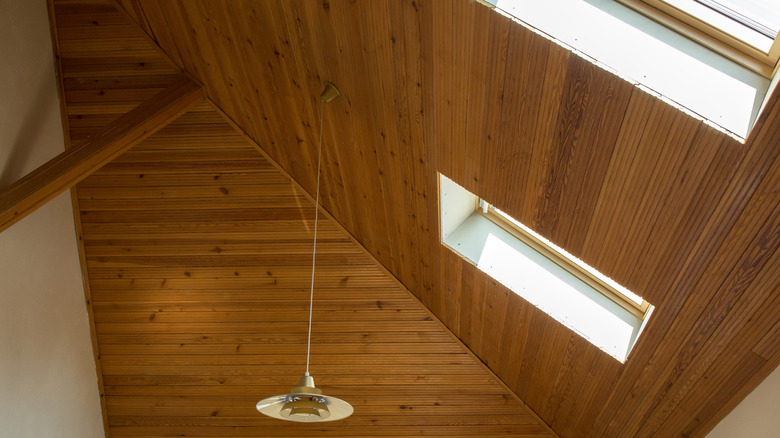
If your home boasts high ceilings, you know just how many benefits they offer. High ceilings are effortlessly elegant and able to infuse any room with a sense of grandeur. They can also help a space feel bigger and brighter, making them a great choice to avoid your home feeling cramped or dark. Plus, in some cases, high ceilings can add value to a home, which can come in handy if you ever decide to sell. Despite so many unique benefits, high ceilings come with one significant drawback: they can be challenging to keep clean. That's because their height makes them less accessible than standard ceilings, allowing dust to accumulate uninterrupted. Luckily, this doesn't have to be the case. To clean hard-to-reach spots when you have high ceilings without hassle, you just need the help of one handy tool: an extendable duster.
Finding the right solution to keep your high ceilings clean isn't just important for your home's aesthetics. Accumulated dust can also affect your and your family members' health, as it can cause allergic reactions or breathing issues. While you can always use the help of a ladder to remove the dust from your high ceilings and avoid these unfavorable scenarios, that's not the safest solution, as you run the risk of falling. An extendable duster presents the easier alternative, letting you keep your ceilings dust-free without risking your safety.
Make high ceiling maintenance a breeze with an extendable duster
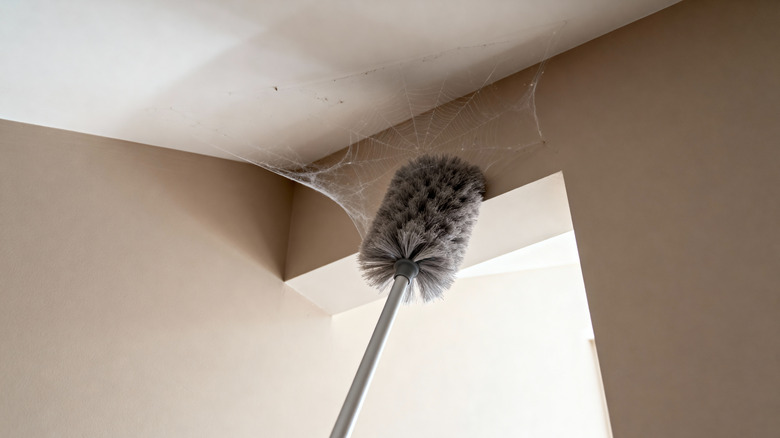
While any extendable duster can help you get the job done, you may want to consider a couple of specific features to make sure you've made the best choice. First off, there are different extendable systems to choose from. Depending on your specific needs, you can either go with a telescopic duster pole that extends to any height you want and then locks into place, or one with pre-set interlocking sections. Then you'll also want to consider the material your duster is made of and pick something lightweight enough to comfortably hold and operate above your head. Depending on your ceiling's surface and the presence of obstacles, you might also want to prioritize the duster's availability of attachments that you can switch between as needed.
While you're not supposed to clean your ceilings all that often, getting the best results when you do clean them doesn't depend only on your duster choice. It's also about how you use it. Generally, you want to start cleaning from the highest ceiling point to avoid spreading dust around in the areas you've already tackled. Don't be afraid to switch out attachments as needed — for example, if you're cleaning light dust or cobwebs from an easy-to-reach spot, a brush attachment might be enough to get the job done. Meanwhile, a microfiber attachment is more gentle and picks up more dirt, so it's perfect to use in more delicate areas with heavier dust.