

Is Your Fridge A Graveyard For Rotten Veggies? Get A Shelfy And Thank Us Later
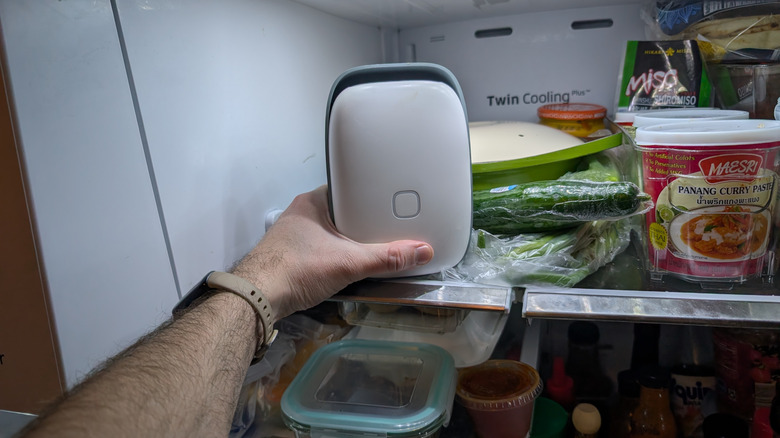
Benjamin Franklin once opined that "death and taxes" are the only certainties that life guarantees. However, with the rise of biohacking venture capitalist multi millionaires and tax-evading angel investor billionaires, it's high time that maxim was updated. While it's difficult to come up with two new guarantees, one is ever-present in my mind and my refrigerator – veggies and herbs that are destined to rot before I can use them. Luckily, it turns out there's a product that supposedly helps with just that, and it doesn't require waking up at 4 in the morning, UV treatment, or an ungodly number of supplements. Enter: the Shelfy, a genuinely fresh product from Italian company Vitesy.
House Digest got a chance to check out the Shelfy at IFA 2024, where its promises of fresher produce and a less stinky fridge earned it a House Digest Best of IFA award. Its website touts the recently upgraded device as one that prolongs the freshness of fruits and vegetables, eliminates the stuff in your fridge that makes your veggies go bad in the first place, and gradually lowers your grocery expenditures over time. To this end, it comes with three usage modes, a reusable ceramic filter that removes odors and bacteria, and photocatalytic technology, which frankly sounds too complex for me to adequately explain.
But who cares? What matters is whether the Shelfy meaningfully increases the life of my veggies and produces an odor-neutral fridge. To test it out, I left it in my refrigerator for a week after stocking the shelves with the most pungent foods I could whip up and a who's who of herbs and vegetables that seem to always become mushy and gross before I get a chance to eat them.
The Shelfy (and Vitesy's app) are easy to use
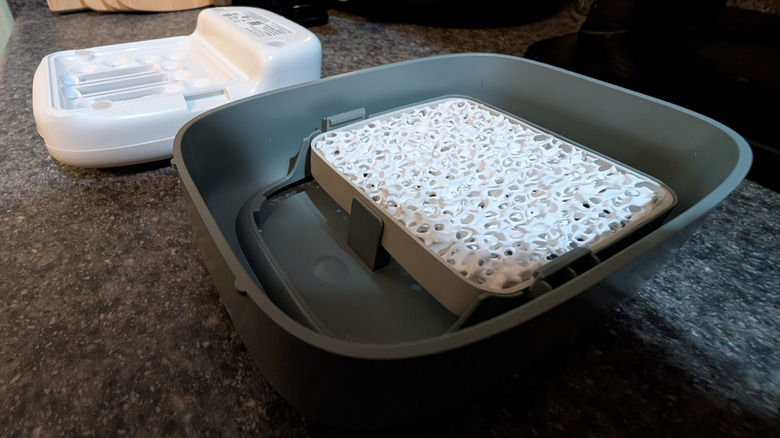
While it was still too early to tell what (if any) impact the Shelfy would have on extending the life cycle of my veggies, I was immediately impressed with just how easy the product was to set up. Simply charge it up, clean the filter, situate it in your fridge, and connect it to your home's Wi-Fi network – nothing particularly complicated about any of that. It's also a breeze to disassemble, so the idea of cleaning its filter every month (which entails little more than running some water through it and allowing it to dry) is hardly daunting.
Luckily, Vitesy's app is every bit as simple to use as the Shelfy. Its best feature illustrates your refrigerator's temperature and door openings by day, week, and month. By my estimation, it's pretty accurate and insanely useful in quantifying the impact of leaving the door open for too long (something I am definitely guilty of) or placing hot food in the fridge (my fiancée's specialty). I also loved how the app offers tips on storing just about any type of food you can imagine. Given how many issues I have had with maintaining the freshness of certain veggies and herbs in the refrigerator, it may not come as a surprise that I was probably storing these incorrectly all along. Go figure.
The Shelfy vs. a week of pungent curry leftovers
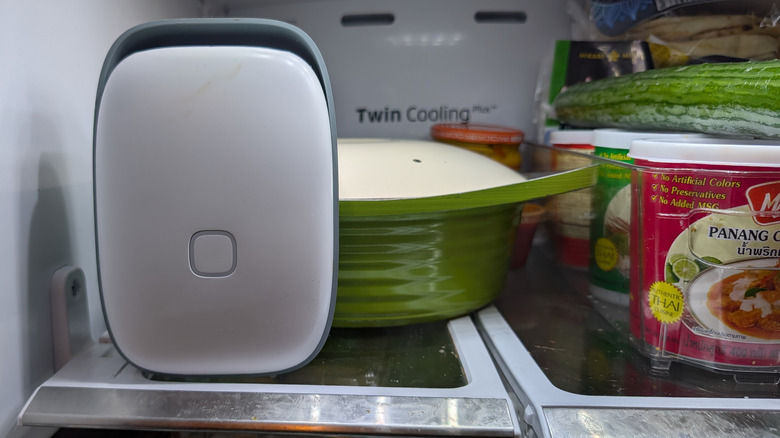
Some people are really sensitive to lingering refrigerator smells, but I do not count myself among those people. Perhaps I have been desensitized to this sort of thing due to diaper changing duty or an off-and-on love affair with cigarettes that has persisted since I was 18, but stinky refrigerators have never bothered me — and, perhaps sadly to say, it's not because I keep an impeccably clean fridge. Regardless, I needed to test it out, so I prepared two dishes that were guaranteed to make their presence known via their strong aroma: Indian curry and Thai panang curry. Naturally, I made these separately, and each sat in the fridge for three days before I could finish the leftovers. As such, there were aromatic leftovers in the fridge for six out of seven days of the week.
For my part, I was unable to really smell much of anything. However, knowing this would likely be the case, I relied on my fiancée's nose for this aspect of the review. To this end, I didn't want to create a bias of any sort, so I simply pretended I was smelling something funky in the fridge and invited her to take a sniff and provide her opinion on what she smelled. I did this on three occasions throughout the week, at which point she began to get annoyed, suspecting I was gaslighting her ... which I was. But more importantly, my better (in an olfactory sense) half was quite clear on the point that our refrigerator smelled like nothing all week despite my best efforts to assault her nose with the very same pungent aromas she complains about when I am on a week-long curry kick.
The Shelfy vs. my suspect produce haul
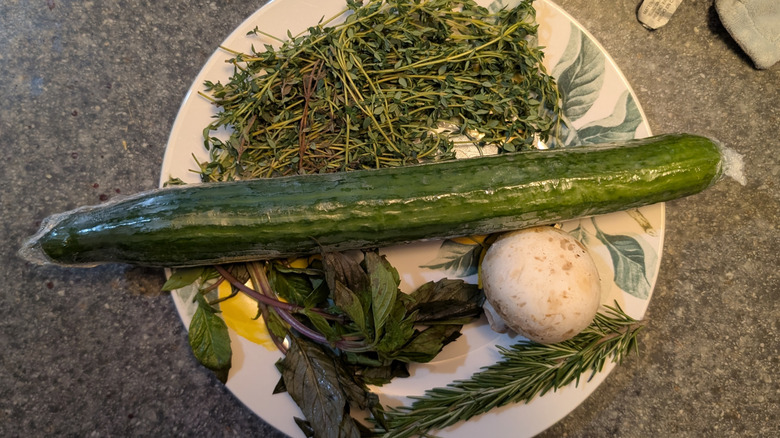
Finally, we have come to the most important part of this review, not to mention the part which I have been dreading to write since I drove to Grand Mart and stocked the fridge with an array of herbs and veggies I am intimately familiar with. Before I break down how the Shelfy did, however, I would like to make one thing clear: There is no "smart" way to go about reviewing this aspect of the product with only one fridge. The shelf life of one's veggies are never guaranteed; the moldy Thai chilis on Grand Mart's shelves are evidence of that. So instead of working out a rigorous methodological framework in order to judge the Shelfy, I completed this aspect of the review based on whether each veggie was perceived to be more or less fresh after a week, compared to what I became used to in my former, Shelfy-less life.
Most of my herbs and veggies fared very well a week out from purchase, with the exception of the fresh thyme, which may very well have been going bad when I bought it. The standout result was the English cucumber; I am used to these going bad within days, and have never seen one in such good condition a week after purchase. Unfortunately, the Thai basil had to be removed from the test, as I discarded its original packaging after using some of it to make the panang curry. I suspect the sandwich bag I put it in quickened its demise by virtue of my not removing the air first. To round out the test, the button mushrooms and rosemary were in pristine condition after one week, indicating that Shelfy indeed made a noticeable difference.
The Shelfy is worth the price
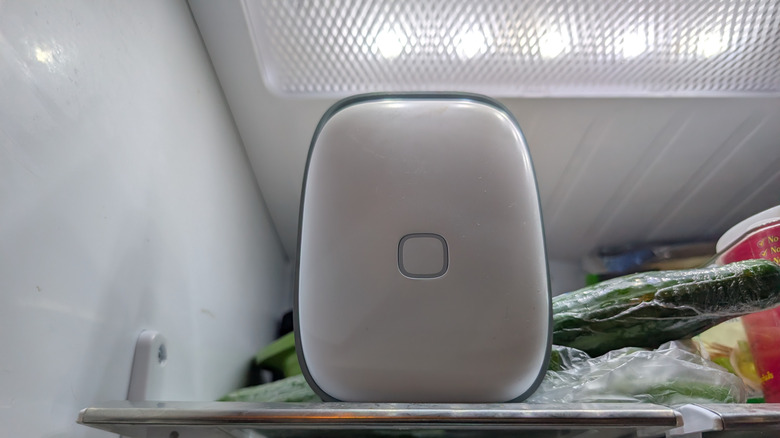
With the price of food getting noticeably higher seemingly every month, spending $149.99 on a Shelfy is not a bad deal based on the results I saw. (As of this writing, it's being offered for $114.99 as part of a holiday sale.) While the Shelfy is unlikely to perform miracles on food that is already on death's door, it definitely seemed to extend the shelf life of most of the produce I tested, making it a solid purchase for those who hate wasting money on food. Additionally, its deodorization capabilities are the real deal, far surpassing baking soda's subpar ability to neutralize funky refrigerator odors.
While they are far from the product's main selling points, I also rather enjoyed some of the Shelfy's ancillary features. Its food library, for instance, is far more user-friendly than asking Chat GPT how to store every ingredient on your shopping list, and its temperature and door opening tracking is a great tool for identifying how bad the damage is when someone leaves the fridge door open on accident. These quality of life features may not be groundbreaking, but can make a dramatic impact on how you use your refrigerator and store food, enhancing the product's already impressive utility in the long run.
Methodology
This review conformed to House Digest's Review Policies. The reviewer did not have any specialized interest in or experience with products similar to the Shelfy. To test out the Shelfy, the product was fully charged and used on Eco mode for one week in a Samsung French door refrigerator that was accessed throughout the day by two people. To test its ability to reduce food waste, various herbs and veggies were purchased that the reviewer routinely uses in their cooking, so that a positive or negative effect on longevity could be determined after a week. Its deodorization capabilities were tested throughout the week by two parties by storing aromatic curries from India and Southeast Asia and noting the amount of odor periodically via a quick smell test.