

8 Fabrics To Avoid At All Costs For Your DIY Upholstery Projects
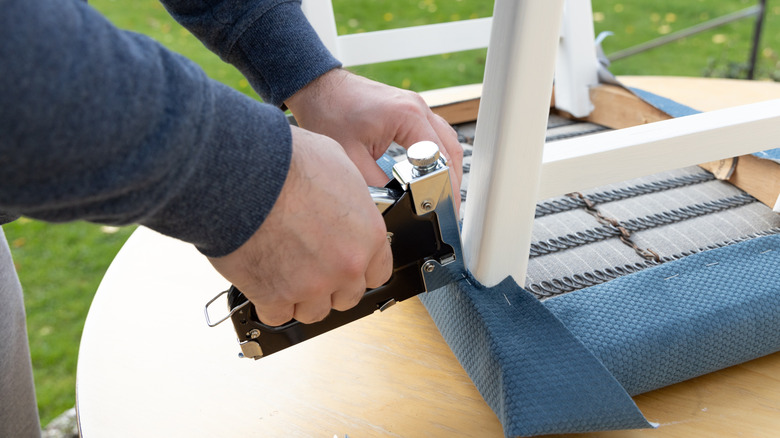
One of the quickest ways to refresh your décor is to reupholster a piece of furniture. Whether it be your dining chairs, a headboard, or an accent chair, it is generally cheaper to reupholster, rather than replace your furniture. But if you're thinking of doing a weekend DIY upholstery project, there is one important thing you need to be aware of: your fabric choice. Nothing can turn a fun project into a disaster faster than the wrong fabric. Within the ultimate guide to choosing upholstery, there are many fabrics that are beautiful and can make an old piece of furniture look new, but there are some that can be a huge mistake. Silk, velvet, or tweed might seem like the right choice for a luxurious look, but not long after you've put away your staple gun, you'll be regretting your decision.
Before you run out and buy that beautiful velvet or silk, you need to consider how it will function in your home and your household's specific needs. Do you have kids or pets? If you answered yes to either, you'll want to avoid fabrics that stain easily or are delicate. You will need a fabric that is kid- or pet-friendly if you want your newly upholstered item to last. If your chosen fabric easily tears, snags, or wears, all your hard work will be for nothing. It's also important to consider how comfortable a fabric is if you are using it for seating. There's nothing worse than sticking to a cheap faux leather seat.
Faux leather or vinyl
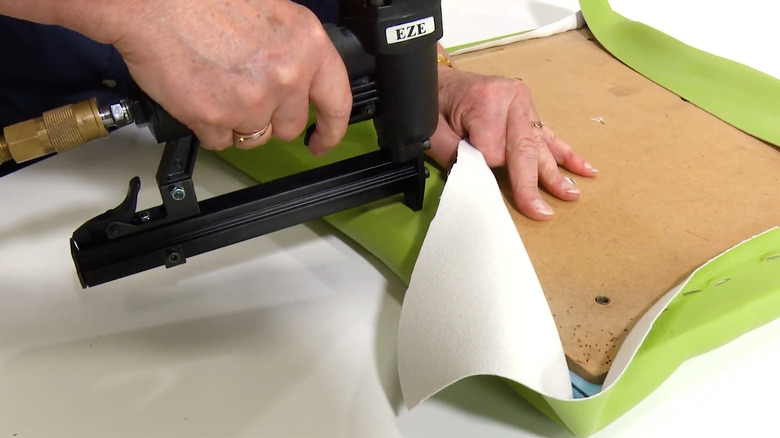
Faux leather and vinyl are generally less durable than their muses. They are made by using a base fabric and covering it with a plastic coating, which can wear, scratch, and tear faster than real leather. This makes them bad choices for seating upholstery. It also stretches easily, which is especially difficult for a beginner to use. If you want to have leather seating, it's best to leave it to the professionals.
Synthetic velvet
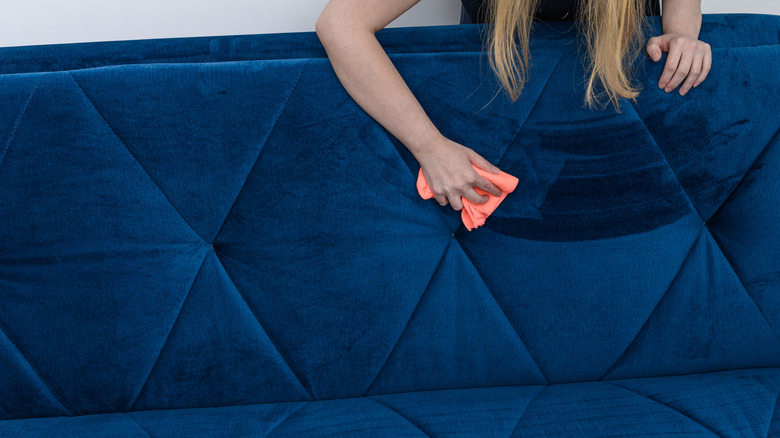
There is nothing more rich-looking than velvet fabric. That said, velvet's cheaper cousin can be a cost-effective way to get the luxurious look for drapes, but it's a bad choice for DIY upholstery. Not only is the fabric notoriously hard to work with, but it is thinner and much less durable than real velvet. If you have a busy house, avoid synthetic — it fades in sunlight, shows pet hair, and can lose fibers quickly.
Embroidered fabric
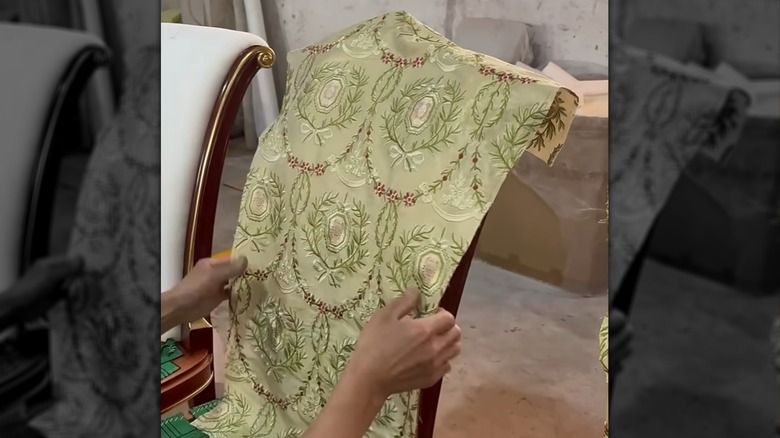
The biggest issue for embroidered fabrics, especially for furniture, is durability. These types of fabrics wear quickly in high-traffic situations. Also, due to how they are made, they will require special cleaning and maintenance. Embroidered fabrics also snag easily, which will not only make them vulnerable to everyday use, but also difficult to work with while working on your project.
Rayon
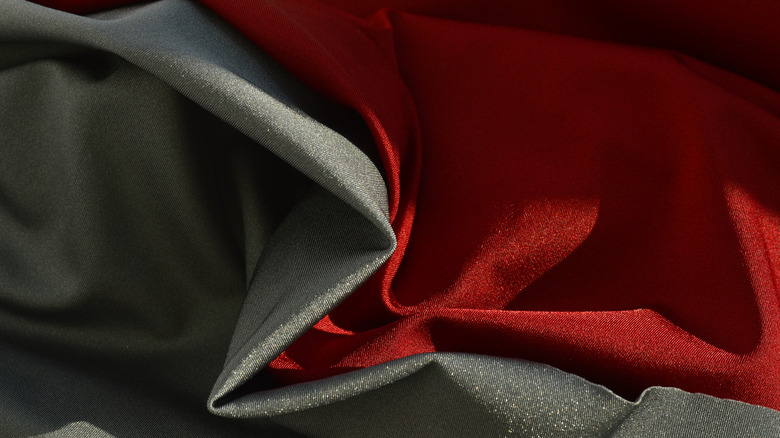
Rayon, also known as viscose, is an extremely lightweight fabric. It's considered a cheaper alternative to silk. But like silk, it can be very delicate, which means if you have a busy home this is definitely not a good choice for a DIY reupholstery project. Like microfiber upholstery, rayon is also going to show liquid stains. Because it is lightweight and slippery, it is very difficult to work with and might tear or snag when being stapled in place.
Silk
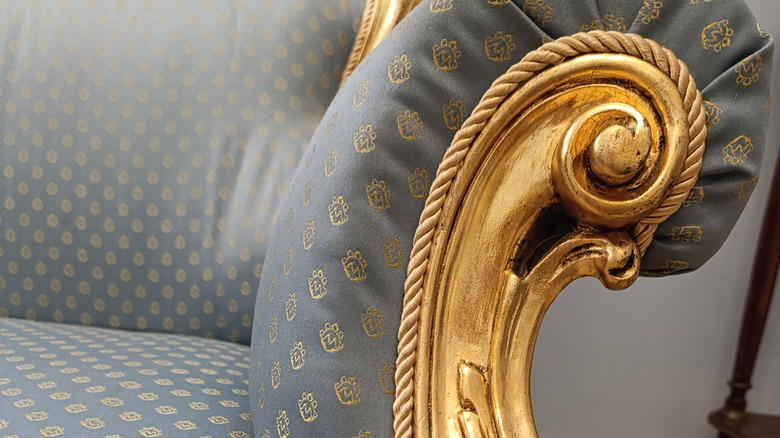
Even if you live in a home by yourself, silk is not a good choice for a DIY reupholstery project. Similar to the reasons rayon isn't a good choice: Stains horribly, snags easily, and isn't durable enough for upholstery, yet has the added issue of cost. Using silk for a simple DIY in your home is like gold plating your toilet seat — it's just plain overkill. Silk is best left for draperies and sheets.
Lightweight wool
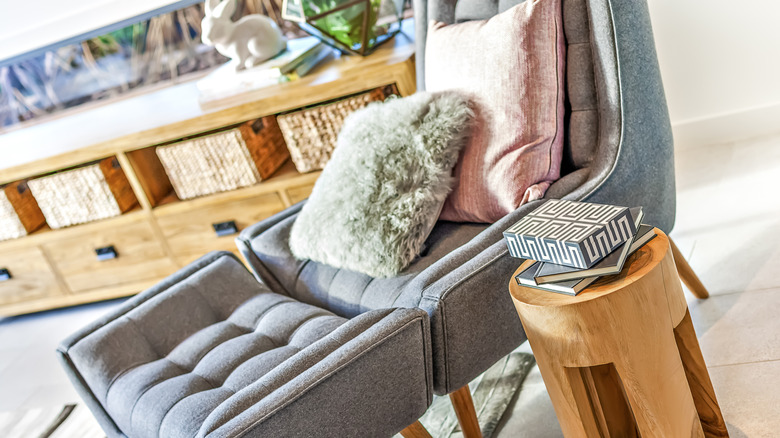
One of the main issues with using lightweight wool for your upholstery project is pilling. If you've ever owned a wool sweater, you probably know exactly what we're talking about. Now imagine someone sitting on your sweater every day. Also, as with any lightweight fabric, you are going to see durability issues and you would need an under lining, which means more work for you. While it's beautiful, it doesn't make a good upholstery fabric.
Chenille
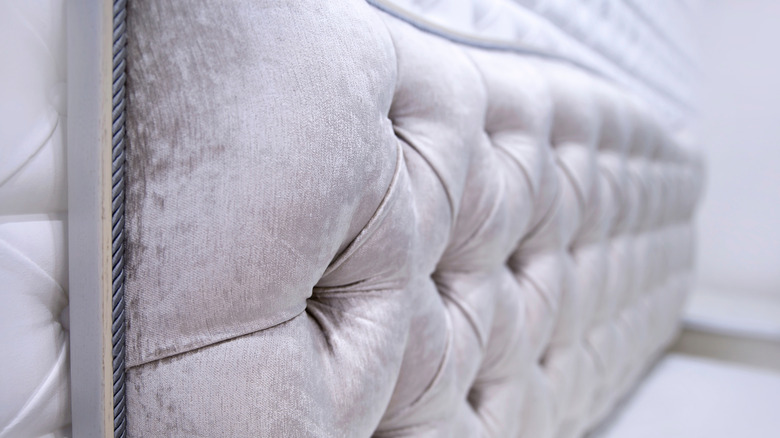
Like velvet, chenille comes with a lot of challenges as an upholstery fabric. If you are using chenille for a headboard, it's not a big deal, but if you are using it for seating, you're in for a headache. Chenille is what is known as a "high pile" fabric, which means it has threads that will snag easily, is harder to keep clean, and requires a lot of special maintenance and cleaning.
Tweed
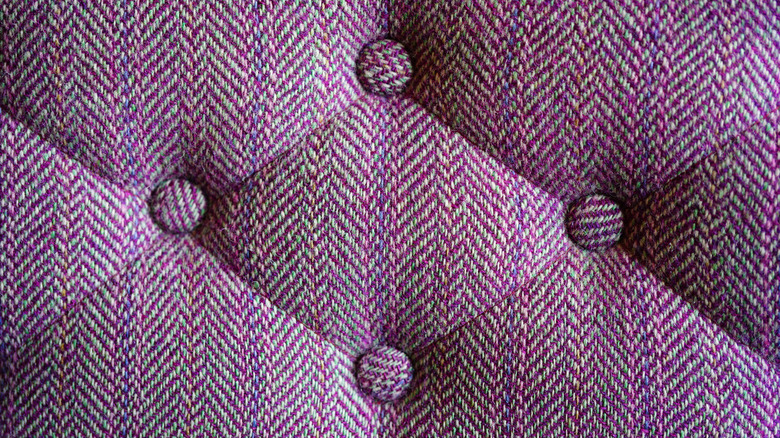
If you are a tactile person, tweed is probably not a good choice for you. It has multileveled fibers that some people don't care for against their skin (it can feel rough). The biggest issue with tweed as an upholstery choice is that it's not a good choice for homes with kids or pets. It snags easily, is hard to keep clean, and requires special care to keep the fabric looking good.