

13 Ideas To Landscape A No-Mow Yard

Yards filled with lush green lawns certainly have their charms. But as inviting as a cushion of soft grass is to walk and picnic upon, there are downsides. The amount of money, effort, gas, water, and chemicals it takes to keep up with a traditional yard is often too much for many modern homeowners. That's especially true of those who are looking for more sustainable, eco-friendly lifestyles. Replacing all or some of the traditional lawn with no-mow yard alternatives is an increasingly popular, low-maintenance way to landscape. Aside from reduced maintenance, no-mow yards also boast greater biodiversity and fewer chemicals, while also reducing soil erosion and decreasing water usage.
To get started on transitioning to a no-mow yard, you don't have to break your back digging up all of that grass. If you plan ahead, you can let time and nature do most of the work for you. Stake out the area you'll be transforming into your no-mow yard. Put down layers of newspaper or cardboard, followed by straw and mulch. By spring, the underlying soil will often soften to the extent that you can plant seedlings right through the layers. When planting seeds, remove the layers, which should reveal softened, enriched, and weed-free ground. If you're short on time, a sod cutter and rototiller can quickly prep the area for you.
Try the let it ride approach to see what your unmown yard can do

Perhaps the most obvious alternative to a no-mow yard is to simply....not mow your lawn! You'll be amazed how, left to its own devices, the yard will begin attracting wild plants and visiting pollinators all on its own. In fact, letting a yard slowly return to nature allows you to see the natural stages of a former lawn welcoming native grasses, wild perennials, and even shrubs and trees! Just be sure to set up a few pathways through the yard for access, while leaving the existing vegetation to grow.
You don't have to make the entire area wild, if you're worried about issues like "curb appeal." (For example, you might leave a patch of traditional lawn in front.) Consider adding some mulched areas with landscaped features like a specimen tree, showy boulder, ornamental fountain, or a decorative bench to make the design look more deliberate. In addition, you're always free to remove plants that just look to "weedy," especially those deemed invasive for your area.
Switch out the traditional lawn with new species of no-mow grasses
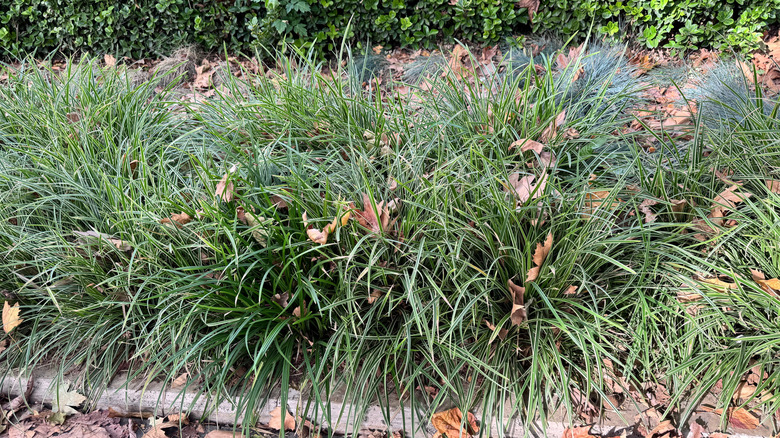
If you love the look of a green lawn, but want to eliminate or reduce mowing and chemicals, consider transitioning to alternative grasses and sedges. They provide the wavering, green landscape that traditional lawns have, but with a touch more wildness. They're also good choices for hard-to-maintain slopes. Because these plants tend to be taller than traditional lawn grass, you'll probably need to create paths through the areas planted, rather than trod upon them. Alternatively, mow them a few times a season to get them to your preferred height.
Depending on the type of grass alternative you choose, it may come as either seed or plugs. For cooler climates, check out tufted hair grass (Deschampsia cespitosa), fine fescue varieties (Festuca spp.), or Pennsylvania sedge (Carex pensylvanica). Warmer climates may do better with buffalograss (Bouteloua dactyloides) or field sedge (Carex praegracilis). Most of these grow 2 to 3 feet in height, with the exception of lower-growing buffalograss.
Forsake grass altogether in favor of self-sufficient ground covers
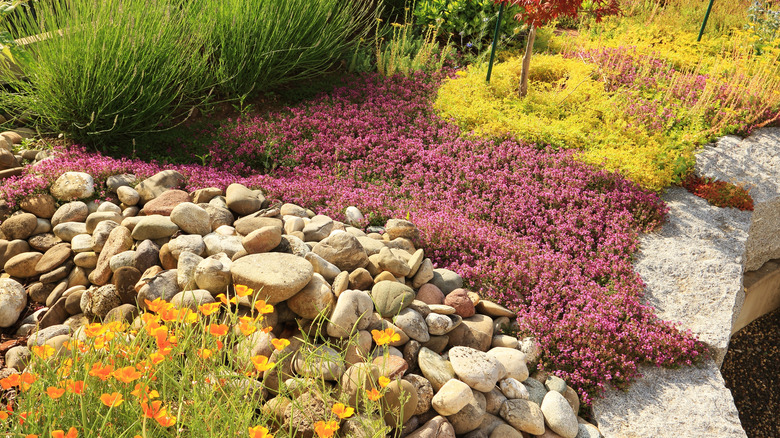
You may already have planted some ground covers under a shady tree or along a pathway, but have you considered planting one or more of these low-growing lawn alternatives throughout your yard? Ground covers don't need mowing, and many are low maintenance. Some, such as chamomile or thyme, can even be walked upon — as well as enjoyed for herbal and culinary uses. The key, as with all landscaping tasks, is to match the right plants with the right conditions. In addition, think about the needs you have for the area, as well as your budget. If you have a large area to cover and limited funds, choose a type that spreads rapidly, so that you don't have to purchase as many seedlings.
Common ground cover options include broad-leaved types such as wild ginger (Asarum canadense), wild strawberry (Fragaria vesca), and bunchberry (Cornus canadensis). If you're looking for an evergreen type, consider various creeping junipers (Juniperus spp.), which have needles, or broadleaved evergreens like bearberry (Arctostaphylos uva-ursi), contoneaster (Cotoneaster dammeri), and prostrate coyote bush (Baccharis piluraris). Flowering ground covers include chamomile (Chamaemelum nobile), wooly yarrow (Achillea tomentosa), stonecrop (Sedum spp.), creeping thyme (Thymus serpyllum), and dwarf periwinkle (Vinca minor).
Explore playscape surfacing as an alternative to soft grass

Traditional yards are rightly prized as a soft area for kids and pets to run around and play games. So where does that leave you if you're trying to get away from regular grass? For inspiration, just head out to your local parks! The same colorful alternatives that playgrounds use might work for your own backyard. Before you begin, make a list of priorities for what will become your no-mow yard. Do you need a soft area for playground equipment? A place where you can pot plants and rinse just-harvested veggies? What about what Fido might need?
Set up large areas that incorporate ground covering such as sand or playground mulch. Kid-friendly materials include vibrant rubber surfacing, as well as rubber paver tiles to create a safe play area (make sure the rubber materials have been certified as child-safe). Wood chips can also soften a playscape area, but it's worth investing in "playground mulch," in which sharp objects have been removed. Make sure natural materials are at least 9 inches thick. For pet areas, consider pea gravel or artificial turf as paw-friendly covers that are easy for their humans to clean. Shredded rubber mulch, while it can be easy on their feet, may hurt animals who swallow the loose material. For a garden chore area, pea gravel, wood chips, or even rubber tiles are easy to hose down and keep clean.
Allow the forest to come creeping back into your yard
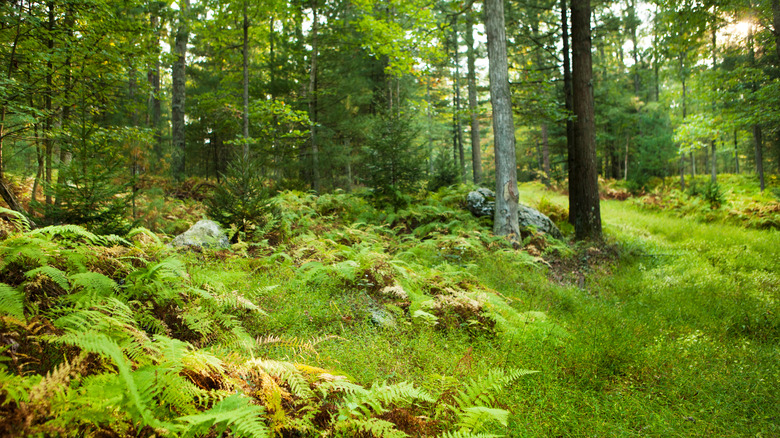
Are you lucky enough to be bordered by groves of trees in your back and side yards? Begin exploring landscaping techniques that tie the woods and the yard together. In this way, you'll not only be leaning into the woodsy charm of your neighborhood, but eliminating the amount of yard that you need to constantly maintain. Think of it as adding a magical borderland between forest and yard that gently transitions one kind of landscaping to another — all while drastically reducing or eliminating the amount of mowing you need to do.
Start with the vertical elements. Select some trees and shrubs that are shorter than the trees in the bordering forest, but still tall enough to add drama. These could include young pines, slender birches, or mountain laurel. Set them in naturalistic patterns that cut into the traditional lawn at the margins of the woods. In front of these, add shade-loving tall ground covers like ferns and hostas to further extend the no-mow sections of your property. To really underscore the forestry feel, mulch the new additions with woodsy materials like pine needs or cedar chips. Other naturalistic touches include rock borders along the edges of your new transitional mini-woods, and paths leading from your door to the woods themselves. To make it pleasant to traverse mulched beds or paths in bare feet, consider laying down slate or flat rocks in the paths.
Create a wildflower meadow for you and your wild neighbors to enjoy

Making a meadow can be a delightful challenge, from researching the local wild grasses and wildflowers in your area, to watching the meadow come to life in your own yard. Meadows are best suited to sunny spots on your property. Before you know it, that boring lawn will soon become a haven for butterflies, birds, beneficial insects, and a host of four-footed friends.
A true meadow is one that contains 50% to 70% native perennial flowers and grasses. While it's tempting to just order packets of "wildflower meadow mixes" online, they likely won't be geared to your specific region. Instead, create your own mix by checking with your local extension service or purchasing from a reputable local company. You can also plant seedling perennials while you're waiting for your mix to come in. Focus on pollinator-friendly perennials such as bee balm (Monarda spp.) While you're waiting for the perennial flowers and grasses to establish themselves, consider adding annual flowers for pops of color.
To provide shade and additional wildlife interest, add shrubs like butterfly bush (Buddleja davidii) and American beautyberry (Callicarpa Americana), which attract birds, foxes, and other wildlife. Be sure to dot the meadow with water features, nesting boxes, and feeders, along with little rock piles for reptiles to hide. And don't forget to establish paths and seating areas so you and your family can enjoy the flora and fauna up close.
Work with the shade instead of fighting it with a zen-like moss garden
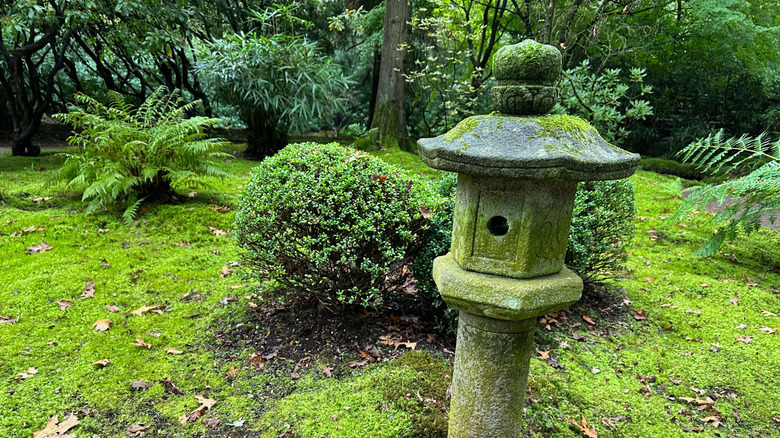
Rather than spending time trying to keep your grass stay healthy in the yard's shadiest parts, change those large swaths of lawn to a moss garden. Moss is an ideal low-maintenance landscape idea for a no-mow garden. In fact, one clue that it might be time to make the switch to moss is if it's already creeping into the shadier parts of your yard. Instead of ripping it out, prize the velvety ground cover! It offers a soft place for humans to walk and lounge, while providing habitat and food for smaller wildlife.
Moss does best either in the shade or in sunnier, but moist, areas. There are several types of moss, as well as sub-categories within each type. Choose those that work best for your climate and needs. Even better, mix and match to get a natural blended "carpet" effect, especially for large areas. Much like a lawn, moss is tough enough to be walked upon, but still gentle on the feet. Consider adding Japanese-inspired touches with features like a small pond or fountain, wooden gazebo, stone bench, as well as sandy areas and river stones.
Turn low-lying and problem areas into a charming rain garden
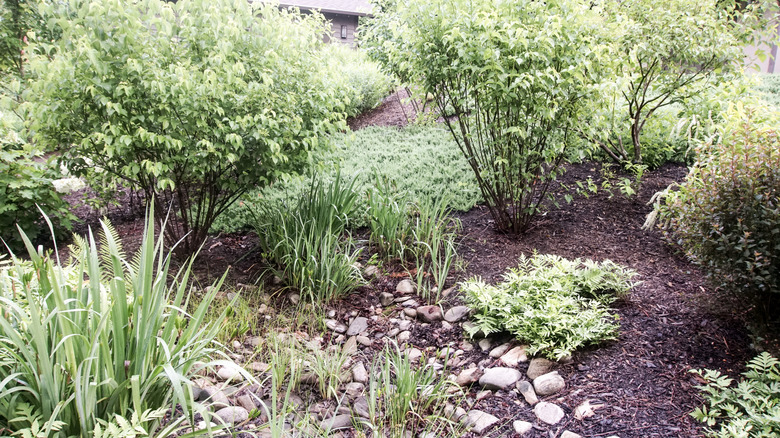
Aside from the mowing, one of the challenges about traditional yards are all of those problem areas. These include naturally boggy spots on low-lying ground, as well as abrupt dips near steep slopes. Yards like these are not only difficult to mow and maintain, but they can potentially cause problems, such as mosquito nesting sites and silty runoff into local waterways. Prevent rain runoff with the natural gardening system known as a rain garden.
This clever landscaping tool prevents runoff into local waterways, while also using water-loving plants and hardscaping to turn sad, soppy areas into a decorative spot. The typical rain garden is 100 to 300 square feet, but you can expand or shrink the concept to suit your needs. You'll generally need to construct a gravel-filled, narrow pathway for the water to trickle down its starting point, such as your home's downspout. The garden itself should be about 6 inches below the surrounding land, so you'll typically need to do some digging. Save the unearthed dirt to construct a low berm bordering the rain garden. After construction, plant water-loving perennials, such as various fern species, sweet flag (Acorus calamus), bulrush (Scirpus spp.), cardinal flower (Lobelia cardinalis), and Joe Pye-weed (Eutrochium purpureum). The specifics will depend on your own preferences, as well as whether the rain garden sits in sun or shade. Mulch both the berm and the garden with wood chips and "streams" of small rocks.
Transform those flat expanses and gentle slopes into a food forest

No longer need a lawn for running around? That vast, grassy yard can be transformed into a mini-orchard and edible landscape that feeds your family, provides plenty of visual interest, and reduces or eliminates the need to mow. As a bonus, there are plenty of dwarf fruit and nut tree varieties available that allow you to harvest fruit sooner, and without towering over your home. Pair these trees with fruiting shrubs and vines, if desired. The trees, plus the mulched areas, will greatly reduce the amount of lawn left. You can even replace grass with edible ground covers, perennial vegetables, and herbs.
Start by establishing dwarf versions of fruit trees, such as apple, pear, cherry, plum, and peach. Select the varieties that do best in your region. Warmer climates can also support citrus fruits, figs, and bananas. Next, surround or intersperse the trees with fruiting shrubs and vines such as blueberry, raspberry, blackberry, and grape. Replace the rest of the lawn with edible ground covers and perennials like rhubarb, asparagus, wild strawberries, herbs, and perennial greens.
Ditch the sprinkler system and get into xeriscaping
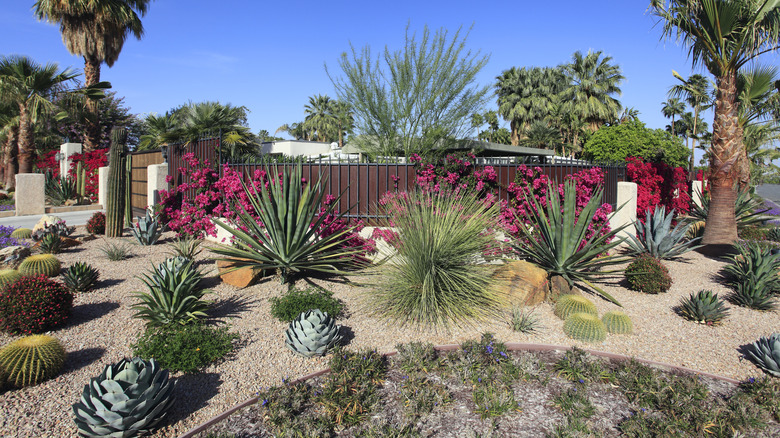
Homeowners in the drier regions of the U.S. often become overwhelmed by how much of their water bills are spent on keeping the lawn green. On top of that, tighter local water restrictions can translate into one big, brown, dead yard. Had it with droughts and costly water bills? Turn to plants and mulching materials that eliminate the need for regular watering, while also showcasing local native plants. The practice, known as xericaping, has many homeowners looking at their arid landscapes with new appreciation, rather than despair.
One simple way to plot out a xeriscaped, no-mow yard is to create a system of wide pathways and heavily-mulched garden beds. Consider gravel or sand for the paths. Mulching material is crucial in a water-wise garden to conserve moisture. Use gravel (perhaps of a contrasting color and size to your pathway gravel), wood chips, or shredded bark. Finally, add drought-tolerant perennials like bougainvillea, cacti, juniper, Mediterranean herbs, and flowers, such as purple poppy-mallow (Callirhoe involucrata), equinox flower (Lycoris radiata), and dwarf lilyturf (Ophiopogon japonicus).
Crowd out the existing yard with raised beds
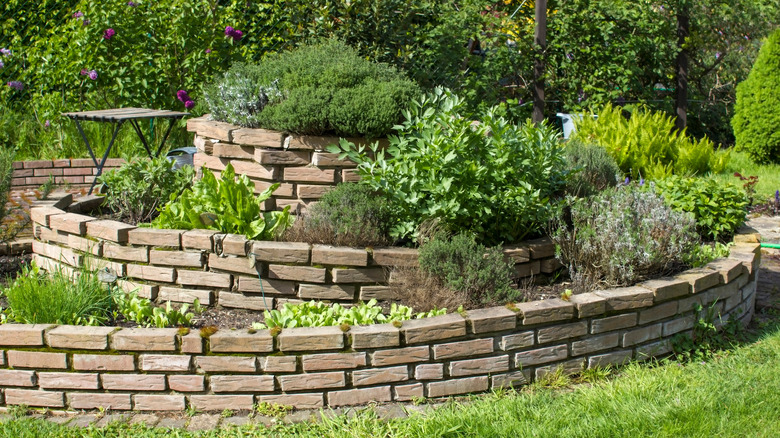
You don't have to relegate bedding plants to a few shrubs by your front door or to a hidden-away veggie garden. Instead, establish various types of raised beds throughout your yard. Whether you like gently-curved, rock-lined flower beds and herb spirals, or rectangular-shaped, wood-framed vegetable beds, these raised gardens make your yard both practical and visually appealing.
A simple mounded-earth raised bed can be freeform in shape, and doesn't necessarily need a structure to hold it in, although rocks or small-woven fencing borders add a rustic touch. These "islands" in your no-mow yard are ideal for spotlighting small shrubs and perennial flowers. A wood-framed raised bed is ideal for hosting vegetables or blooms for a cutting garden. Make them either square or rectangular, and set them where they can get the most sun.
Another way to both break up the lawn and add function and beauty is by dotting the landscape with herb spirals. These tiered structures not only look decorative with their brick or rock circular walls, but also create a series of microclimates within a relatively compact space. Place shade-loving herbs and flowers in the back and sun-seekers in the front. Water-loving plants go at the bottom, where moisture collects, while drought-tolerant types thrive near the top.
Let the chips fall where they may with a mostly-mulched yard
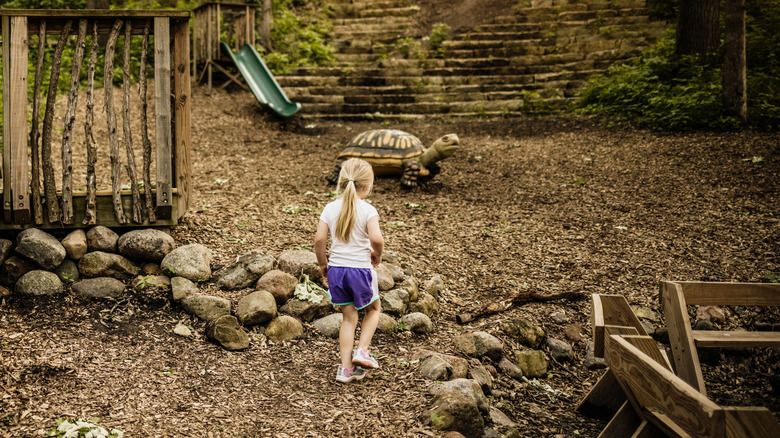
When you really, really, really don't want to deal with keeping lawns and ornamental beds alive, consider smothering the yard completely, and covering the whole area with wood chips or another decorative mulch. After all, it's your yard, and your aesthetic may best respond to a naturalistic mulch topped with decorative elements. Done artfully, you'll be creating a low-maintenance oasis that's pleasing to the eye in every season. And if you do start longing for easy-care in-ground plants, such as ferns, a season or two of heavy mulch will have loosened up and enriched the soil.
When going the wood chip route, use coarse, chunky types from hardwoods like maple and oak. These shade out weeds and conserve water better than finer-textured options. Apply it to a depth of at least 4 inches. For paths, use a contrasting natural material like river rock or slate. Ornamental touches like bird-baths and groupings of large container plants add to the intriguing landscape choice. Don't forget to provide different lounging zones — from a couple of Adirondack chairs, to a cozy backyard hammock, to a magical dining spot. These can all be grounded with outdoor carpets, if you wish.
Connect your garden features with magical paths
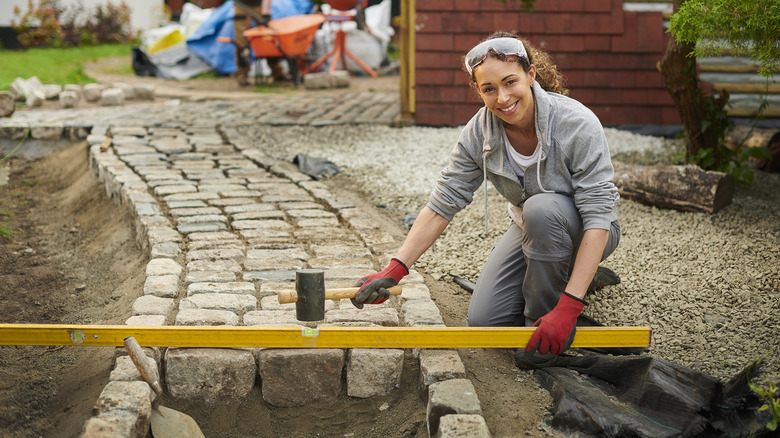
Whether you've established a colorful wildflower meadow, a yard full of herb spirals, or just let the old yard go completely no-mow, you'll need walkways that make it easy and pleasurable to cross the outdoor spaces. And there is certainly no shortage of budget-friendly DIY path options to explore. Visually, walkways also connect different elements of your property. These include the house itself, different gardens and play zones, and even the landscape beyond your yard. The materials you choose for the path, as well as how it's laid out, are key design elements that are all too easy to overlook.
Choose materials to match the new landscape. For example, simply mowing a curving line through your meadow might be all the "path" you need. But a straight, wide gravel path is better suited for gaining access to wood-framed veggie beds. The geometric lines visually complement rectangular and square beds, while gravel efficiently absorbs hose water. If you have more naturalistic elements, such as cottage or zen gardens, a meandering path of river stones or cedar chips might suit the mood you're going for. In addition, consider paved surfaces if you have elderly or disabled people in the household. Compacted gravel or tightly-joined paving stones can also work to make your space accessible for everyone.