

The Easy Way To Rehydrate & Save Your Dried Out Dahlia Tubers
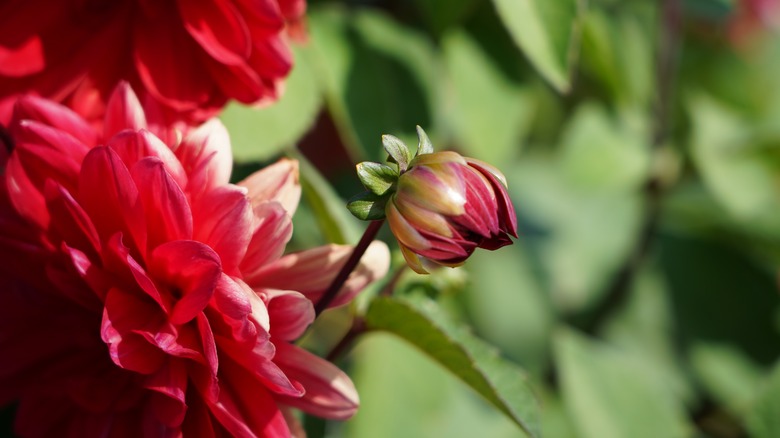
The bloom of a dahlia (Dahlia spp.) is so bewitching that gardeners go to great lengths to make sure their flowers come back every year. If you're in a cooler climate, such as USDA Hardiness Zone 7 or colder, this means storing their tubers over the winter and checking on them throughout the season. If nothing goes wrong, when you go to plant the dahlia tubers, they'll have the same degree of firmness they had when you dug them up. But if there's not enough humidity where they're stored, they could become dried and shriveled.
All is not lost if you notice your dahlia tubers have dried up. You can rehydrate and save shriveled dahlia tubers by misting them and placing them in a storage medium that will help them stay a bit moist. Or you can even try soaking them in warm water and letting the excess water dry before putting them back into storage.
Rehydrating dahlia tubers, of course, isn't as necessary when you're overwintering them in the ground, which you can do in climates warmer than Zone 7. In these areas, it's possible to insulate the tubers by covering the ground with some mulch instead of storing them. You can also grow dahlias as annuals, planting new tubers every year, which means you don't have to protect or preserve the bulbs. This lets you cycle through the wide variety of dahlia types, which produce everything from giant blooms so wide they're known as "dinner plate dahlias" to petite pompom-shaped flowers. When you find a variety you love, however, overwintering your dahlias by digging up and storing the tubers properly is still the safest practice to preserve them from death by frost.
Rehydrate dahlia tubers with misting, proper storage, or soaking
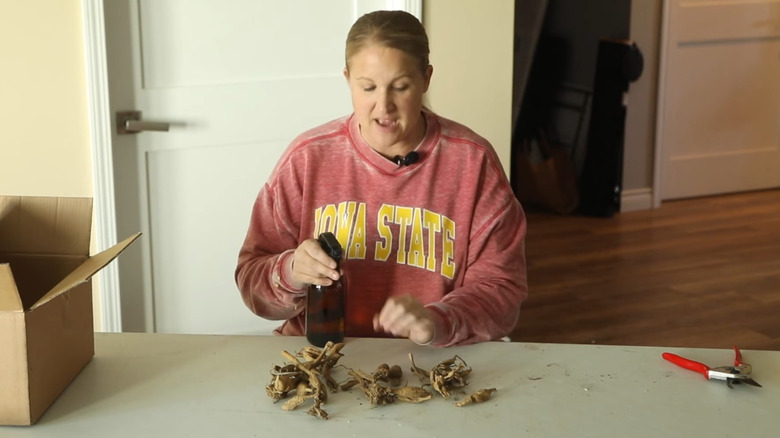
Checking on your stored dahlia tubers to see if they've become dry is an important part of winter care for these flowering plants. During a regular check, first assess how bad the problem is. If the tubers are only slightly dried, you may be able to stave off extreme dehydration with some light misting, or adding peat moss or potting mix that has some degree of moisture into the box or bag they're stored in.
With severely dry and shriveled tubers, some gardeners get results by placing them in a pot of water for a couple of hours. You should be careful with this method, though; other gardeners caution that it comes with a risk of rotting the tubers. Drying them off before re-storing them can help you avoid rot from developing; placing them near a fan for a while is one way to prevent sogginess.
When your dahlia tubers are rehydrated and ready to go back into storage, there are some changes you can try to keep them from drying out again. As mentioned, you can keep them packed in a potting mix, peat moss, vermiculite, or wood shavings, especially if you live in an arid climate, since the tubers need at least 70% humidity. If your home has an attic or basement, these are ideal places to place the tubers' container to protect your dahlias from cold winter weather while ensuring they're not exposed to temperatures above 55 degrees Fahrenheit.
How to tell if your dahlia tuber will grow
While you can often rehydrate dahlia tubers, don't bother if they are disintegrated since they won't have a chance of growing. But even some tubers that look very dry may still have some moisture at their core, which you can sense by squeezing them. Test your tuber by touching it to feel its level of give and firmness. If it still has malleability, it still has some moisture. Tubers that are either so brittle they're cracking or so soft that they feel mushy won't be good candidates to give you the show-stopping summer blooms that dahlias are known for. It's best to discard these, especially if they are slimy or showing other signs of rot.
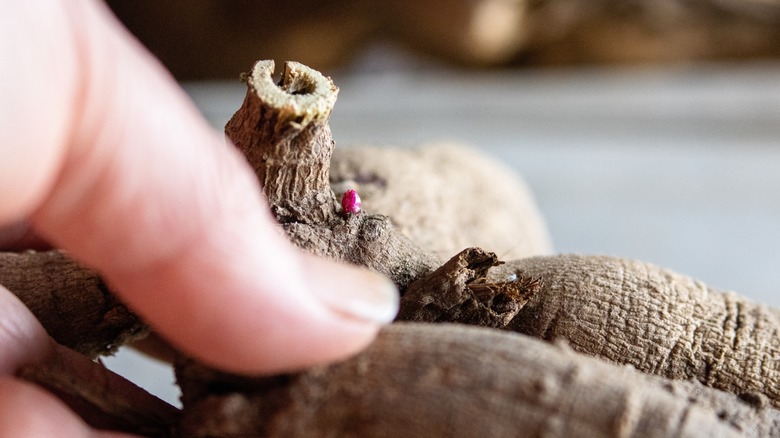
In addition to being well-hydrated, a tuber that will grow must have an eye on its crown, from which a bud will sprout. But if you're storing a late-blooming variety, don't panic if you don't notice the eye right away, as it may not appear until later in the spring.