

How To Overwinter Chive Plants So They Come Back Healthy In Spring

Cold weather doesn't automatically mean the end for perennial herbs, but winter can be rough on them if they aren't protected. Some of these plants are well adapted to colder temperatures and can return year after year when they're cared for properly. Chives usually tolerate cold conditions well, which makes winter care much easier. Overwintering chives mainly involves protecting the roots, limiting active growth, and adjusting the care routine based on whether they are in containers or planted in the ground. This winter care success is important for the plant to grow well in the spring. The care you need to provide can vary depending on how much exposure the chives have to winter conditions.
If your chives are grown in containers, they are usually more exposed to temperature swings during the winter than those that are planted in the ground. Without the insulating effect of the surrounding soil that in-ground plants benefit from, the roots of container-grown chives are more affected by exposure to wind and cold air. During prolonged cold spells, this lack of insulation leaves roots unprotected from cold temperatures. This increased exposure can make damage from winter conditions more likely if your container chives aren't protected in the right way. Winter care for container chives focuses on reducing their exposure to these potentially damaging elements. Where you place your container chives during winter can make a big difference in how much cold stress your chives have to deal with.
How winter care differs for container and in-ground chives
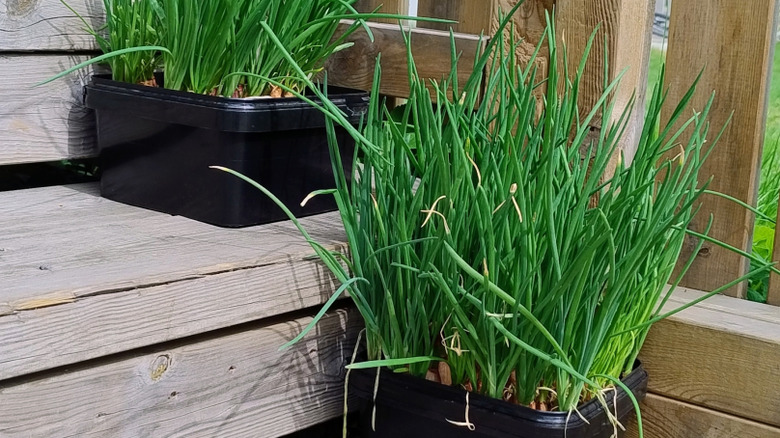
Container-grown chives need a bit more attention during winter to help them make it through colder temperatures. One of the most effective ways to protect your container chives is by choosing a sheltered location during the winter that shields them from harsh winds. Reducing drastic temperature fluctuations is also an important part of overwintering chives when they are in containers. Insulating the containers will help limit these damaging temperature jumps and prevent the cold from reaching the roots. Moving containers into warm indoor spaces may seem like a good idea, but this can interrupt the dormancy period and make winter stress more likely. If you do bring them inside, make sure you place them in cool area like a shed, basement, or unheated garage. Too much intervention can sometimes do more harm than good while the chives are dormant. Allowing your container-grown chives to rest throughout winter helps reduce unnecessary stress and gives them the boost they need to flourish when the temperatures warm up.
Unlike container-grown chives, those planted directly in the ground are better insulated against winter conditions due to the surrounding soil in the garden bed. Because of this natural protection, they experience fewer temperature swings through the colder months. As a result, chives planted in the ground usually require less hands-on winter care. Leaving the surrounding soil undisturbed and adding a layer of mulch around your chives can help reinforce needed insulation during cold conditions. In colder regions, your winter care routine may be slightly different than in milder climates, but the goal of allowing your chives this quiet time stays the same. The ideal goal is to support the chives' dormancy rather than prompt new growth until warm weather returns.