

How To Remove Salt Stains From Your Winter Boots Based On The Material
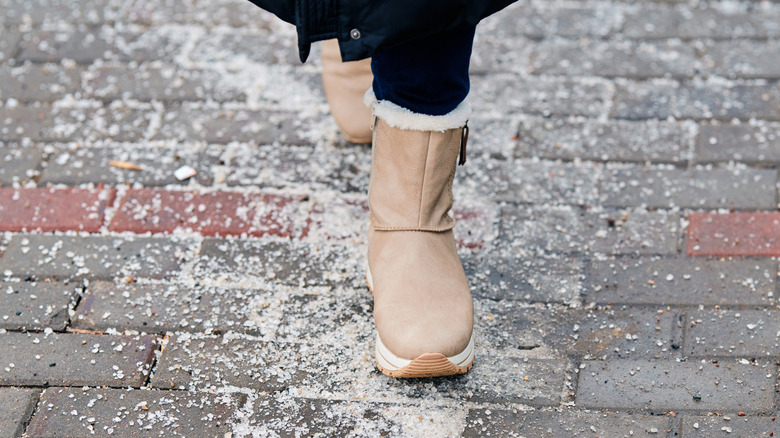
Winter weather is a double-edged sword: while the snow is beautiful to look at, the salt used to melt it is rough on your winter boots. Road salt is a corrosive mineral that doesn't just sit on the sidewalk; it actively dehydrates and damages your shoes. If you don't remove it, the salt can cause staining and long-term material damage. So to keep your favorite rubber, leather, and suede boots looking fresh all season, you'll need to know how to clean them.
Rubber boots, like classic rain boots or heavy-duty snow galoshes, are the easiest to maintain since they're non-porous. While salt can't penetrate their surface, it can cause blooming; that's a dull white film that makes the rubber look aged. To get them clean, start by rinsing off any loose debris with warm water. Then, mix some dish soap and warm water, and grab a dish sponge or soft-bristle toothbrush and start scrubbing. Because rubber is durable, you don't need to be especially delicate while cleaning. Make sure you get into the treads where salt likes to hide.
Let your boots air dry. After, buff a little oil into the surface (either olive oil or a specialized conditioner for rubber) with a clean cloth. This helps create a protective barrier against salt in the future, so you likely won't see any blooming again. Rubber is highly resilient, so a quick five-minute scrub is all it takes to keep them looking good. If they're too far gone, though, you could always repurpose them to store umbrellas.
How to get rid of rock salt stains on leather boots

Leather boots are the classic winter go-to, but they are incredibly susceptible to salt damage. This happens because leather is a natural, porous material. It behaves a lot like skin, in fact; salt draws out the moisture and oils, leaving the material brittle and prone to deep cracks. When white salt stains appear, it's important to act quickly, as the goal is to neutralize the salt, not just remove residue. If you wait too long to clean, the salt will permanently "burn" the leather and change its texture forever.
A common cleaning solution for leather care is a mixture of one part white vinegar and two parts water. The acetic acid in the vinegar works to break down the alkaline salt minerals without damaging the leather. Dip a microfiber cloth into the solution so it's damp (not soaking) and gently wipe the salt lines from the top to the edge. Wipe the soles down after, carefully.
Cleaning alone isn't enough to fully restore leather boots. Once they're clean, they need to dry, but that has to be in the right type of space. Don't set them near a radiator or fireplace to dry. Direct heat causes the fibers to shrink and snap. Instead, let them air dry at room temperature. After they've dried, you can optionally apply some leather conditioner to replenish any oils stripped by the salt and help the leather stay healthy for the rest of the season.
How to handle salt removal for suede boots

Suede is notoriously difficult to maintain in winter; it soaks up water and has a delicate nap. When salt water hits suede, it soaks into those soft nap fibers. As that water evaporates, it leaves behind a crusty mineral deposit that can create "bald" spots. This can permanently alter the texture and appearance of the material. The trick with suede is to avoid using too much moisture while you clean it. Adding too much can create water rings, so careful, targeted cleaning is essential to avoid permanent damage to your suede.
Start with a dry method using a suede eraser or a specialized suede brush. By gently rubbing the eraser over the dried salt stain, you should be able to rub it completely out. For especially stubborn stains on light suede, a very small amount of white vinegar applied with a soft cloth may help. Always brush in whatever direction your shoes' fibers face. If they look flattened after the stain is gone, a quick puff of steam from a kettle should help fluff them back up.
While rubber boots are easy to take care of, persistence and patience are key when dealing with more high-maintenance materials like leather and suede. With proper care, even high-maintenance boots can stay wearable and presentable for years. If you do end up needing to buy new ones, you can always repurpose old boots into spring garden decor.