

The '80s Called And They Want Their Dining Room Decor Back: 12 Outdated Design Choices
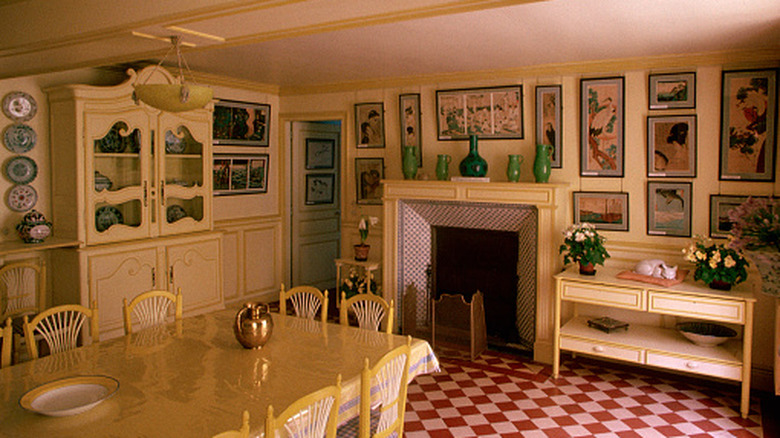
The '80s weren't exactly known for being timeless. This decade was all about boldness — big shoulder pads, bright colors, and bouncy curls dominated fashion, and interior design followed the same path. Of course, there were variations in the style depending on personal taste, but as a general theme, the trends of the day were reflective of a desire for fun, individuality, and luxury. While there's plenty of great trends from this era that are begging for a comeback, not everything needs a revival. When it comes to dining spaces, we're better off leaving these design ideas in the past.
Gaudy gold flatware, heavy drapes, and overly yellow honey oak furniture are just a few of the things that were common sights in '80s dining rooms. If you want to create a space that doesn't feel dated, it's best to stick to classic home decor trends that stand the test of time, like simple patterns, eclectic furniture arrangements, and neutral, natural materials. Of course, at the end of the day, design is personal. There are still ways to incorporate these dining room trends into spaces today without making them feel like a time capsule, and if you're a fan of the retro '80s aesthetic, the more dated-looking the better! Full send into the trends of the past with reckless abandon, and you're sure to create the '80s paradise of your dreams — after all, lack of restraint is what makes so many '80s looks so notable, for better or for worse.
Gold-toned flatware
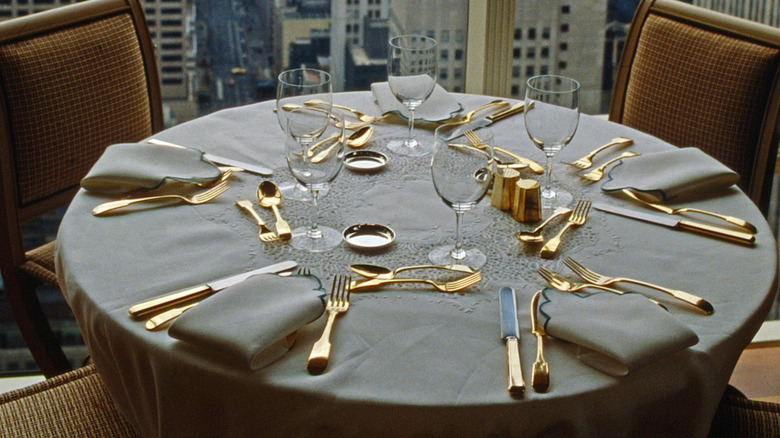
Gold was everywhere in the '80s, from glam earrings to shiny faucets, so it makes sense that it would also find its way into dining spaces. While most forks and knives nowadays have a silver look, gold-toned flatware had a moment in the '80s. It's certainly possible to style it in a way that reads as luxe and interesting, but for many, gold flatware feels tacky and overpowering. If you don't want to have to style your dining room around this choice to help tone it down, it's best to stick with the classics.
Glass tables
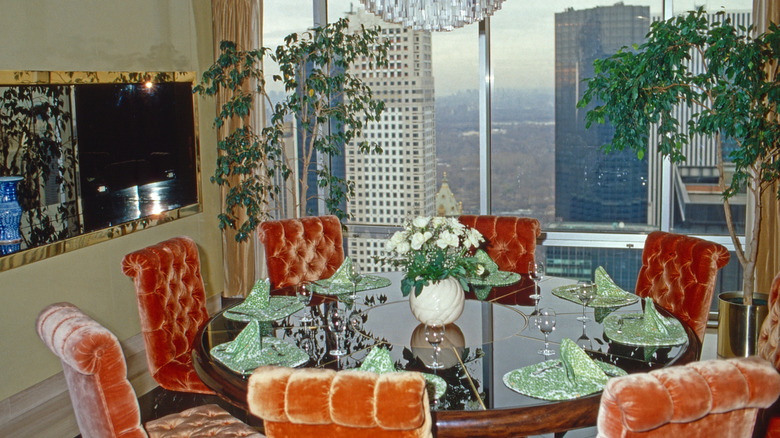
Alongside shiny gold and brass, glass was one of the dominating materials of the '80s. For those who embraced a more glam style, it featured in pretty much every room, showing up in the form of smaller decorations, glass block walls, and, of course, tabletops. You might be more familiar with glass tables being used in the living room on coffee and side tables, but they also had their moment in dining rooms. Unless you're willing to constantly clean up streaks and smudges, however, you're better off going with another material for your dining table.
Excessively formal tablescapes
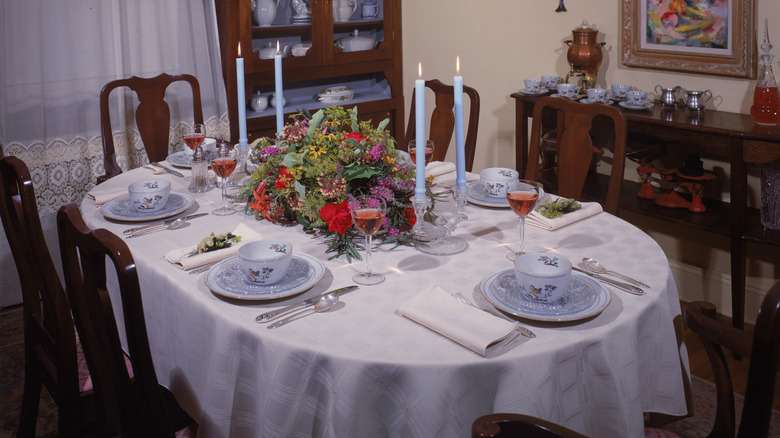
Opulence was for everyone in the 1980s. The hair was big, the colors were bright, and the patterns were bold. The same was true for tablescapes of the era — before the minimalism of the '90s and early aughts took over, luxe table settings were in. No china was too fancy, no candlestick too formal, and no silverware too ornate. Nowadays, people tend to go for a more pared-back look, even for formal events. While there's nothing wrong with going all out for your dinner parties, over-the-top settings might read as a bit more retro than intended.
Quirky geometric shapes
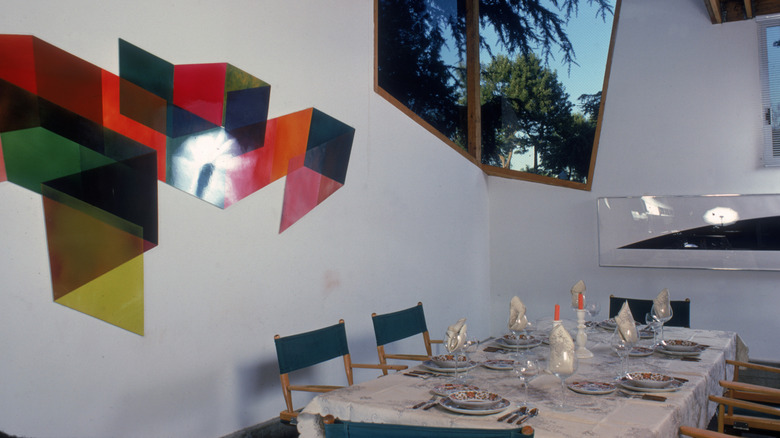
While it wasn't everyone's cup of tea, Memphis design brought a flair to homes that felt distinctly '80s. Characterized by bright colors, geometric shapes, and kitschy motifs, this movement was created as a direct contrast to pared-back brutalism and modernism, and despite its relatively short run as a design movement, its often what comes to mind when people think of the '80s. In dining spaces, specifically, this design style often shows up in the form of quirky shapes and bold colors, but its incredibly distinctive look can easily give spaces a dated feel.
Heavy drapes
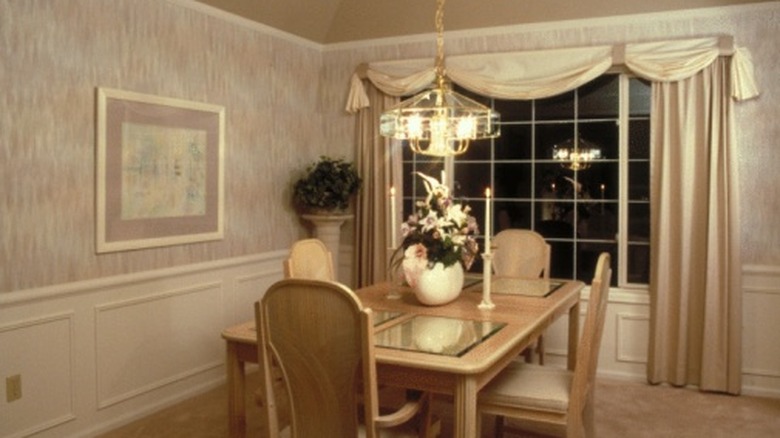
Natural light who? In the '80s, elaborate window dressings were all the rage in just about any room of the house. Curtains made of heavy fabrics with large valences and thick tiebacks were everywhere, and in many cases, they also featured the bold patterns and colors of the day. While there's nothing wrong with a fun window dressing, hiding your dining room window behind a curtain that's a workout to pull back is distinctly '80s. Consider saving the heavy fabric for a room where you'll actually benefit from the light blocking, like a bedroom.
Floral wallpapers
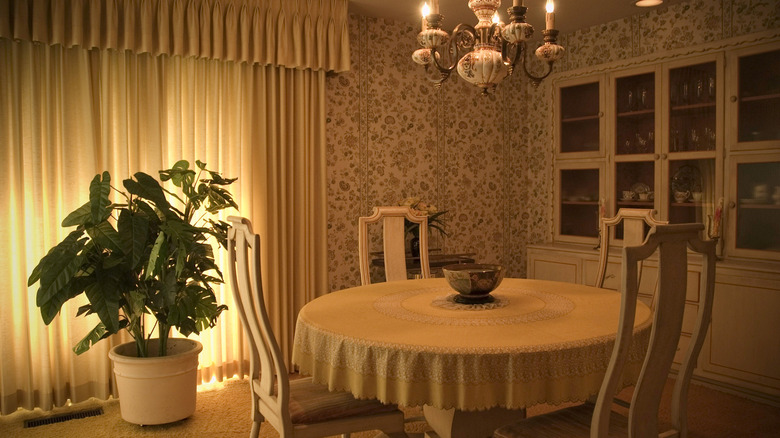
Floral wallpaper has been popular in just about every decade, but the distinctive, small patterns that were popular in the '80s have earned a reputation that feels more dated than classic. Tightly packed, highly detailed florals can read as busy and overwhelming rather than cozy and sophisticated, so if you want to try out this look without dating your home, consider learning what makes floral wallpaper look vintage before picking out a pattern for your space. By choosing larger florals, more subdued patterns, and crisp designs, you can keep yourself from veering into '80s territory.
Honey oak furniture
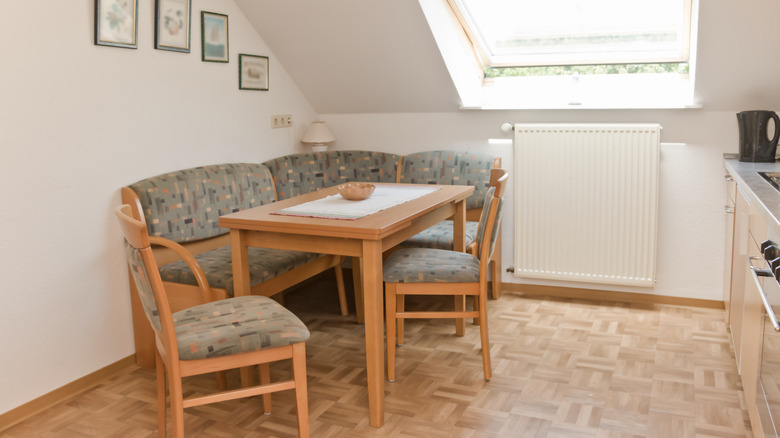
If your home was built and last renovated in the '80s, you're likely all too familiar with the look of honey oak wood. Nowadays, you see this remnant of the era most commonly as cabinetry, but it's pretty inescapable when it comes to furniture, too. There's nothing inherently wrong with honey oak furniture, especially if you love warm tones and want to bring them into your dining space, but this color of wood was such a massive trend for so long that it feels dated. For a more timeless look, opt for a more neutral stain.
Wood everywhere
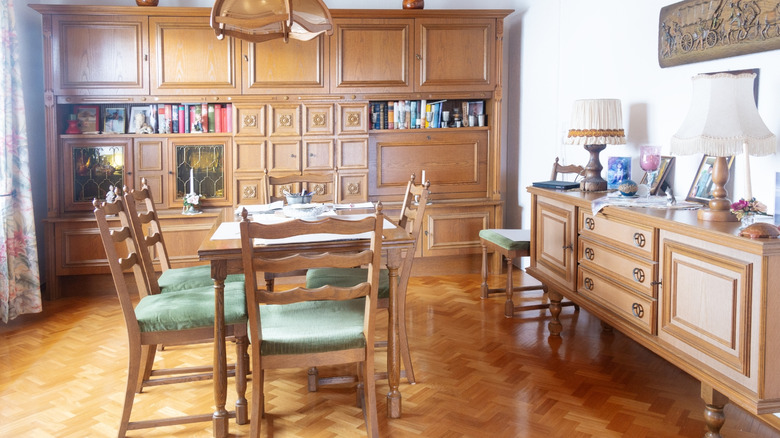
Wood paneling might be more reminiscent of the '70s than the '80s, but that doesn't mean that coating your dining space in wood wasn't still popular. Working hand in hand with the honey oak trend, decking out your dining area in a matching set that included cabinets, a buffet, a dining table, and dining chairs all in the same color of wood wasn't unheard of, especially for those who were going for a more cozy, rustic look. Some even added paneling or matched the wood tone to the flooring — talk about matchy-matchy!
Matchy-matchy palettes
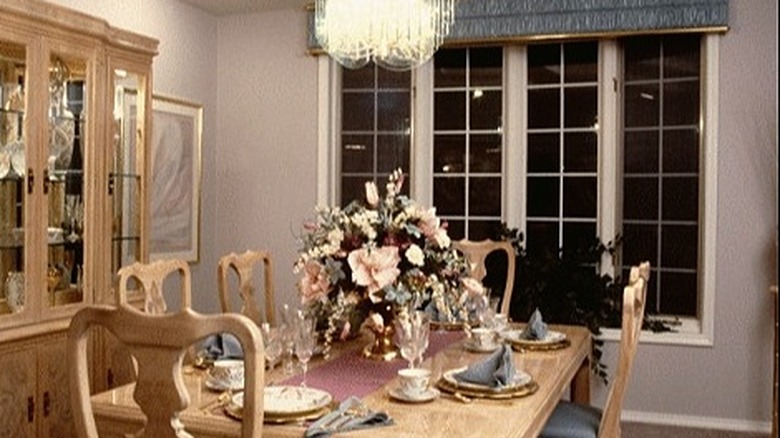
A through thread you'll notice in '80s rooms, at least those frequently featured in advertisements and magazines, is the repetition of colors and patterns throughout the space. Having a floral bedspread wasn't enough — that same floral print also had to be featured on the bed skirt, curtains, and walls. The same is true for dining spaces; even if it's just a plain color, that same fabric would've likely appeared in several spaces throughout the room. For a more modern look, don't be afraid to play around with texture and pattern rather than matchy-matchy.
Dramatic chandeliers
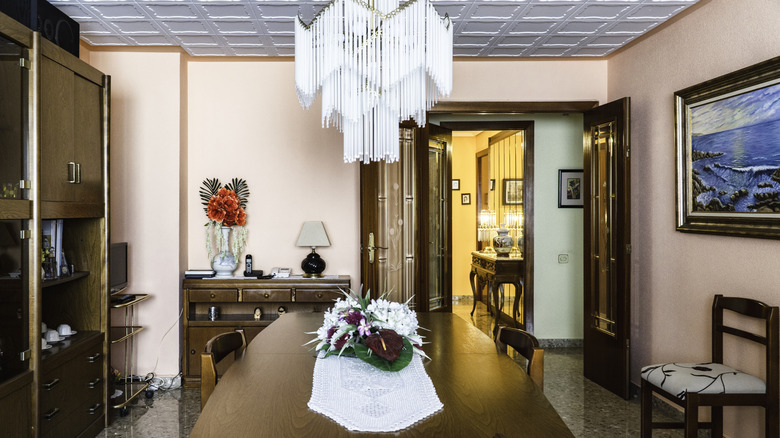
In an era that embraced opulence, it makes sense that chandeliers were such a trend. Bold designs that hung low, right over the dining table, were common, and whether they were a nod to the art deco revival of the time or a more fashion-forward representation of Memphis style decor, they were certainly in your face. Literally. Chandeliers can be a gorgeous addition to a dining room without feeling dated, but make sure you choose one that's a reasonable size for the space and mount it high enough to not distract from your dinner conversation.
All pastel color palettes
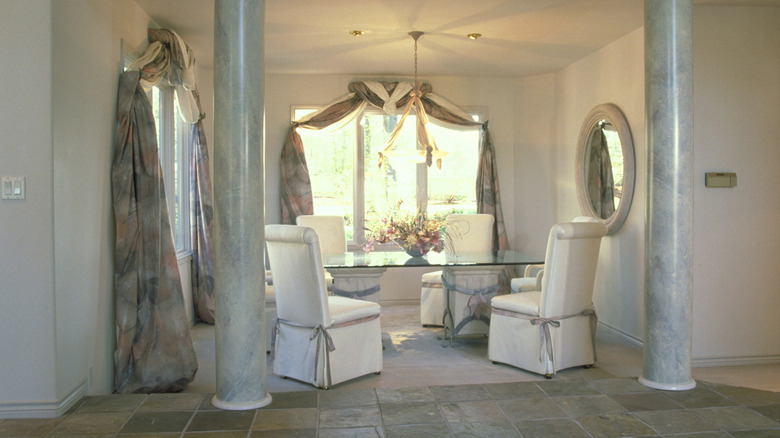
Full pastel palettes featuring shades of soft mauve, blue, and peach were one of the trends that dominated '80s design, and no room was safe from this treatment — not even the dining room. While there's nothing wrong with incorporating soft, muted tones in your home's design, all-pastel spaces, especially those that include other bygone trends like heavy drapes and matchy-matchy patterns, can feel particularly stuck in the past. Instead, consider pairing these colors with furniture and decor that is slightly deeper in tone or more saturated for a more balanced, modern look.
Glass block walls
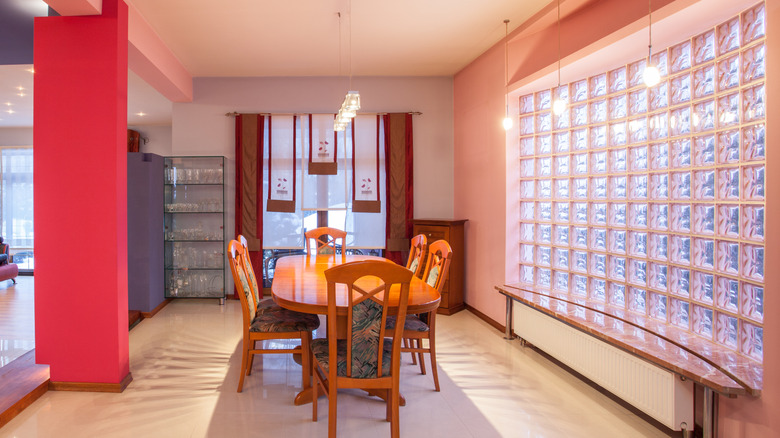
Glass block walls were a common feature in '80s design, and in many cases, something that those who saw this trend in action would rather forget. These blocks were touted as a way to bring texture to a space without eliminating the natural light that would be blocked by a full wall, but it's safe to say that they were a bit overused. Now, however, some are actually recommending homeowners keep those outdated glass block windows. With the correct styling, they can feel fresh, but it's a difficult line to toe.