

The Old-School Pattern Trend That's Having A Major Resurgence In 2026
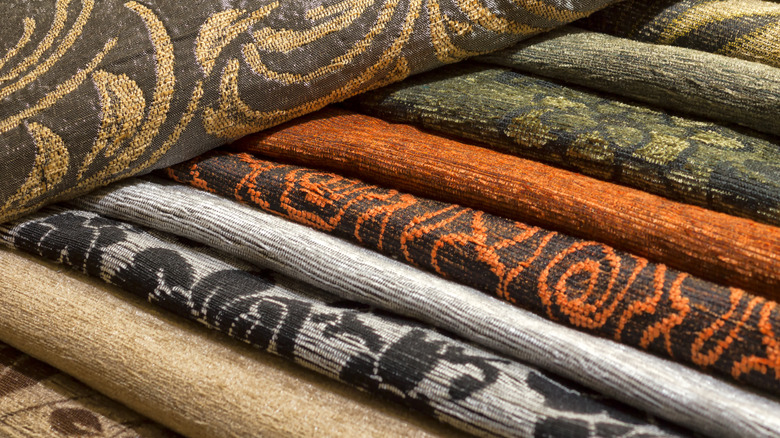
One of the patterns set to take over interiors in 2026 carries centuries of history, while simultaneously embodying everything that's inspiring designers and homeowners right now. Known as verdure, the French word for "greenery," this print originates from the lush handwoven tapestries of 17th century France and Belgium, particularly the rich tradition of the town of Aubusson. It portrays scenes of nature marked by leafy trees in dark and muted shades of greens, blues, teals, and browns.
Tapestry as a way to add texture to home decor, and as a warmer, more tactile alternative to framed paintings, has been trending in interior design for a couple of years. But, among the many intricate, worldly patterns that populate this ancient art, verdure stood out, becoming so popular that it jumped out of the wall into any upholstered furniture and accessory around the home.
"I've noticed a resurgence of tapestry fabrics that feature layered botanical patterns and rich, earthy hues," designer Kathy Kuo pointed out in an interview with Homes and Gardens, adding, "It's a trend I believe will grow stronger in 2026." Once a chic, curated secret among designers, it's now a recurring motif in all kinds of pieces, from pillows and duvets to sofas and mirror frames, found at somewhat accessible retailers like Anthropologie, Mcgee & Co., and Pottery Barn.
Why the verdure pattern fits today's trends so well
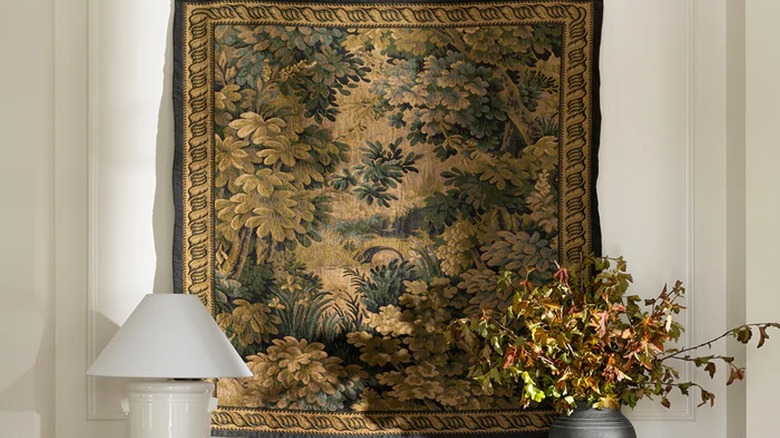
The verdure pattern is a perfect cocktail of the biggest trends that have defined interior design in the last year and are predicted to continue dominating in the near future: A penchant for warmth and comfort, an interest in the storied and vintage, a desire for nature and the outdoors, and an urge to break free from cold minimalist interiors by playing with color and pattern.
For one, in its most authentic form, verdure tapestry is woven from threads of wool and silk, two natural materials that give your home the perfect cozy look and feel while channeling the biophilic design philosophy. This is only further charged by the lush depictions of flora and fauna, conveying a sense of tranquility that people crave in an increasingly technological and detached reality. Also contributing to the character of this pattern is its antique history and handmade quality. That thread, both literal and metaphorical, tying a given work to the artisans who made it and the previous owners who cherished it, grants it a kind of weight that you just can't get from something bought from an off-brand catalog. If buying new, look for pieces that retain those artisanal qualities.
As picturesque and soft-hued as the verdure pattern is, it's still fairly ornate for the standards of modern 21st century design. Its multiple decorative elements are all carefully constructed with an impressive attention to detail, making it an ideal fit for maximalist, print-filled interiors that celebrate that level of complexity. With that said, this vintage-inspired trend isn't just made for bold interiors. In fact, as a subtle pattern, it can be a simple vehicle for adding color to your minimalist spaces and contrast to your modern interiors.