

Why Winter Is The Perfect Time To Update Your Kitchen Backsplash
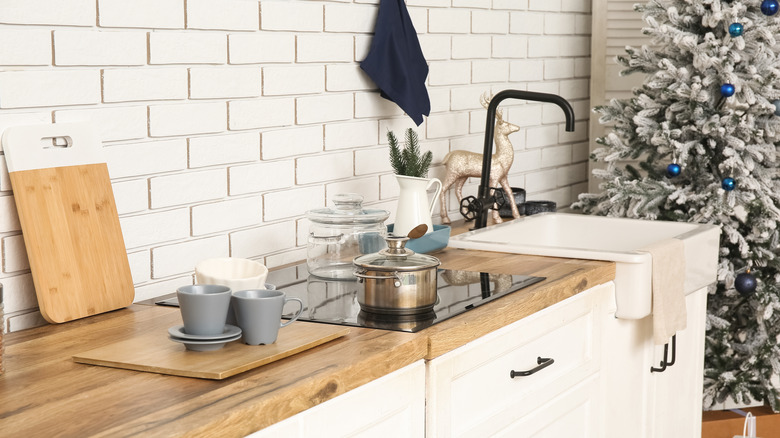
With the dipping temperatures and freezing rain of the winter season, you're likely spending a lot more of your time indoors. Not to mention the holiday festivities that require more cooking, baking, and hosting, keeping you circling around your kitchen for most of this time. During winter, every subtle issue you dislike about your kitchen may become more apparent, such as the outdated backsplash trend you're ready to ditch or an old, damaged backsplash that's begging for an update. Well, this snowy season is actually one of the best times to tackle this renovation.
One advantage is that during winter, the air turns really dry. As a result, adhesive, caulking, and grout tend to dry and set much faster, so your winter backsplash renovation may move along more quickly compared to the summer and spring seasons, when humidity is extremely high. However, keep in mind that adhesives and grout will only benefit from the low humidity and set quicker if you keep your working space warm enough.
Secondly, since most construction work generally slows or halts in winter, many other homeowners instinctively pause their home-improvement projects as attention shifts to enjoying the holiday season. That means winter is an off-peak season for contractors and material suppliers. And while that may be bad news for business owners, it's actually a huge advantage for you as a homeowner, as there's more availability of the services you'll need for your kitchen backsplash reno.
Faster installation and other off-season advantages
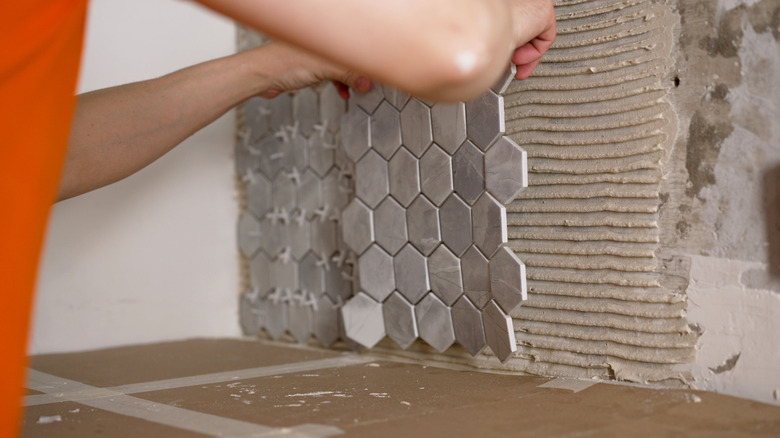
As you tackle your kitchen backsplash update during winter, be aware of the unique circumstances you're working under and implement a few tips for a successful project. Most importantly, ensure you maintain a controlled warm temperature in your working area — you can use space heaters and keep the windows closed to minimize drafts from outside. For grout to set properly, your kitchen should be above 60°F. It's also wise to select the right adhesive that can withstand low temperatures, and depending on the backsplash material you want, remember to acclimate tiles indoors, allowing them to warm up for at least 48 hours before starting installation.
If you're still on the fence about whether updating your kitchen backsplash is one of the best home renovation projects to tackle during winter, think of all the off–season perks you can take advantage of at this time. First, your wallet will thank you because many contractors are more willing to lower their labor rates to attract more customers during this quiet season. You can also expect a faster turnaround time because most contractors don't have dozens of other homes to work on, so they can focus more time on your kitchen.
There's even more money to be saved thanks to material discounts. Many suppliers will be eager to clear their "last-season" stock in preparation for the new year, so you can expect great holiday deals on tiles or any other preferred material for your backsplash. Winter presents a great opportunity to implement all your creative backsplash ideas for your kitchen on a budget.