

Save Some Wood Ashes — Your Rose Bushes Will Love Them
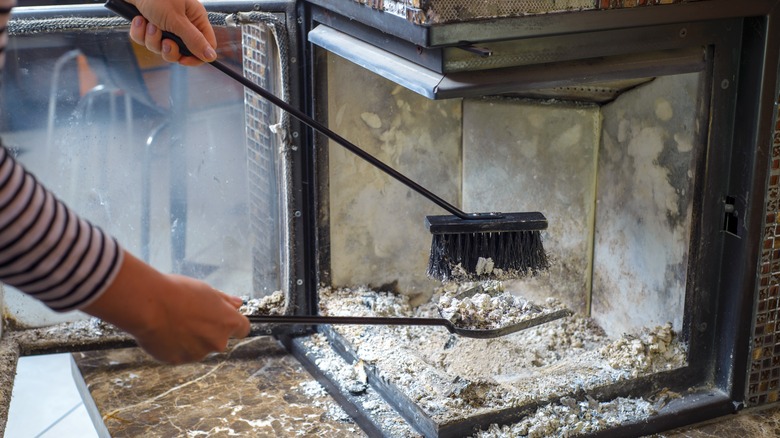
Let's say you hosted a holiday celebration and had a crackling fire in the fireplace. Or your power went out during a winter storm, and you kept the house warm by burning logs all night. Or maybe your kids just wanted to roast some marshmallows. Eventually, you will need to clean out that fireplace. It's a dusty job, but you'd like to make something of all that wood ash instead of throwing it away. There are a number of surprising uses for the wood ash from your fireplace, which can include composting it. But did you know that you could apply it to your roses and help them thrive in the coming year?
Roses are heavy feeders that need a lot of nutrition to produce an abundance of flowers each year. This can quickly deplete the soil. Roses should be fertilized annually each spring and after they are done blooming in summer. You can get a head start on the process by collecting and storing your wood ash in preparation for spring feeding. A few precautions: the alkali in wood ash can be a health risk and a skin irritant, so it's recommended that you wear protective clothing, goggles, and a dust mask. Never burn pressure-treated wood or apply its ash as compost fertilizer. And it should probably go without saying: Make sure that the wood ash is fully cooled and contains no warm embers before you remove it from the fireplace.
How and why to use wood ash as rose fertilizer
Wood ash contains high levels of calcium, potassium, phosphorus, and magnesium. Potassium and phosphorus are two of the three (along with nitrogen) key macronutrients any plant needs. Magnesium is an integral element in chlorophyll, so a deficiency can appear as yellow leaves. Magnesium also helps plants take up nitrogen and phosphorus, key for the growth of cell walls and the production of seeds and pollen. Calcium is important for root growth, and it is also an excellent way to perfect the soil for thriving roses. These flowers prefer slightly acidic soil. So, if you've tested your soil's pH levels and determined that it is too acidic, the alkali calcium can raise the pH level, making it less acidic.
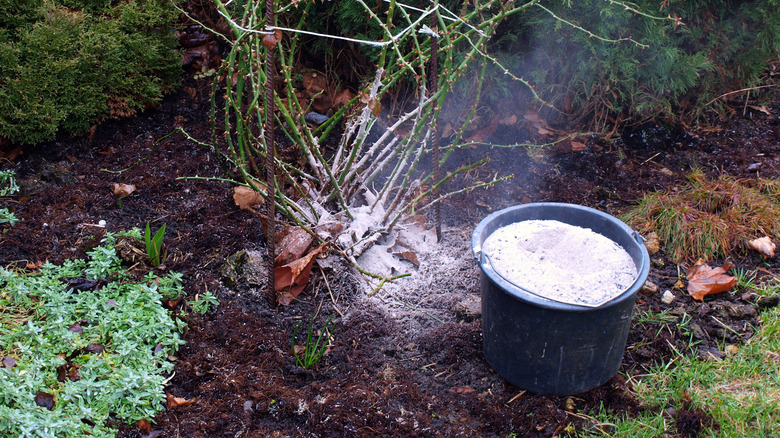
To feed your roses, remove any large pieces of charcoal from the wood ash first. You can use the ash separately or add it to your own DIY compost mix, which gives your roses a more complete fertilizer. However, you should never mix it with another chemical fertilizer. This can result in noxious gas. In early spring apply the compost or wood ash directly to the base of the plants. Water it to prevent the ash from blowing away and to help the essential nutrients slowly make their way to the plant's roots by the time it emerges from dormancy.