

This Clever Tile Trick Uses Multiple Grouts For A Unique Effect—and The Result Is Stunning
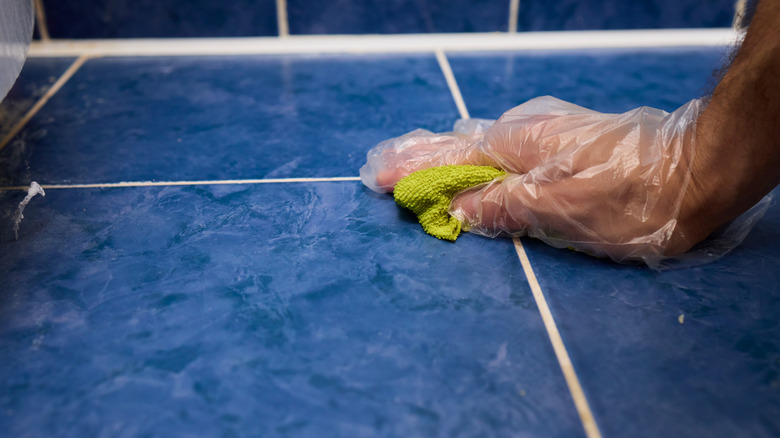
Grout isn't exactly exciting. It has a simple job: filling the gaps between tiles and bringing them all together. So when people find fun and interesting ways to work with grout to make tile look even more interesting, we have to make note of it. And it doesn't get much more intriguing than the clever trick from Instagram account @ptinstallers, who used different colors and shades of grout to create an ombre effect with absolutely stunning results.
For this hack, the designer chose three shades of grout: white, light gray, and deep gray. They started with the darkest shades up top and transitioned towards the white as they moved downwards. This hack is brilliant because it can be completely customized. You could, for example, combine three different tile colors to complete a uniform ombre effect. You might also use this hack with single-color tiles for a more subtle impact or go all out and use colorful grout and tile combinations like blue, orange, or yellow to bring a lot of personality into your home. Then, you just have to worry about sealing the grout to maintain its looks and the eye-catching gradient.
Create a stunning ombre effect with grout and tile
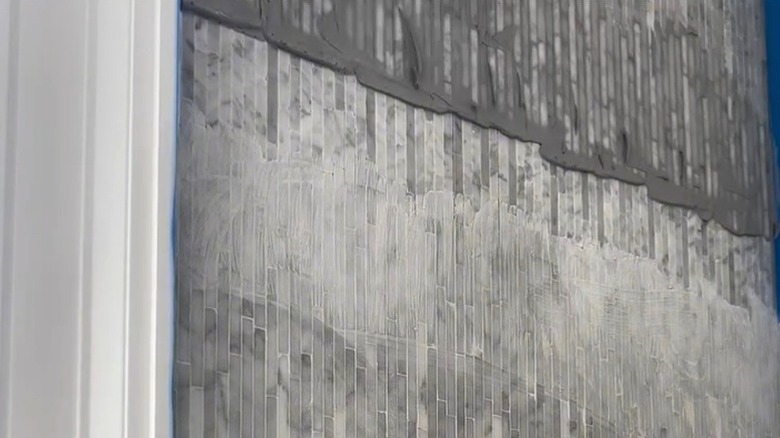
The first step of this DIY is to choose the right grout colors for your tile. You might be most familiar with basic white and gray grouts, but there are actually a ton of shades that you can pick, from bright yellow to deep reds and greens. And while grout is only a small portion of a tiled surface, it makes the tile itself look completely different by creating contrast, blending in, or highlighting different hues. Since you'll be doing a gradient, it's safest to choose colors that naturally transition into each other. Opposite colors like yellow and blue will not easily flow together. Instead, you could use the same dark-medium-light transition but with your color of choice.
Whether you place the darker grout at the top or bottom depends on personal choices, but keep in mind that light grout tends to darken as it gets dirty. If you're tiling a high-traffic area, like a shower, consider placing the dark color at the bottom and the light one on top, where it can stay fresh longer. You may want to match the grout's ombre to a tile color change too; if only the grout gets darker, it might just look dirty or moldy.
While this ombre bathroom tile design is stunning, you may also approach this project with a more structured tile layout instead of a gradual shift in tile color. For example, tile the top of the wall with white tile and the bottom with black tiles, and use the ombre grout technique to soften the transition. The center black and white tiles can be grouted in gray. This will create an interesting contrast and make the transition from black to white tile a lot softer-looking.