

The Vintage Item That Collectors Consider A Rare Thrift Store Find (It Can Be So Valuable)
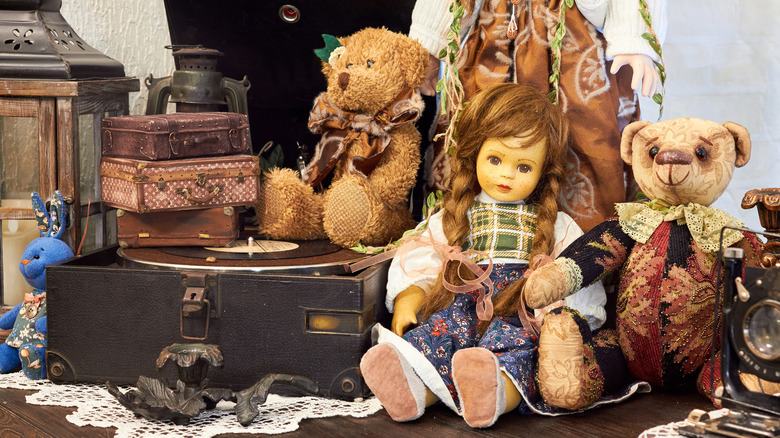
If you have a love for vintage items, even if they seem to have seen their better days, we've found a treat worth keeping an eye out for when you're thrifting. Vintage toys make great decor, especially if you're aiming for a whimsical look in your home — and Steiff stuffed animals are no exception. It's safe to say these plush toys are full of character and charm. In fact, Steiff, a toy company founded in 1880, was one of the two manufacturers that created the first teddy bears.
Rewind to 1902, a couple named Morris and Rose Michtom heard a story about Theodore Roosevelt's bear hunting experience and decided to create a small stuffed bear. They got Roosevelt's permission to call it Teddy's Bear. At the same time, Richard Steiff, nephew of German toy company owner Margarete Steiff, created the first articulated bear — though it wasn't yet referred to as a teddy bear (that wouldn't happen until 1906).
Bears aren't the only animals created by Steiff, and they weren't even the first plush critters the brand made. However, those bears are part of the reason Steiff became famous. Some of its vintage plush bears can fetch $20,000 to over $100,000, with the most valuable being the Steiff Louis Vuitton bear, which sold for a whopping $182,550 back in 2000. Other animals are also worth looking for when thrifting, since they make fun decor when organized with a simple yet visible storage solution. Before you start snatching up every Steiff you find, it's essential to know that this company still manufactures plush toys. Therefore, you'll want to be aware of what to look for when it comes to authentic vintage and collectible Steiff pieces.
How to spot a vintage Steiff and which ones are worth the most
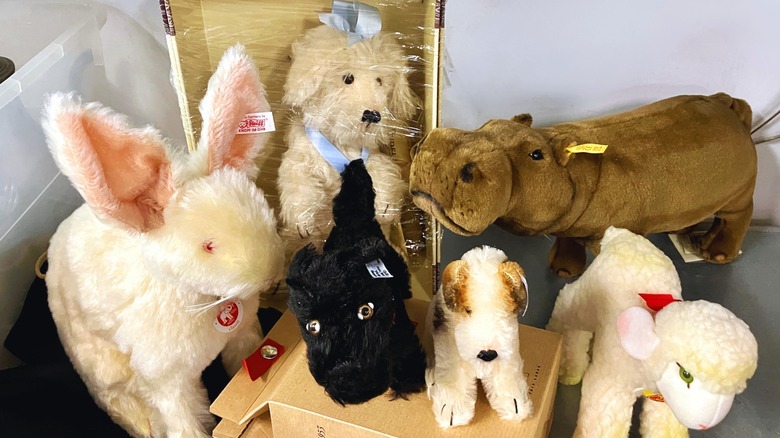
Before determining whether your Steiff find is worth anything, you'll want to ensure it's authentic. Since its early days, the Steiff company developed an interesting way to demonstrate authenticity: each creation had a button in the ear. Of course, animals with no ears would have their button tags located somewhere else on the body. Most buttons were stamped with "Steiff" on them, but bears predating 1905 had blank buttons. And, with age comes lost buttons — though there will often be a hole where the button once was. While a certificate of authenticity will increase the value of your Steiff toy the most, other factors can also enhance its value and help verify its authenticity. Limited-edition Steiff animals with a white tag and red print are highly valued, while those with a yellow tag and a button in the ear are moderately valued.
Toys are always one of those unexpected collector's items you want to look out for at thrift stores. Even replicas of original Steiff animals can generate a small additional revenue. One example is a 1902 mohair bear replica that sold on eBay for just over $150. That's not bad, considering an original Steiff bear from the 1950s sold for around $300. While Steiff bears may be popular, a 1960s dinosaur from the toy company sold for over $200, and a bunny from the '50s sold for almost $150. Even if the Steiff toy you find isn't worth a lot or is in rough shape, there are plenty of clever ways to repurpose old stuffed animals around the house.