

Turn An Old Furniture Leg Into An Essential For Extra Plants

We may receive a commission on purchases made from links.
While you can't keep everything, one thing you should never throw away is an old furniture leg. There are so many genius ways to repurpose old furniture legs around your home that once you know about them, you'll regret every set you ever tossed. If you're looking for a fun, simple DIY and have a lot of extra plants, using an old furniture leg to make a plant stand is an idea that's sure to get your creative juices flowing.
All you need to turn an old furniture leg into a plant stand is a base and a top. The base holds the stand steady, and the top holds the plant. Wider bases offer more support, but you can achieve a more elegant look with a streamlined base. Mix and match your bases and tops, or add layers to get just the look you want. Whether you use pieces of dimensional lumber that have been sanded and finished, or buy something pre-made like the Evermark Unfinished Poplar Round Rosette Handrail Fittings, which cost $4 each, you can glue them together, then paint, sand, or treat them in many different styles to match your home decor.
This DIY requires at least one furniture leg, but if you don't have any, you could repurpose an old chair or table from the second-hand store. You can also find vintage furniture legs at antique shops, thrift stores, and online. To attach your furniture leg to its base and top, use nails, screws, or an appropriate adhesive depending on the plant stand materials.
Bring variation to plant stands made from old furniture legs
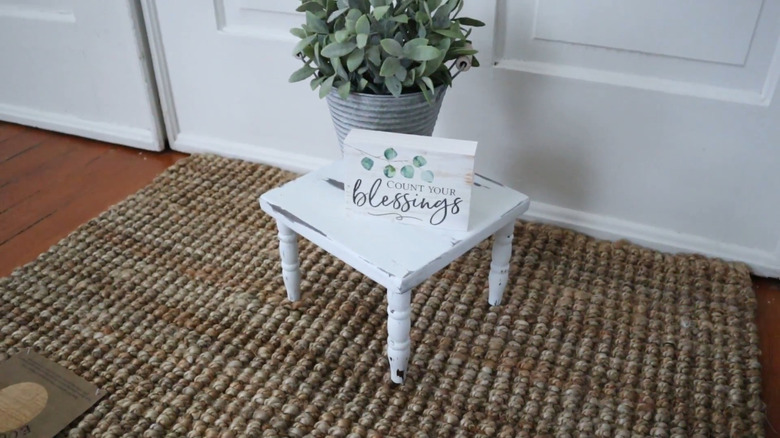
If you have children or pets, you may want a plant stand that's a little sturdier. In this case, many variations can be made by attaching three or four old furniture legs to a flat top. Whether you find fancy and ornate spindles or use basic ones, like from an old crib, there are plenty of creative ways to repurpose old furniture legs into plant stands.
From decoupage to different colors of stain or distressed paint, the possibilities for customization are endless. For example, you could spray your new plant stand with metallic paint, or choose some of your favorite fabric and decoupage it onto the leg and base for a personalized, textured look. You can also experiment with stencils, hand-painted designs, or even gold leaf for a more dramatic effect.
Once you're done, don't forget to seal your new plant stand to protect it from scratches and water from plant pots. You can make several of these in various heights, shapes, and sizes to create a cozy plant corner in your home. They would also make a lovely addition to a container garden. If you decide to use them outside, apply a natural wood treatment, such as tung oil or linseed oil, to keep them looking good for years.