

Make A Groovy DIY Headboard With Surprisingly Affordable Materials
What's more dreamy than resting your head next to a cluster of wavy psychedelic shapes? If your bedroom is lacking a little something to crown the space's most important feature, a '60s-inspired headboard feature might be just the ticket. Borrow from the mesmerizing forms that dance in a lava lamp to create this easy DIY headboard to upgrade your bedroom. Surprisingly, a plush, padded statement piece like this doesn't take a lot of skill, time, materials, or money to make. You cut bubble-like and amoeba-like silhouettes from a timber sheet and cover them with a layer of cushy foam and faux velvet. Mount them to the wall above your pillows with removable adhesive strips.
Source a large sheet of chipboard, MDF, or plywood. Measure the height and width of the space above your bed to make sure what you get is large enough. You'll also need a few yards of TinaKim Velvet Upholstery Fabric in Sea Blue and a roll or two of GoTo Foam Firm 1-Inch Upholstery Cushion. Get enough to cover the shapes you plan to make with a generous margin for trimming. Toolwise, gather together a jigsaw, a tape measure, a pencil, some string, a permanent marker, a staple gun, scissors, and a utility knife. Also grab a pack of heavy-duty picture hanging strips or adhesive mounting tape. Alcohol wipes will come in handy to prepare the wall for the adhesive strips.
How to create a groovy '60s headboard from wood, fabric, and padding

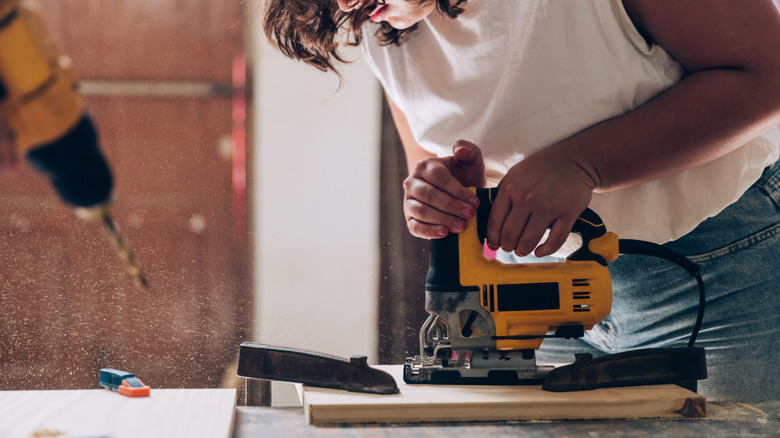
Ready to create this renter-friendly DIY that won't jeopardize your deposit and looks incredible? Use the pencil and string as a compass to draw even circles on the wood. For the largest of the headboard pieces, outline a circle with a diameter about ⅔ to ¾ the width of the bed. About 4 inches away from the large circle, trace another one that's about ⅓ the diameter of the larger one. Connect the two circles by drawing a curved neck between them. Recreate the same shape, but downsize it by about ⅓ of the size of the original. Draw four or five smaller circles of differing sizes. In total, you should have five separate pieces. Cut each piece out with your jigsaw.
Working one by one, lay a wood piece atop the foam and trace around it with the marker. Leave a border of about 1 inch all the way around. Cut out the foam shapes with scissors or a utility knife. Trim the foam at a 45-degree angle to help the fabric lay smoothly. Place the foam cutouts atop the fabric, and trace the shapes, leaving a border of about 2 inches. Cut the cloth with scissors, and fold the edges up and over the padding and wood. Pull the fabric taut with a consistent amount of force as you staple it to the wood, spacing the staples about 1 inch apart. If necessary, trim off any excess fabric that's bunching in the back. Too much material could affect how neatly the piece sits on the wall.
How to hang your headboard components and ways to customize this DIY

Before mounting the fabric-covered wood pieces on your wall, hold them up to the wall and trace around them with a pencil. This will help you work out your ideal arrangement. Aim to have about 4 inches of space between each of the five circles of varying sizes. The shapes should extend about 6 inches beyond either side of the bed and sit high enough up the wall that your pillows won't hide them. Once you're happy with the look, wipe away dust or debris from the back of the shapes. Then apply the adhesive strips or mounting tape. How many you use and how long you wait before hanging the pieces on the wall will depend on the manufacturer's instructions. Clean the wall with rubbing alcohol, then press and hold each shape in place before moving on to the next one.
The sky's the limit when it comes to modifying this DIY. You can, of course, cut different shapes. Take inspiration from wallpaper, furniture, or even art from the era. If you're on a budget, you could thrift some used velvet curtains for the fabric. Bonus points for finding vintage 1960s drapes. You don't have to stick with retro hues, though. Instead, choose fabric in colors that match your existing bedroom décor. Likewise, velvet isn't a necessity. Channel the current trend for natural materials and choose neutral linen or recycled cotton. Need padding on the cheap? This would be a genius way to repurpose your old mattress topper. A thick layer of quilt batting could also give a satisfyingly cushiony look.