

The Easy Way To Tell If A Thrift Store Art Piece Is Truly Vintage Or Not
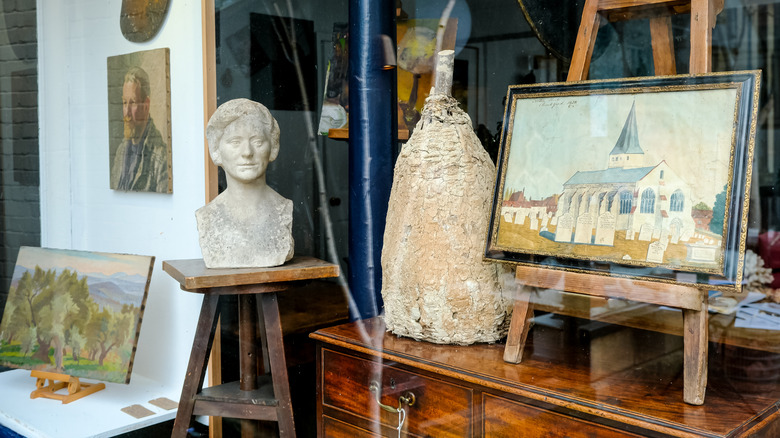
Filling your home with art is a great way to add personality to your space — and, with vintage art, at least, a little bit of history, too. If you've ever purchased artwork, or even just browsed the selections in a gallery, you'll know that it can get expensive quickly. Prices vary widely depending on the artist, size, rarity, and historical significance of a work. Authentic vintage pieces often come with hefty price tags, especially if you're shopping on luxury resale platforms like 1stDibs or buying from top auction houses like Christie's and Sotheby's. However, if you're lucky and know how to spot an authentic piece, you can find some treasures at thrift stores. The first thing to look for is a darkened canvas. Other common signs include a signature, labels, and old framing techniques.
Some artistic mediums have their own particular indicators of authenticity. For example, if you're on the lookout for stunning oil paintings for your décor that are truly vintage, knowing a few key details about this specific style of art can help you determine whether it's authentically old. One such indicator is the color of the back — or sometimes the front — of the canvas. An aged painting canvas naturally dulls over time. In other words, the darker the canvas, the higher the likelihood that it's a genuine piece. Sometimes the paint darkens, too. This isn't a hard-and-fast rule, however, as artwork can be relined multiple times, which can brighten the original canvas. Look closely at the edge of the canvas to see if you can spot more than one layer. It's a sure sign of relining.
Other ways to authenticate old art: nails, signatures, and labels
Another important framing detail to look out for — one that applies to most canvas-based artwork, not exclusively oil paintings — is how the canvas is applied to the stretcher. If it's attached by nails rather than staples, the frame may have been created before the 1940s. Up until around that decade, nails were more commonplace in framing than staples. Later, staples became more prevalent, and they are still the most commonly used method today. Once you become familiar with these subtle signs, it will become much easier to find authentic vintage paintings and, in turn, secure the perfect artwork for your home.
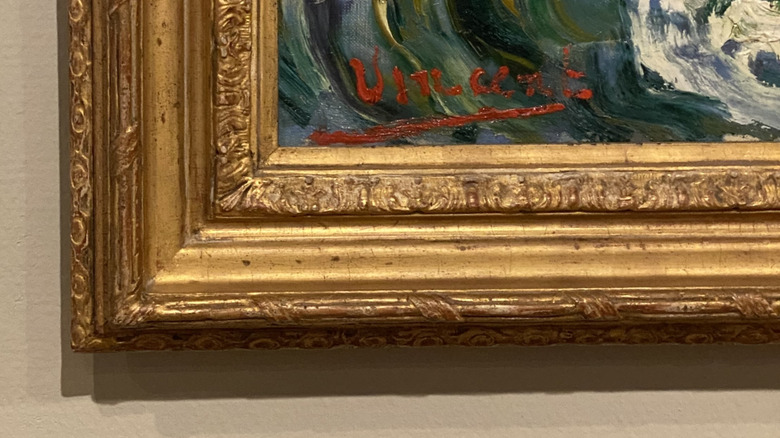
Perhaps the most obvious detail to note when authenticating vintage art is an artist's signature. Artists mostly began signing their work during the Renaissance, after which the practice became commonplace. A visible signature, often in the bottom right corner of the canvas, is a promising sign. Look it up online to see if you can find any matches, comparing both spelling and style. The back of an artwork can provide clues, too. Look out for handwritten notes, framing details, or care instructions. Keep an eye out also for small, rectangular labels or stickers indicating gallery display, exhibition participation, or auction sales — all information that can be used for authentication. Those weird vintage art prints at the thrift store can be far more valuable than you think!