

Improper Shoe Storage Mistakes To Avoid Making In Your Home
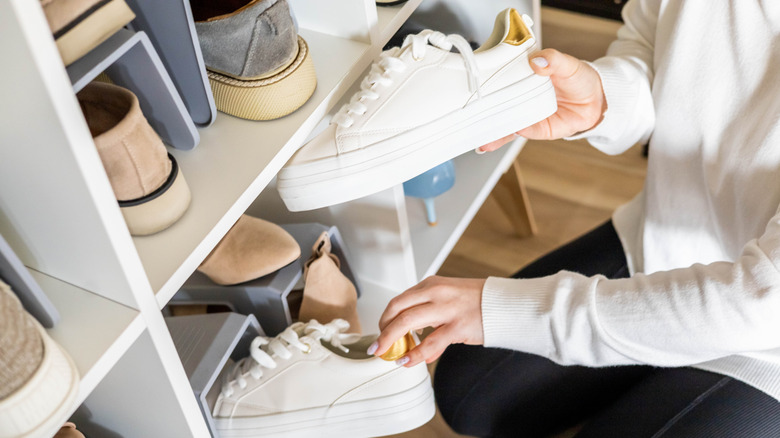
Depending on their quality and how often they are worn, your favorite trainers, loafers, boots, or even heels can last for several years. However, to enjoy the most time possible with your shoes, it's important to provide the proper storage. This means knowing the right steps to take, as well as those easy-to-make shoe storage mistakes you should avoid.
At first glance, finding the best way to store shoes may seem like a matter of keeping clutter under control. After all, keeping your shoes tidy can help clear up room for foot traffic while reducing the amount of dust or debris tracked throughout your home. However, finding the right way to store your shoes when not in use can also help prevent the problems that arise when improper shoe storage mistakes are made. For example, if you're not planning on wearing a certain pair of shoes for the season, avoid leaving them in an open box in your attic or basement, as this can leave them vulnerable to water or pest damage.
Just as there are many ways to correctly store your shoes to maximize their lifespan, there are an equal amount of important shoe storage methods. To steer you in the right direction, here are a few common shoe storage mistakes to avoid making in your home and tips for finding the best way to store your shoes.
Common shoe storage mistakes (and what to do instead)
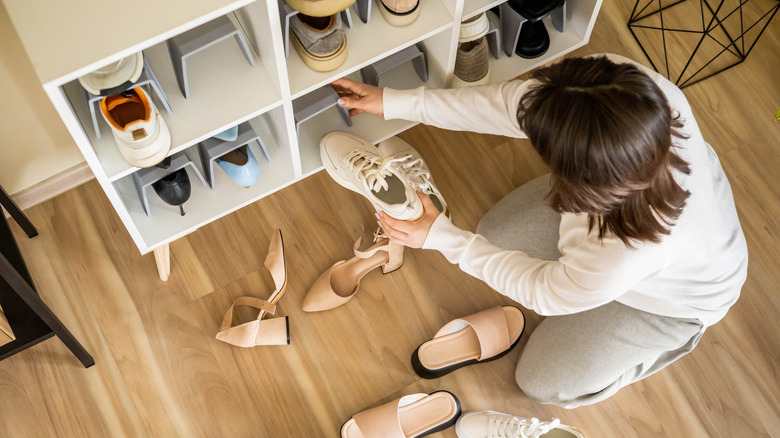
Have you ever pulled a pair of shoes out of storage after a season, just to find that they're falling apart? One of the most common shoe storage mistakes is leaving your shoes exposed to the elements when not in use, especially if you're storing them in an area that isn't temperature-controlled. Heat and humidity, which are common in garages, can break down shoe materials, including the adhesive that holds them together. Excessive water damage can also lead to mold and mildew.
Instead of leaving your shoes to fend for themselves, one easy step you can take to avoid this mistake is to properly package them before putting them in storage. You may want to invest in specialized storage boxes that protect shoes from dust, light, and the elements without trapping moisture. You can also inspect your shoes regularly in storage, ensuring that no pests have been able to access them.
Mistakes don't just occur with long-term shoe storage; there are also day-to-day mistakes that can shorten your shoes' lifespan. Stacking them on a storage rack at your front door can be convenient, as well as space-savvy, but it can be harmful for softer shoes that end up at the bottom. To avoid crushing them, a different shoe storage option, such as a hanging rack, may work better, along with shoe inserts to help maintain their shape.