

Hide An Eyesore Coming From Your Neighbor's Yard With A Beautiful Garden Solution
We may receive a commission on purchases made from links.
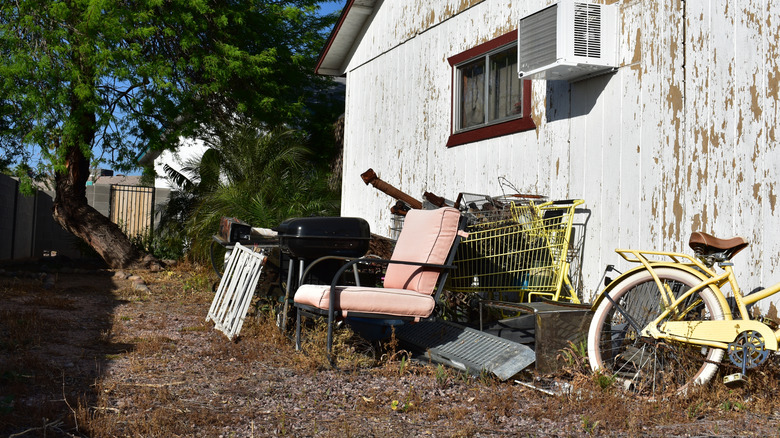
No matter how much time and effort you put into creating the garden of your dreams, if your neighbors decide to park a rusty old clunker in their yard, it can instantly ruin your view. Fortunately, you don't have to pack up and move to get away from clutter bug neighbors. Instead, you can use a trellis and climbing plants to create a natural screen between your yard and your neighbor's. This will allow you to enjoy a beautiful view in peace, regardless of what eyesores pile up next door.
With this endlessly versatile project, you can design a screen that fits in perfectly with your garden style and your home's aesthetic. Choose a trellis made of scavenged vines or decorative ironwork, depending on the look you're going for. Complement your trellis with your choice of climbing plants that can blanket your yard in color. You can pick colorful flowering varieties, such as wisteria, or go with a leafy evergreen, such as Persian ivy. Plus, you can customize all elements of the project based on considerations like how much effort you want to put into maintaining it, how much coverage you need, and your gardening style.
Best types of trellises for a natural screen
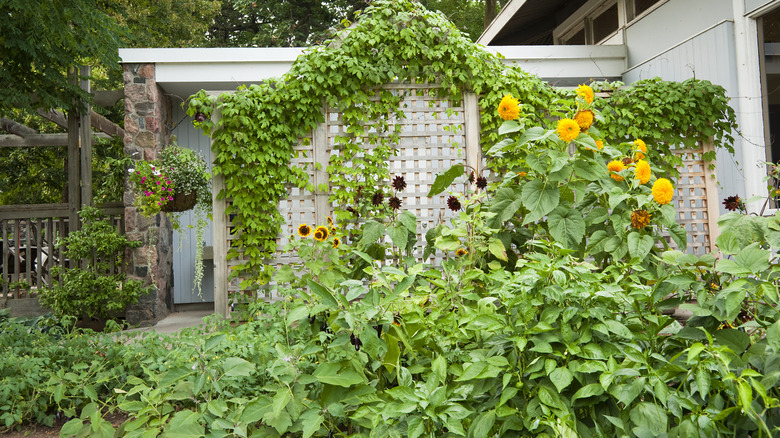
Your garden trellis structure can be as simple or as elaborate as you want. To narrow down your choices, decide on your top priority. Do you want to create a screen that will last for years with relatively little maintenance on your part? Or are you on a shoestring budget and looking for a quick, cheap solution that only needs to last for a season or two? These parameters will guide your choices.
For the most budget-friendly option, you can use materials you already have on hand. If you have a chain link fence, it can easily serve as a trellis. You'll only have to plant some inexpensive climbing plants. However, since most chain link fences are fairly short, you may need to extend the height to block the view into your neighbor's yard. You can do this by securing sturdy branches to the fence and using twine to create a trellis net. This type of branch and string trellis is also a cheap option if you don't have an existing fence. You just need to bury the sticks four to six inches deep and space them approximately one to two feet apart. You can also use U-posts or bamboo stakes for support, for a more durable option.
If you're more concerned with longevity than budget, or you're looking for a readymade option, you can buy timber, metal, or vinyl trellises, such as this Concord trellis that comes with a ten-year warranty. Though the initial upfront expense is higher, you won't have to redo the trellis every year. This is also a good option if you plan on using evergreen climbing plants for year-round coverage.
Best types of climbing plants for a trellis
Before you choose a climbing plant for your natural screen, consider how much space you need to cover, whether you want flowers or only foliage, and whether you want seasonal or evergreen plants. Combining climbing evergreen plants such as star jasmine or ivy with a long-lasting trellis will allow you to invest an afternoon in setting up your natural screen. After that, your maintenance tasks will be minimal. You can "set it and forget it" other than providing basic plant care. Just make sure that you avoid invasive species when making your plant selection. It's always wise to check with your local extension office for the best recommendations for your region.
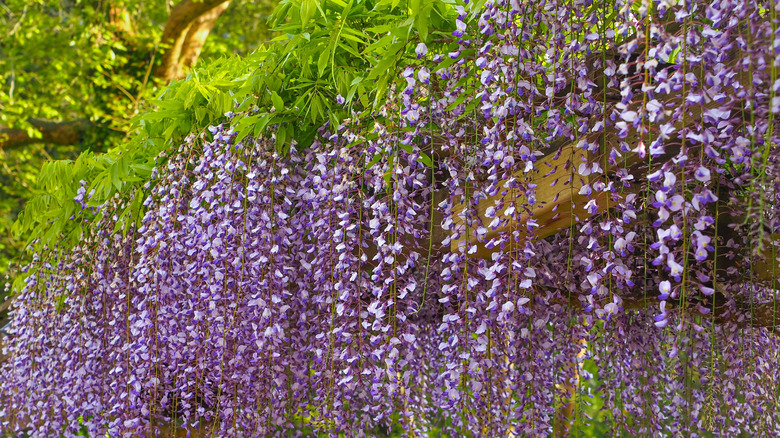
If you want to turn your screen into a garden feature in its own right, you can opt for plants such as the show-stealing summer cascade wisteria (Wisteria macrostachya 'Betty Matthews') to add color to your yard with vibrant purple blooms that are delightfully scented. Blue passion flower (Passiflora caerulea) is another climbing plant known for its stunning blooms. Don't overlook your other senses, though. Coral honeysuckle (Lonicera sempervirens) vines are native to the U.S., grow quickly, and make the air around them smell heavenly when they're in bloom. Similarly, star jasmine (Trachelospermum jasminoides) is frequently sought after for its fragrance. These plants can do double duty if your neighbor's eyesore is also accompanied by a sour smell.