

The Stunning Addition Erin Napier Uses To Make A Kitchen Island A Statement Piece

The island has become an essential piece of modern kitchens. This is in part thanks to its more pragmatic benefits of adding counter space for food prep and facilitating social gatherings in what was previously primarily a working space, but also because it gives designers and homeowners a chance to add flair to their kitchen plans. Islands are prime real estate for design focal points, offering exceptional flexibility to play around with shapes and materials. HGTV's celebrity designer Erin Napier knows this well, and the island from Season 5, Episode 8 of "Home Town" proves it.
In the episode titled "Clean Lines Open Spaces," the mood board was all about midcentury modern, so Napier took the chance to turn the island at the center of the open floor plan into a wooden statement moment, in line with the style's fondness for using this natural, warm material in the kitchen. She and her woodworker husband, Ben Napier, chose smooth black walnut wood veneer panels to cover the back of the structure. "This island is really our baby. This is our favorite thing in the kitchen," the designer gushed (via HGTV).
A wood veneer island combines style and function
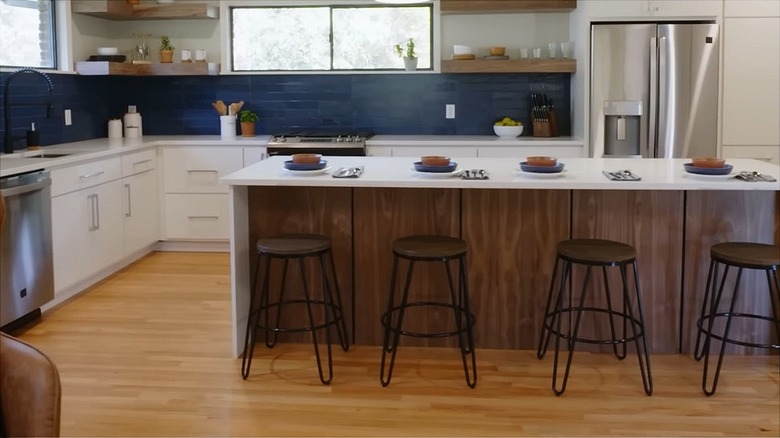
Using the island to add a wooden accent to your kitchen is a simple yet incredibly stylish way to introduce contrast, warmth, and the texture that comes with this kind of natural material. In this particular Erin Napier design, the choice was a nod to the ever-popular midcentury modern style, but wooden islands pair just as well with a plethora of other schools of design, depending on wood type and stain. Lighter woods like white oak and birch help create the perfect Scandinavian-style kitchen, while rougher reclaimed woods add a rugged edge to farmhouse or industrial spaces.
Whatever your preferred aesthetic, wood is a simultaneously trendy and timeless material for the kitchen island. As a mainstay in the ultimate guide to biophilic interior decor and an infallible way to make modern homes cozier, it fits all the current priorities of interior design. At the same time, its storied past across the various eras of home building testifies to its staying power. Make your island pop by framing it with white countertops and cabinets, play into its tactility with metal accents, and enhance its organic essence with other natural materials like leather stools or simple ceramics.
Since solid wood has become quite pricey and inaccessible, cladding an island with wood veneer can be an innovative way to spice up your kitchen island. This thin layer of real wood is layered over plywood or fiberboard, reducing the cost of production and raw material, but maintaining the attractive grain and depth that makes solid wood so attractive. Veneer is also less susceptible to warping than solid wood, which can be an advantage in a high-humidity space like the kitchen.