

Everything You Should Declutter From Your Bathroom In January
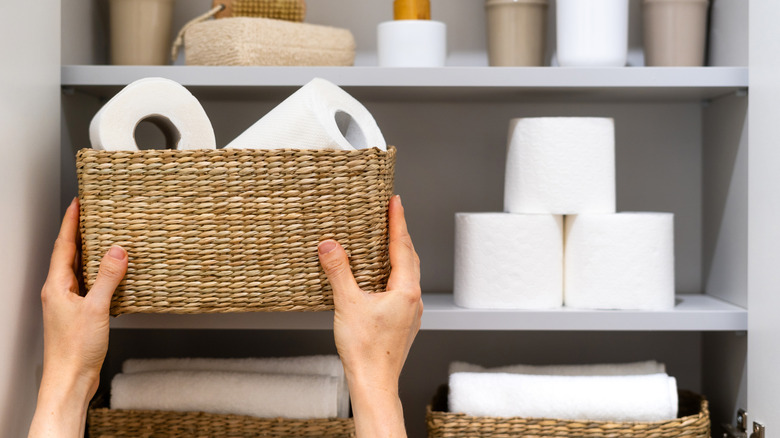
Once the Times Square ball has dropped and the Christmas decor is packed away, it's the perfect time to get started on those New Year's resolutions. Goals like exercising more and creating healthy habits top the list of resolutions, but many people also aim to improve organization in the home (and in life in general). If you're one of those people, your New Year's resolution may have you looking for tips to help keep your bathroom clutter-free. That starts with decluttering bathroom items that are no longer safe, things you don't use, and things that don't fit quite right.
One of the easiest ways is to toss products that are expired and items that are broken — you can justify getting rid of bathroom supplies in those categories since they're no longer useful. For the rest of the items, you have to be honest about how much you use them or if they add value to your bathroom. In some cases, things like excess toiletries or items that live on the vanity countertop simply need to be relocated. Other items, like the automatic rotating curling iron or foot spa you never use, are ready for a new home. If you're not sure where to start on decluttering your bathroom in January, our list will guide you.
Any cosmetics and medications that have expired
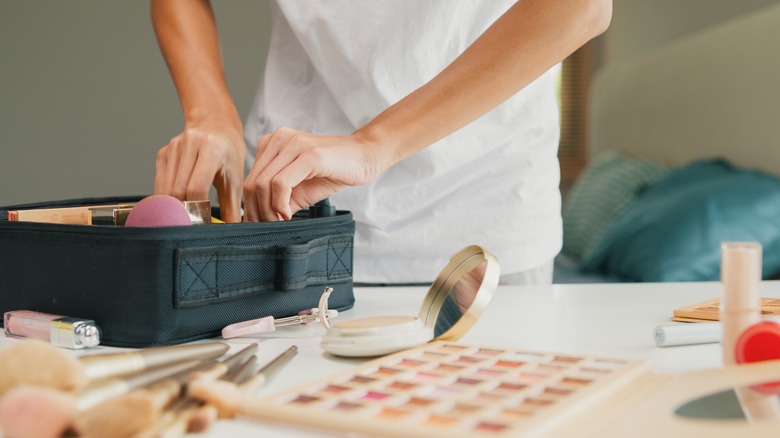
Did you know your makeup and medication have expiration dates on them? Medication expiring makes sense — you're consuming it just like you consume food. The main problem with old medication is that it might not be as effective as it should be, but in some cases, the medication could be subject to bacterial growth. When it comes to makeup, the expiration date helps you avoid changes in the color, texture, and performance of the product — old cosmetics might be clumpy, faded, separated, or difficult to blend.
Pull out your beauty products and medications. Then, check for a date or symbols that can help you decide. For example, Revlon uses an open jar image and a number to display how long you can use the product once it's open. To dispose of makeup, empty the product into a plastic bag and wipe out the container. Then, recycle or repurpose the container. Think twice before flushing old medication down the toilet — it could clog the toilet and contaminate the local water supply. Most medications can be thrown in the trash. If it's a medication that could be desirable, adding coffee grounds, cat litter, or something else that's undesirable is an option before tossing it. Or look for mail-in or kiosk take-back programs through pharmacies, organizations, or law enforcement agencies.
Cosmetics that no longer suit your style or preferences
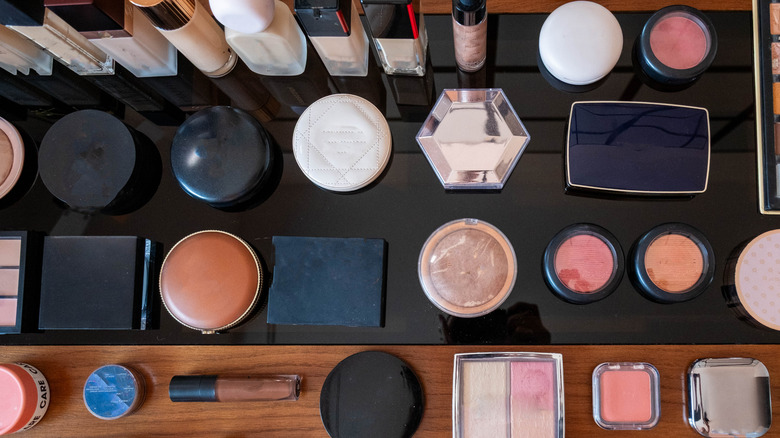
January is your chance to get real about which beauty products you use and pare down the selection. Maybe that coral lipstick that spoke to you in the store made you look pale once you got home. Or that glittery eyeshade sparkled just a little too much. For some people, the new year is a time for setting appearance-related goals. Perhaps you want to go in a new direction with your makeup look or simplify your beauty routine in the new year. Getting rid of the beauty products that don't support those goals helps you declutter your bathroom.
Spreading everything out in one area lets you assess and organize your cosmetic items. You might spot products right away that you never use and that don't fit your current makeup style. Then, consider your beauty resolutions, such as simplifying your routine, focusing on skincare, or choosing heatless hair-styling options. Get rid of items that don't support those goals. Items that haven't been opened and aren't expired can be donated, so you can help others while you streamline your stash.
Samples you've collected throughout the year
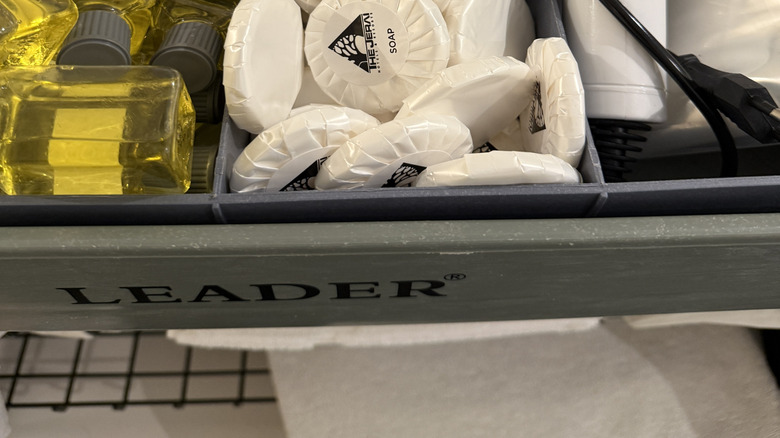
It's so tempting to scoop up those cute mini lotions and individually wrapped makeup wipe removers when you stay at a hotel. And who can pass up free samples at the mall? But often, those freebies wind up stuffed in a drawer somewhere. You think you'll use them, but you forget about your stash once you're back into your everyday routine. Despite being small, those little packages can create a lot of clutter in your bathroom. Plus, they'll eventually reach the end of their shelf life if they aren't used quickly. January is the perfect time to make a clean sweep of the mini toiletries you've collected during the last year of travel.
There are several ways to repurpose the cosmetics samples cluttering your vanity. If you think you'll use them on your next trip, put them in your travel bag now, so they're already packed. Or, grab a cute basket or tray and put them in your guest bathroom. You may even be able to donate some of the toiletries. Of course, if they've already expired or look discolored or separated, they may need to be tossed.
Hair tools and gadgets that haven't been used this year
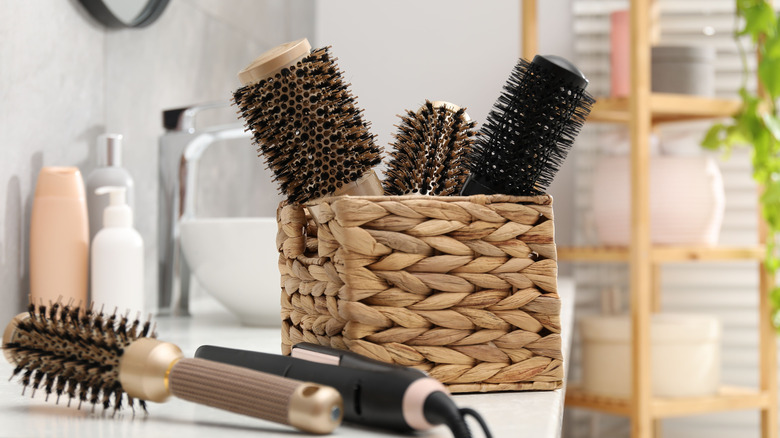
Hair dryers, curling irons, and straightening irons are the classic heat styling tools, but you might also have accumulated crimpers, wave-creating tools, and rotating curling irons. Then, you have the heatless curl trend, which you can create with rollers, headbands, rods, and other hair tools. That doesn't take into account clips, bands, brushes, and other manual styling tools. Together, your hair styling collection can take up a significant amount of space.
If you fell for gimmicky, fad styling products that you never use, consider donating them. It's also easy to declutter by getting rid of tools that are broken or don't work well. Multi-style tools, like the Dyson Airwrap and Shark FlexStyle, are a space-saving option with multiple heads for a single handle — consider replacing several bulky individual tools with these options. You can also make basic tools work double duty. For example, get rid of your curling iron and keep your flat iron, since it can be used to create curls.
Towels that are old and don't get used
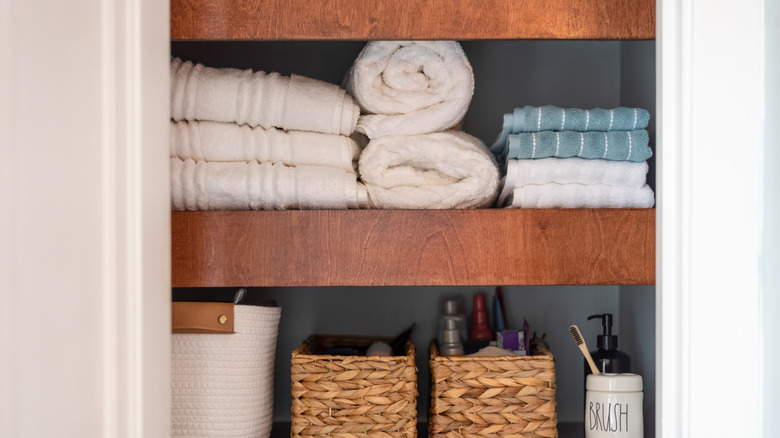
Over time, bath towels become worn, scratchy, and less absorbent, which is why you should replace them every two to five years. Some people add towels to their collection more often — maybe you find a great deal, or you decide to redecorate your bathroom. There's a temptation to hold onto the old towels. But they also take up precious space that could be used for other items.
How many bath towels do you really need in your home? The general guideline is two to three sets per person in your family, plus another two sets per guest. To calculate the guest number, think about how many people you usually host at a time. If you have more than that, decide which ones will get eliminated. They don't have to be thrown away — towels can be repurposed into other items, like pet beds, Swiffer covers, and beach bags. Or, donate them to a local shelter if they're still in good condition.
Duplicates that need a new home outside of the bathroom
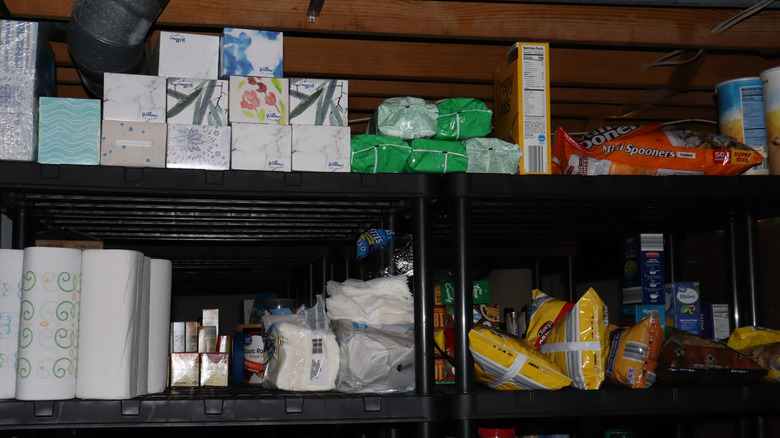
There are lots of deals on toiletries and bathroom supplies between sales, specials, and clearance sections. For other people, it's buying in bulk at stores like Costco and Sam's Club that saves money. It makes sense to stock up when the price is low, but it doesn't make sense to keep all of those extras in your bathroom, especially if space is limited. The extras eat up space and can get in the way when you're looking for something specific. It can also be difficult to find those backup razors or tubes of toothpaste if you shove them in random places in the bathroom.
Dig out duplicate products from the vanity. Make sure you have an open container available for use, and then relocate those extra items somewhere else. Many bulk buyers and couponers create a central storage area for the stockpile. That way, everyone knows right where to go when they run out of deodorant or laundry detergent. Common options include your basement, a temperature-controlled garage, or a spare room. You might designate a closet as the stockpile area or set up a freestanding cabinet to hold it all. Move the extra toiletries to that area to clear clutter out of the bathroom.
Dull and rusty nail clippers, razors, and other grooming tools
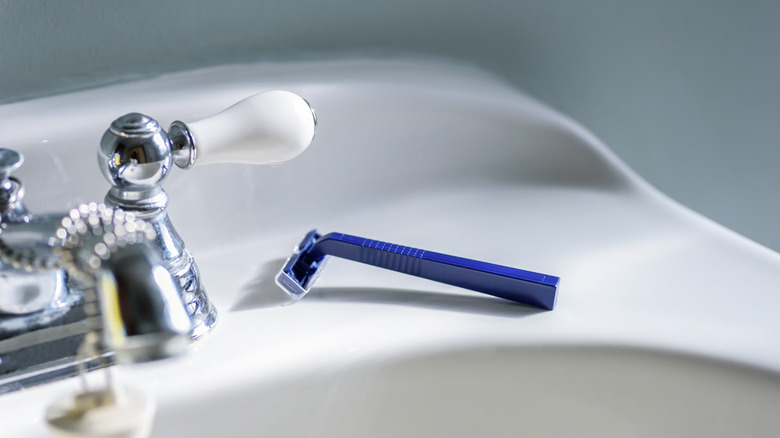
Personal grooming can be frustrating when you're dealing with a dull nail clipper or a rusty razor. Many grooming products, like tweezers and scissors, rely on a sharp edge to perform properly. Repeated use dulls the blades a little at a time until they're no longer able to make clean, consistent cuts. The high moisture levels in the bathroom can also cause metal tools to rust, which can interfere with their performance. Sometimes, when people replace these dull tools, they keep the old ones as a backup. But, really, no one wants to use those dull tools.
If you have multiple nail clippers, scissors, razor blades, and other sharp tools, check their sharpness while you declutter. For nail clippers, check the hinge to see if it's loose, and look for signs of rust on all metal bathroom tools. You might notice nicks in the blade edge if a tool needs to be replaced. By getting rid of these dull tools, you know you'll always grab a sharp option that works well.
Bath toys your kids no longer play with
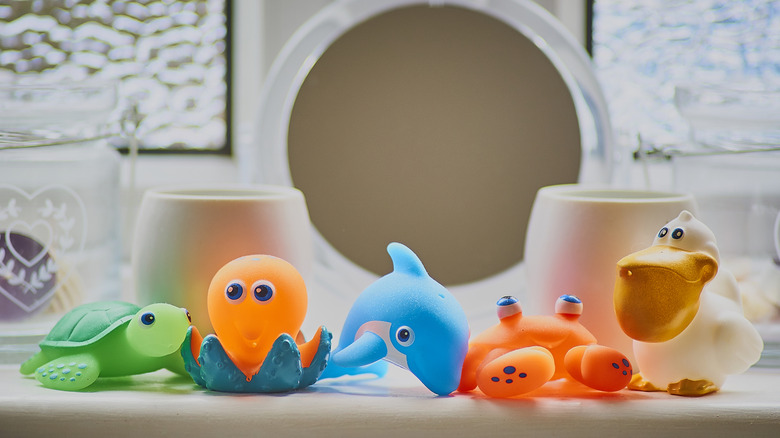
A lot can change in a year, including which toys hold your child's interest. Some toys may need to be eliminated because your child doesn't play with them anymore, while others should be tossed for health and safety reasons. Many bath toys are inexpensive and might not last long. Mold is also an issue with bath toys due to the moist environment. If you haven't looked through the bath toy collection in a while, January is a good time to do it.
Checking the condition of bath toys regularly is one way to keep your bathroom safe for children, and it's a good way to declutter by getting rid of the pieces that don't meet your safety standards. Pull all of the toys together, and look for anything that's broken — toss those items. Then, check for mold. It can appear greenish or blackish and often grows inside toys with holes or gaps where water can enter. Tossing moldy toys is an easy option, but you can clean them with a bleach and water mixture to kill the mold if your child wants to keep the toy. If your child is old enough, invite them to help decide which of the remaining toys they'll keep to help streamline the collection.
Expired, dangerous, or unused cleaning supplies
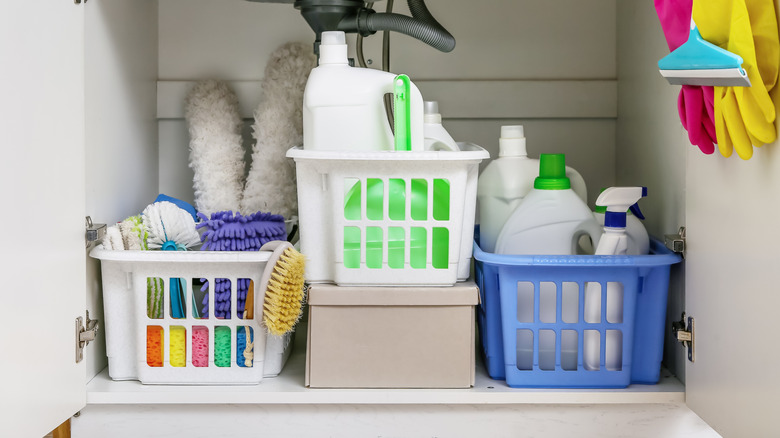
Cleaners also tend to accumulate in bathrooms. You might grab a specialty cleaner to tackle the grime on the shower grout or to make the metal finishes sparkle. Some people buy liquid drain openers when their bathroom sinks clog. Like many products, cleaning supplies have expiration dates — if you have older cleaners, they could be expired and less effective at their intended purpose. Some products also might not align with your New Year's resolutions. For example, harsh chemical cleaners no longer fit in if you're moving toward a green approach to cleaning. Or, your goal might be to create a minimalist cleaning routine with just a few multi-purpose options to save space.
Start the new year with fresh cleaning products that align with your preferences by decluttering what you've accrued. In addition to looking for an expiration date, you can also check for color, smell, and texture changes in cleaners that could indicate they're no longer good. It's also easy to declutter cleaners you never use or don't plan to use in the future. Just make sure you follow the right way to dispose of cleaning products. Many cleaning products can be put down the drain, but always read the label on the package. Anything that's considered a household hazardous material may need to be taken to a special facility or cleanup program.
Organizers, containers, and gadgets that don't fit the space or your lifestyle
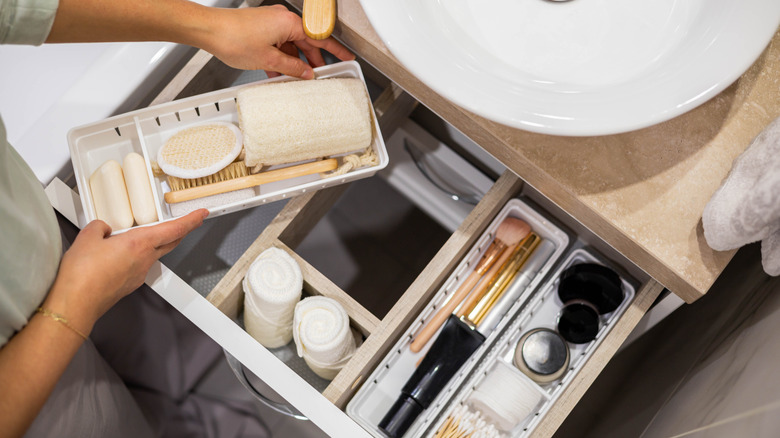
Storage containers and organizers can come in handy when they fit the space and the items you're storing well. But many people buy random organizers over the years and shove them in drawers in an attempt to get organized. That can backfire if the products don't fit well or aren't tools you like. For example, a set of plastic drawers might help you keep items sorted, but it can be annoying to open and close multiple tiny plastic drawers to find just what you need. Some people run into a situation where they have too many organizers, and those storage containers take up excess space. In some cases, having enclosed storage containers encourages more clutter. Tucking away items you never use in a storage drawer keeps them out of sight, with the appearance of being organized when you should really just get rid of them.
Look at the organizers you already have to see if they fit the contents well. You may be able to rearrange what you have into different storage containers or eliminate some of the organizers to clear up space. The storage containers should fit well into the space without creating small, wasted pockets — measuring the places where you want to put the organizers can help. Consider whether or not you like the functionality of the organizing tools.
Countertop clutter that interferes with functionality
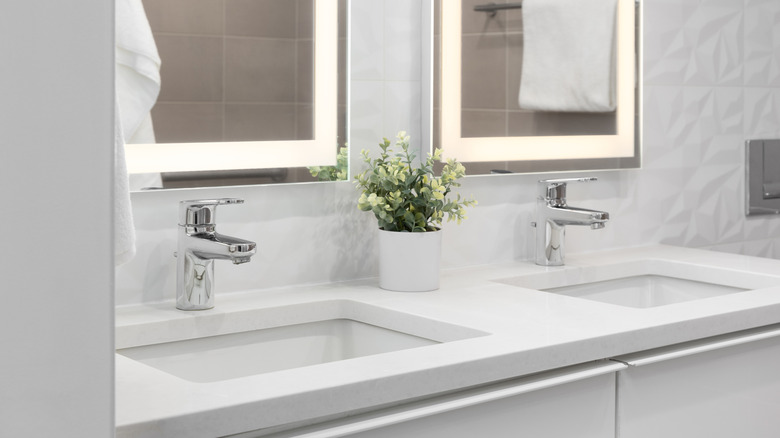
Countertops naturally collect clutter in many bathrooms. It's common to keep items out that you use on a daily basis to make them easily accessible. However, keeping too many items on your countertop creates visual clutter and cuts down on how much functional space you have. Bottles can easily get tipped over, and you might have difficulty finding what you need when the vanity top is crowded. If there are items that you never use on your countertop, you can declutter them completely. Items that you do use can be relocated to other bathroom spots, so they're still accessible but aren't cluttering up the surface.
There are several items you should never store on your bathroom countertop to keep those items safer and healthier, so relocating these items gives you a good start. For example, your toothbrush can get covered in bacteria if it's left out. Cosmetics and fragrances may be ruined by heat, moisture, and light, and other products that are sensitive to moisture should also be kept elsewhere. Tuck those items in more protected areas. Then, look for other items you can remove. A minimalist approach with just a few items, like a soap dispenser, on the countertop keeps your bathroom looking clean and fresh for the new year.
Broken items that don't function properly
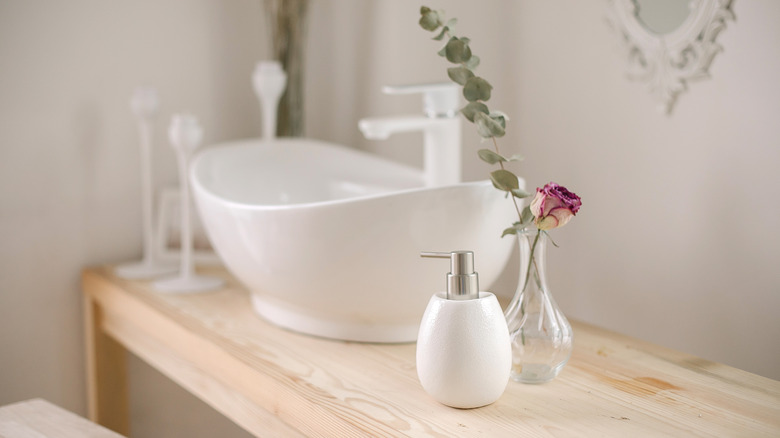
Items wear out in your bathroom, but it can be so gradual that you don't really think about it. Maybe your soap dispenser is difficult to use, or you have to mentally calculate your actual weight because you know your scale is off. Broken shelves, plungers, or toilet brushes are other examples. January is a fresh start to the year, so it's a good time to leave those worn and broken items in the past.
Assess the condition of various gadgets and items in your bathroom to decide what is no longer functioning well. For instance, it might be time to toss your scale if it provides inconsistent readings, needs to be recalibrated frequently, or has a digital display that doesn't appear correctly. Some items can be fixed — a loose towel bar or shelf can be tightened, for example. Other items simply need to be tossed. Before replacing broken items, make sure they're things you'll actually use. If you never weigh yourself, get rid of the scale and don't look back.
Home spa gadgets and devices you never use
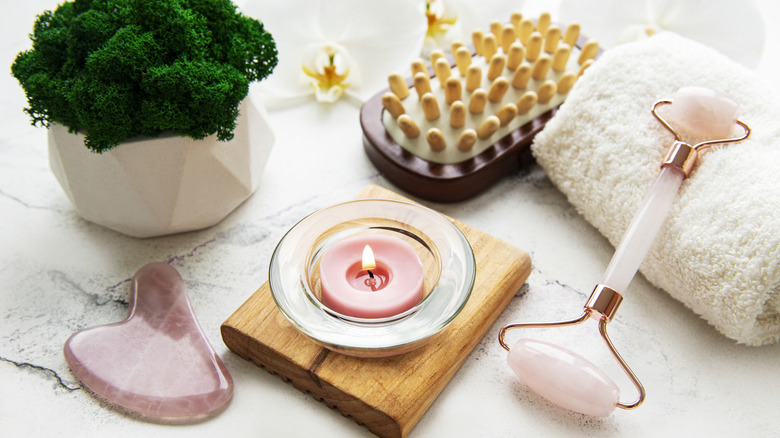
Everyone deserves a little pampering, but a trip to the spa on a regular basis isn't always in the budget. That's why home spa products are so tempting. Why not recreate the experience at home? Unfortunately, many of those items fall short of your expectations, or you simply don't set aside enough self-care time to use them religiously. Take the foot spa. You see them prominently displayed around the holidays, marketed as an ideal gift option. But their performance is often disappointing. Other gadgets you might collect include hair removal devices, red light face masks, facial rollers, and steamers. If you don't use those items regularly, they just take up space and create clutter.
While there are many things you need to create the perfect spa-like bathroom, you don't always need lots of spa gadgets to get the job done. Honestly assess how often you've used the various devices in the last year to determine if they're worth keeping. If the items are still in good condition, you could sell them and use the profits for a day at the spa.
Bathroom decor that contributes to clutter instead of adding personality
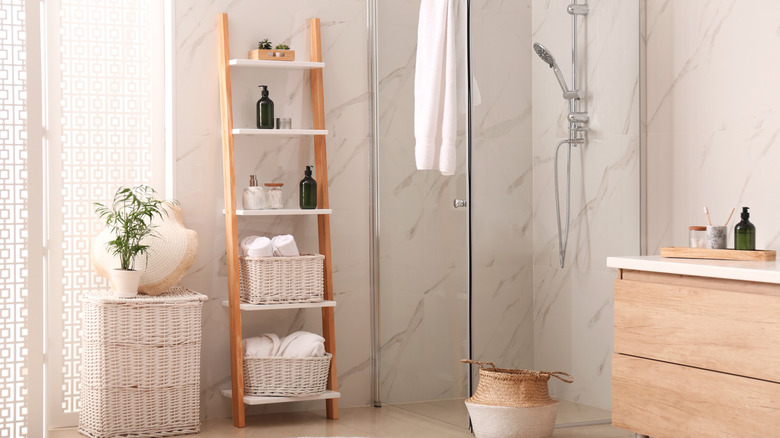
Decorating your bathroom gives it personality and creates a welcoming space that you enjoy using. Yet too much of a good thing simply causes clutter. Countertop decor takes up precious space, and too much wall decor can make the area feel cramped.
When assessing your bathroom decor, consider how much you like it and whether you would buy it again if you didn't already own it. Getting rid of decor pieces you no longer love can lighten up the space. Consider the functionality of various decor pieces. Baskets add texture and style to the room while also serving as storage. Shelving creates more storage space while adding warmth and dimension to a bathroom. Ceramic soap and lotion dispensers are ideal for decanting your products while adding to the style of the space. A countertop tray keeps small items confined. Get rid of decor pieces that simply take up space and don't contribute much value to the bathroom.