

How To Know If Your Tap Water Has Microplastics In It
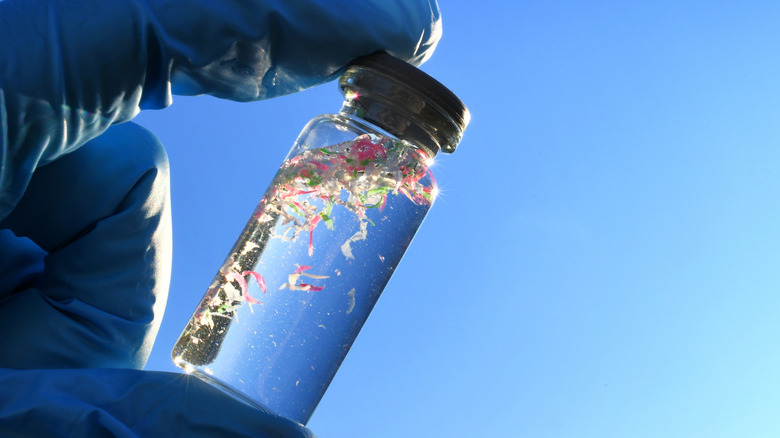
Microplastics: these tiny particles are literally everywhere, and researchers are just beginning to understand their impacts on human health. Like many people, you might be looking for ways to reduce your household's exposure to plastic. One helpful way is to ditch plastic items in your kitchen for safer alternatives, such as glass or wood, but you may also need to look beyond the obvious spots. Your home's tap water might be another potential source of microplastics. Outside testing can detect the presence of microplastics in your tap, and there are ways you can reduce your exposure the next time you reach for a glass of water.
Many kitchen essentials harbor microplastics, and tap water is unfortunately among them. Since tap water is a necessity in your home, you might understandably be eager to rule out the presence of any plastics. While testing is possible, it's important to know that this is an evolving technology, and the number of companies that provide this sort of testing is limited. These private tests also currently cost up to several hundred dollars.
Nevertheless, a mail-in microplastics test can provide some valuable information about your home's tap water. To date, Tap Score is the sole provider of mail-ordered tap water testing kits. This company was specifically founded to make drinking water testing accessible to the public. One of their offerings is the Microplastics Water Test, which is said to help detect particles as small as 1 micron. In theory, you could obtain data from private testing of this nature while also contacting your water utility company for information about tap water quality.
What to do about potential microplastics in your tap water
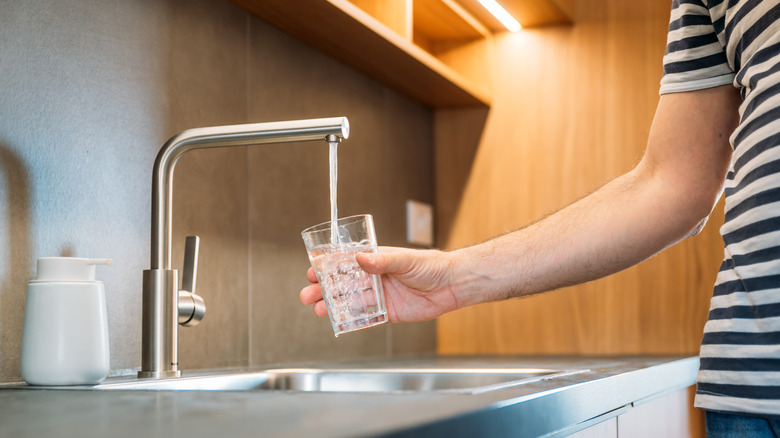
If you decide to test your tap water for microplastics, you will need to buy a test kit first. Once you receive this kit, you can obtain a sample of water from your tap and then send it back to the laboratory. After the sample is analyzed, the company will send you an electronic breakdown of its findings. The exact criteria vary between tests, with some measuring microplastic presence and size only. More advanced testing may reveal the precise types of plastics in your drinking water. Some regions and municipalities also have practical tests to detect microplastics in water facilities. For example, Stateline reported in 2022 that California was the global leader in testing for microplastics in drinking water.
Testing for microplastics is a good first step in understanding the health of your tap water. But what do you do if microplastics are indeed lurking in your home's water? One possibility is to use a filtration system to help remove some of them. Certain filters may remove different sizes of microplastics, with reverse osmosis versions among the most effective (but also most expensive). One great starting point is a filter for your drinking water, such as a carbon block filter. If you're unsure about a particular water filter, check with the company to see if it's designed for microplastics. You should also think twice before buying bottled water over tap water. Not only are these single-use plastic bottles a potential source of microplastics, but they're also among the things to avoid buying if you want a sustainable home.